

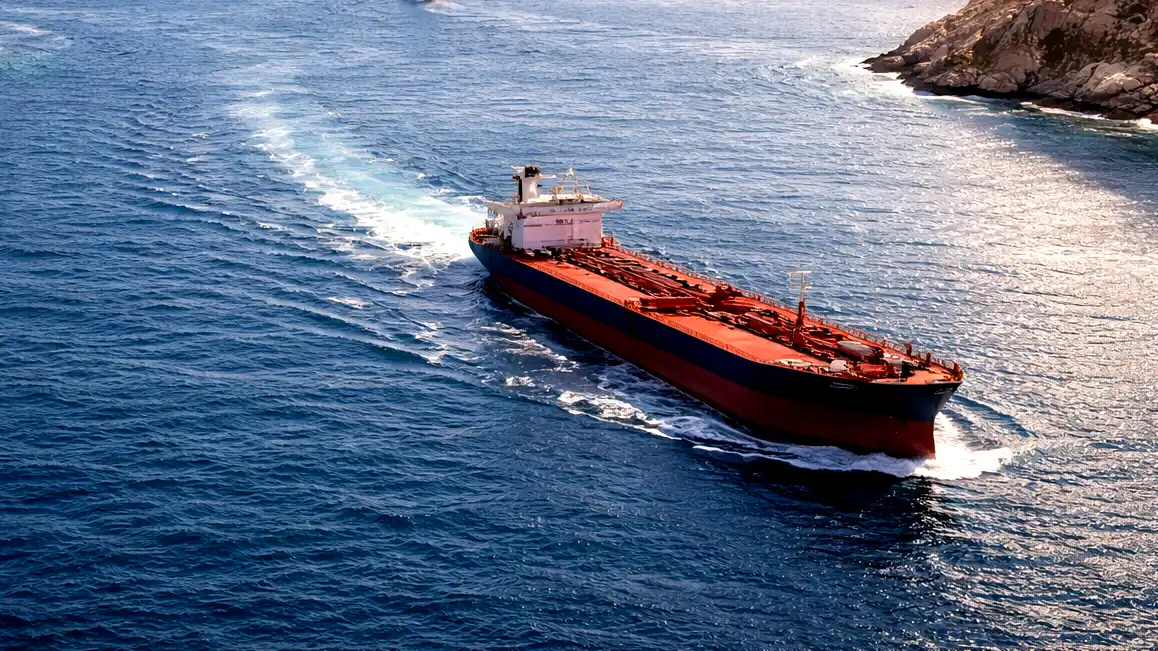
A massive geopolitical crisis has erupted in the Middle East, threatening to completely unravel the newly signed peace agreement between the United States and Iran. On Saturday, the Iranian military joint command officially announced the closure of the strategic Strait of Hormuz, citing what they called the U.S. failure to stop Israeli military operations in southern Lebanon. The dramatic announcement came after heavy fighting flared up once again between Israel and the Hezbollah militia, shattering a fragile ceasefire just hours after it took effect. This sudden escalation has undone the primary achievement of the recent peace talks and thrown global energy markets into renewed panic.
The official closure was announced via a formal statement from Iran’s Khatam al-Anbiya Central Headquarters, which carries direct command over the country’s joint military operations. In its release, the command accused the United States of a clear breach of its commitments to end the regional war and described Israel’s continued bombardments as an unacceptable violation of the first clause of the peace memorandum. The military command warned that closing the strait to commercial vessel traffic is only the first step in its response to the Western breach of trust, threatening further tactical measures if the military aggression against its regional allies does not cease immediately.
Under the terms of the 14-article memorandum of understanding signed on Wednesday, all parties agreed to an immediate and permanent termination of military operations across all fronts, including Lebanon. Iran had agreed to reopen the Strait of Hormuz, which handles nearly 20% of global petroleum liquids, on the strict condition that the United States and its allies halt all offensive campaigns. By closing the Strait once again, Tehran is demonstrating that its willingness to maintain the peace is directly tied to the actions of Israeli forces on the ground.
The physical collapse of the truce occurred overnight and into Saturday, as both Israeli forces and Hezbollah fighters launched heavy attacks. The Lebanese National News Agency reported that intense Israeli airstrikes and artillery fire struck the southern city of Nabatieh and several surrounding villages, killing at least 16 people, with several civilians among the dead. The Israeli military defended the strikes, claiming its forces responded to a massive barrage of more than 50 projectiles and rockets launched by Hezbollah overnight at troops operating inside the southern security zone.
Even before Saturday’s dramatic shutdown, the recovery of commercial maritime traffic through the Strait of Hormuz had been incredibly halting and tense. Although a total of 25 commercial vessels successfully crossed the waterway on Thursday—the highest daily volume recorded since mid-April—shipping companies remained highly wary of the security environment. To maintain tight control, Iran’s maritime authority had imposed strict new security procedures, requiring all international ships to submit formal transit requests at least 48 hours in advance. This administrative bottleneck, combined with the threat of unexploded naval mines, kept global energy supply chains highly constrained.
The rapid escalation of violence has severely disrupted the broader diplomatic timeline. Originally, senior technical delegations from both countries had planned to meet in Switzerland on Friday to launch 2 months of negotiations to discuss outstanding long-term issues, particularly Iran’s nuclear program. These talks were postponed amid the initial border clashes, but diplomats are working frantically to get the negotiations back on track. Pakistan’s foreign ministry, acting as a key mediator in the dispute, announced that U.S. and Iranian representatives are set to meet in Geneva on Sunday to begin technical-level talks.
To rescue the collapsing peace plan, President Donald Trump has dispatched his special envoy, Steve Witkoff, to lead the U.S. delegation in Switzerland. This development follows a chaotic 24-hour period where Vice President JD Vance suddenly canceled his plans to attend the talks, grounding his official delegation at Joint Base Andrews on Thursday night. While the White House has remained quiet on whether Vance will eventually join the talks, sending a senior presidential envoy like Witkoff demonstrates that Washington is desperate to preserve the diplomatic framework before the upcoming November midterm elections.
The President has also been personally intervening behind the scenes to pressure regional allies to adhere to the terms of the agreement. Trump revealed to reporters that he had spoken directly with the Israeli government, urging its leadership to agree to a ceasefire and allow the diplomatic process to play out. The President emphasized that both sides must calm down and use their heads to avoid a wider, catastrophic war. However, Trump’s public warnings have met with significant resistance from Israeli cabinet ministers, who were entirely excluded from the secret negotiations and continue to argue that they must maintain a free hand to combat hostile proxies.
The sudden closure of the Strait of Hormuz has also supercharged the domestic political backlash against the administration’s foreign policy. Conservative lawmakers and national security specialists are publicly questioning whether Trump gave away too much leverage to secure a fragile, short-term agreement. They point out that in exchange for a tentative ceasefire that lasted less than 48 hours, the administration lifted its naval blockade of Iranian ports and prepared to unfreeze tens of billions of dollars in blocked assets. With the primary global energy chokepoint now closed again, critics are accusing the administration of leaving U.S. national security in the hands of a hostile regime.
Ultimately, the dramatic closure of the Strait of Hormuz and the resumed fighting in southern Lebanon serve as a stark reminder of the immense difficulty of securing peace in a highly fractured world. While U.S. and Iranian leaders have successfully negotiated agreements on paper, the physical reality on the ground shows that regional proxy warfare can quickly derail high-level global diplomacy. As Steve Witkoff and Iranian negotiators prepare to meet in Geneva on Sunday under the shadow of a renewed maritime blockade, the global community can only watch on a knife-edge. The coming days will prove whether this fragile diplomatic framework can truly adapt and survive, or if the Middle East is destined to return to a state of total war.















