

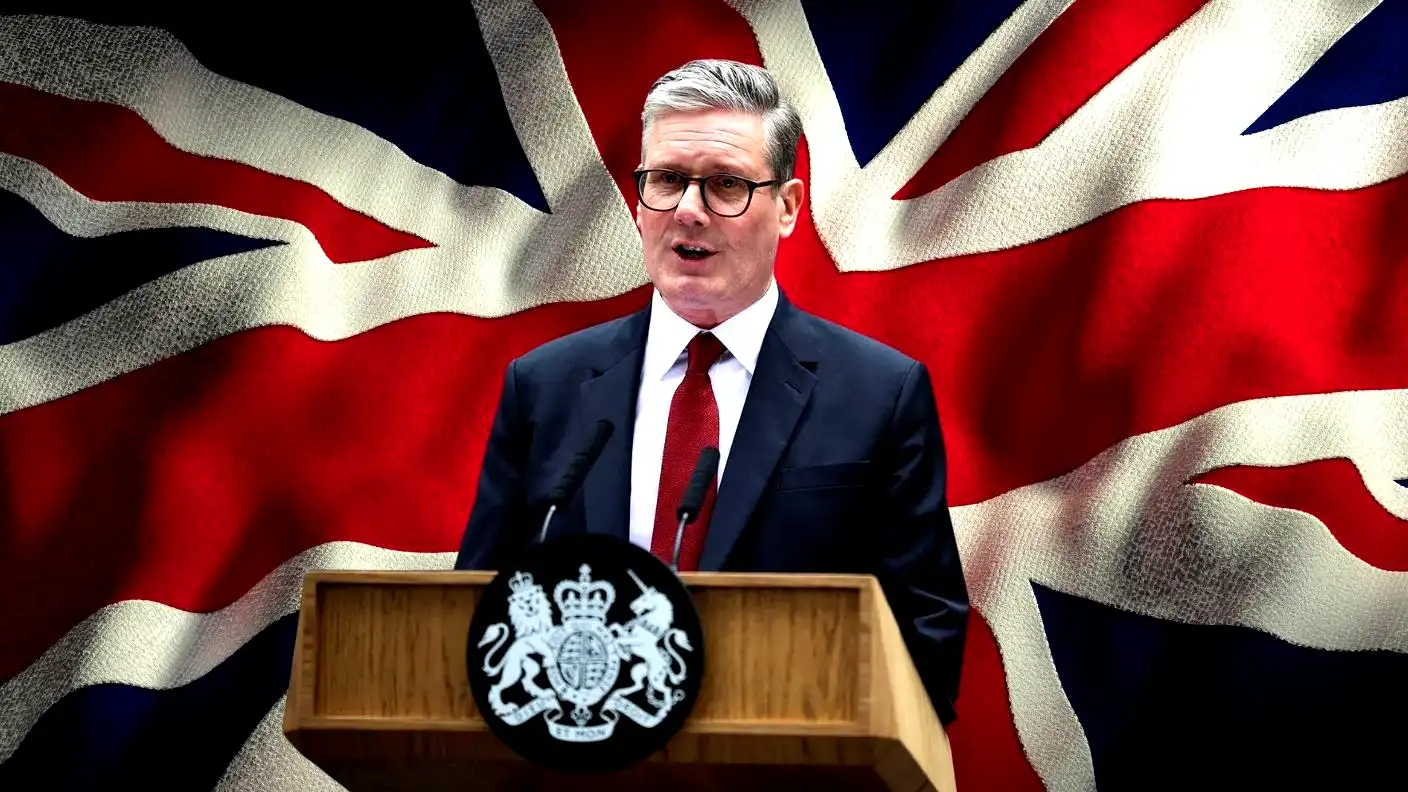
The European Union has postponed a highly anticipated bilateral summit with the United Kingdom following the sudden resignation of British Prime Minister Keir Starmer. The event, which officials had scheduled for July 22 in Brussels, was designed to mark a historic turning point in post-Brexit relations. Now, European diplomats find themselves reassessing the future of these delicate negotiations. The sudden vacuum of power in London has forced an abrupt halt to months of diplomatic preparation, leaving key economic and security agreements hanging in the balance.
European Council President António Costa officially announced the decision to postpone the gathering, noting that the political reality in London required a temporary pause. Costa expressed his regret over the Prime Minister’s departure but emphasized that the European Union remains committed to stabilizing its partnership with Britain. He voiced hope that Starmer’s eventual successor would maintain the current trajectory of rebuilding trust and establishing closer structural ties between the two powers.
For the past several months, civil servants on both sides of the English Channel had worked tirelessly to lay the groundwork for this meeting. The summit was not merely symbolic; it aimed to finalize a series of comprehensive treaties to streamline trade and energy sharing. Now, with the British government entering a period of transition, European Commission officials are working to determine when, and under what conditions, they can safely resume these critical discussions.
The postponement represents a significant setback for the wider European community. Diplomats had hoped that a successful July meeting would unlock billions in joint economic projects and establish a more unified front against shared geopolitical threats. Instead, the sudden collapse of the British administration has revived long-standing anxieties in Brussels regarding the reliability and consistency of the United Kingdom as a negotiating partner.
Outside Downing Street: The Fall of Another Prime Minister
Standing outside the black door of 10 Downing Street on Monday, June 22, Keir Starmer addressed a quiet crowd of reporters to announce his resignation. His statement marked the end of a turbulent period in office that lasted less than two years. Starmer admitted that the central question facing his administration was whether he remained the right person to lead the Labour Party into the next general election. He conceded that his parliamentary colleagues had answered that question with a clear refusal of support, and he accepted their decision with grace.
Starmer confirmed that he will remain in his post as Prime Minister in a caretaker capacity until the Labour Party completes its leadership contest. This timeline aims to ensure an orderly handover of power. Nominations for the next leader will officially open on July 9, and the party hopes to conclude the process by July 16, just as Parliament rises for its summer recess. If multiple candidates contest the leadership, the transition could extend until September 1, leaving the country under caretaker management for most of the summer.
Starmer’s resignation makes him the sixth British Prime Minister to step down since the country voted to leave the European Union in 2016. This rapid turnover has created a sense of chronic instability in Westminster, where prime ministers have struggled to maintain the confidence of their own backbenchers. Despite winning a historic landslide victory in the general election, Starmer found his authority rapidly eroded by persistent internal division and economic challenges.
The pressure on the Prime Minister reached a boiling point after several high-profile cabinet departures. Former Health Secretary Wes Streeting had already resigned in May, citing a complete loss of confidence in the Prime Minister’s political strategy. When other senior ministers began privately demanding a clear departure timeline, Starmer’s position became entirely untenable. Despite a brief attempt to rally his supporters, he ultimately recognized that his leadership could no longer survive the internal rebellion.
The May Bloodbath: How Local Elections Sealed Starmer’s Fate
To understand the sudden collapse of Starmer’s premiership, observers must look back to the local elections of May 2026. The results of those votes sent shockwaves through the Labour Party and directly triggered the current leadership crisis. In a devastating blow to the government, Labour lost more than 1,000 local council seats across England, reflecting deep public dissatisfaction with the administration’s economic policies and national direction.
Even more concerning for party strategists was the loss of Labour’s historic stronghold in Wales. For 27 years, the party had maintained a firm grip on the Welsh legislature, using it as a reliable base of political power. The loss of this majority signaled that the government was shedding support not just in swing districts, but in its traditional industrial heartlands. Panicked backbenchers, fearing for their own seats in the next general election, quickly concluded that Starmer had become an electoral liability.
At the same time, the rapid rise of Reform UK, led by Nigel Farage, put immense pressure on Labour’s northern constituencies. Fearing a massive populist surge, Labour MPs began demanding a change in leadership to revitalize the party’s platform. They argued that Starmer’s cautious, managerial style had failed to connect with voters who felt ignored by Westminster’s political establishment.
As the internal rebellion grew, backbenchers openly discussed replacing Starmer with a figure capable of projecting charisma and a bolder economic vision. The local election disaster effectively broke the Prime Minister’s authority, making it impossible for him to pass major legislation or maintain party discipline. From that point forward, the question was not whether he would resign, but how quickly his colleagues would force him out.
The Battle for Westminster: Inside the Makerfield By-Election
The final blow to Starmer’s leadership came from a carefully engineered by-election in the northern constituency of Makerfield on June 18. The seat became vacant after Labour MP Josh Simons resigned on May 14, specifically to allow Andy Burnham, the highly popular Mayor of Greater Manchester, to run for a seat in Parliament. This calculated maneuver was designed to pave the way for Burnham’s return to Westminster, where he could mount a direct challenge to Starmer.
The strategy mirrored a rare historical precedent from 1965, when a by-election was triggered to provide a legislative seat for an individual outside of Parliament. Because British prime ministers must historically be sitting members of the House of Commons, Burnham needed to secure a constituency before he could legally bid for the top job. The plan succeeded beyond the expectations of many political analysts, who had predicted a tight race against a surging Reform UK.
Burnham won the Makerfield by-election with a commanding 54.8% of the vote, securing 24,927 individual ballots. His closest challenger, Robert Kenyon of Reform UK, finished a distant second with 34.5%, representing 15,696 votes. The massive victory demonstrated Burnham’s unique appeal in working-class northern districts, where many voters had grown disillusioned with Starmer’s national policies.
In his victory speech, Burnham declared that the result represented a crucial turning point for British politics. He argued that the voters of Makerfield had rejected the politics of division and had instead chosen a platform focused on unity, public investment, and regional empowerment. This decisive victory instantly transformed Burnham into the undisputed frontrunner to replace Starmer as Prime Minister.
The Coronation of Andy Burnham and the Withdrawal of Wes Streeting
Following Starmer’s resignation announcement, the path to 10 Downing Street cleared rapidly for Burnham. On Monday, June 22, the newly elected MP for Makerfield formally confirmed his candidacy for the Labour leadership. He pledged to manage the transition of power in an orderly and responsible manner, promising to restore stability and seriousness to a government that had spent months distracted by internal bickering.
Burnham’s path was made even smoother by a surprise announcement from Wes Streeting. The former Health Secretary, who had previously described himself as a “plucky underdog” and called for a competitive contest, chose to withdraw from the race. Instead, Streeting threw his full support behind Burnham, declaring that his own policy ideas would find a welcome home under Burnham’s leadership.
This strategic alliance makes a political coronation highly likely. If no other candidate secures enough nominations from the Parliamentary Labour Party by July 16, Burnham will bypass a lengthy vote of the wider party membership. Under this accelerated timetable, he could walk into Downing Street as Prime Minister on July 17, just three weeks after winning his by-election.
As the former Mayor of Greater Manchester, Burnham brings a distinct executive track record to the table. His allies argue that his experience running a major regional economy makes him uniquely qualified to lead the country through its current economic challenges. However, he must act quickly to unify a fractured parliamentary party and reassure international allies that Britain remains a stable, predictable partner on the global stage.
The High Financial and Economic Stakes of a Postponed Summit
The postponement of the Brussels summit is a direct blow to the British economy, which continues to struggle with the long-term structural barriers created by Brexit. One of the central pillars of the scheduled talks was a planned Sanitary and Phytosanitary agreement. This deal aimed to eliminate burdensome border checks on agri-food products, plants, and live animals traveling between Great Britain and the European Union.
Independent economic analysts estimate that aligning British food and drink standards with those of the European Union could inject up to £5.1 billion annually into the UK economy. When combined with a planned deal to link the UK and EU Emissions Trading Systems, the total economic boost could reach £9 billion per year. The current border checks have added high costs for British exporters, who have faced lengthy delays at European ports since full controls were implemented.
Furthermore, the summit was meant to finalize negotiations on linking electricity markets, a move that energy experts believe would lower compliance costs and enhance energy security for both parties. Linking the two emissions trading schemes would also protect British businesses from looming carbon border taxes, which threaten to disrupt trade across a variety of industrial sectors.
However, these proposals have faced fierce opposition from Brexit hardliners. Conservative critics have warned that automatic alignment with European rules represents a betrayal of British sovereignty. Some think tanks argue that merging the emissions schemes could cost British industry up to £1.1 billion annually, and that rejoining European educational programs like Erasmus+ would cost taxpayers £570 million. Burnham must now decide whether to push forward with these integration plans or modify the government’s negotiating stance to appease domestic critics.
A Chilled Warmth: Diplomatic Reactions from Brussels
Despite the sudden postponement of the summit, European leaders have responded to Starmer’s resignation with a mixture of warmth and diplomatic caution. European Commission President Ursula von der Leyen paid tribute to the outgoing Prime Minister, thanking him specifically for his unwavering support of Ukrainian defense and wider European security. She noted that Starmer had quickly developed into a respected international statesman, and she credited him with strengthening the defense architecture of the continent.
European Council President António Costa maintained a highly professional tone, reiterating that while the summit must be postponed, the underlying relationship between the UK and the EU remains strong. He made it clear that Brussels is prepared to work with Starmer’s successor to ensure that the progress made during the last two years is not lost.
However, behind the scenes, European diplomats are privately expressing deep frustration. Many feel that just as they were close to securing stable, predictable agreements, the UK has once again plunged itself into domestic political chaos. The sudden need to build relationships with an entirely new prime minister and cabinet will inevitably delay key policy decisions for months.
Starmer’s final major international appearance is now expected to be the NATO summit in Ankara, scheduled for July 7 and 8. The event will serve as a bittersweet farewell for a leader who placed international alliance-building at the center of his foreign policy. For European allies, the focus will quickly shift to Ankara as they attempt to gauge how a potential Burnham administration will approach defense spending and global security challenges.
The Perpetual Turmoil of British Governance
The sudden collapse of Starmer’s administration highlights a deeper crisis of stability within modern British governance. With the country preparing to welcome its seventh prime minister in just ten years, international observers are left wondering whether the UK can maintain a consistent domestic or foreign policy. This rapid cycle of leadership changes has undermined Britain’s international standing and complicated its relationships with major trading partners.
This political volatility carries a high financial cost. The British pound fell close to its lowest point of the year against major currencies following the news of Starmer’s resignation, reflecting market anxiety over the sudden leadership vacuum. Investors value predictability, and the constant threat of a government collapse in London has made major corporations hesitant to commit capital to long-term projects in the UK.
As Burnham prepares to take the reins of government, he faces the monumental task of breaking this cycle of instability. He must demonstrate that a regional executive can successfully transition to the national stage and manage the competing factions of the Labour Party. If he succeeds, he may finally restore a measure of predictability to British politics. If he fails, the UK risks falling into an even deeper cycle of political crisis that will continue to isolate the country from its closest economic partners.
The delayed summit in Brussels is more than just a postponed meeting; it is a stark reminder of how quickly domestic political turmoil can derail vital international progress. For the millions of businesses and citizens affected by the barriers of Brexit, the wait for a stable, lasting solution has just grown significantly longer.















