
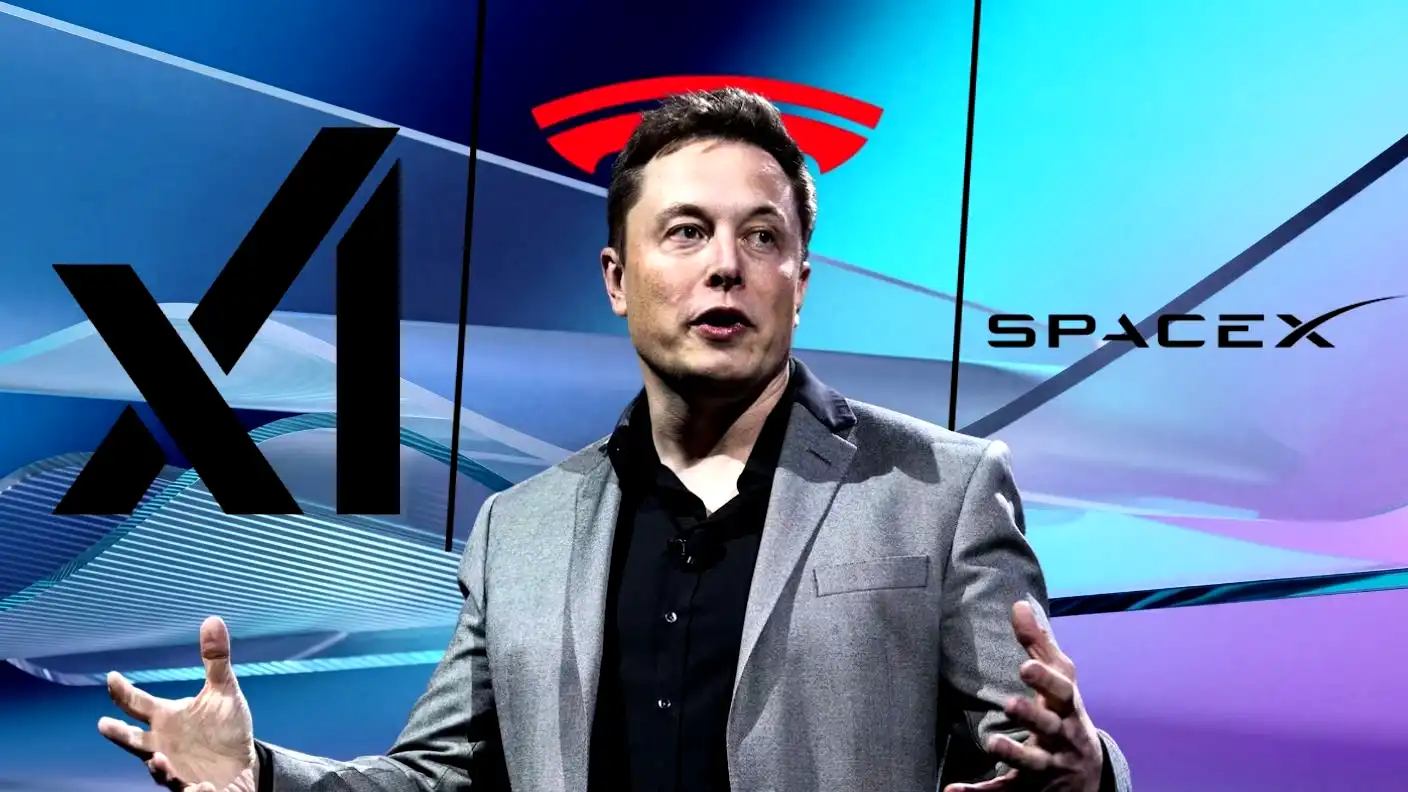
Wall Street is currently buzzing with intense speculation about the future of two of the most valuable corporations on the planet. Following a historic public market debut that turned their founder into the world’s first trillionaire, a growing number of Tesla stockholders are betting heavily on a potential merger with SpaceX. Many retail investors and venture capitalists view a combined mega-conglomerate as the natural and ultimate destination for these sprawling technology empires.
However, this growing consensus is not without its critics. While retail backers and tech visionaries paint a picture of a unified AI, robotics, and aerospace giant worth upwards of $4 trillion, major financial research firms are urging extreme caution. Analysts warn that turning the electric vehicle maker into a tracking stock for a rocket company could distort its true valuation and expose shareholders to massive dilution risks.
At the heart of the debate is a fundamental question of corporate governance, strategic synergy, and the unique way the market values the projects of a single highly influential entrepreneur.
The Trillion-Dollar Catalyst: Inside the Massive Space IPO
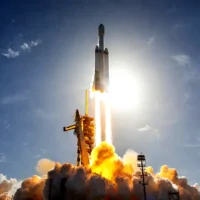
The speculation regarding a merger reached a boiling point after the space exploration firm completed the largest Initial Public Offering in history. The aerospace giant sought to raise $75 billion in its public debut, establishing an overall market capitalization in the ballpark of $2 trillion.
The public listing was met with overwhelming enthusiasm on Wall Street. On its first day of trading on the Nasdaq, shares opened at $150 each, jumped more than 19% during the session, and finished the day just under $161. This rapid surge officially pushed the net worth of its chief executive past the $1 trillion mark, a milestone never before achieved in modern economic history.
Despite the astronomical valuation, the company’s financial filings revealed a complicated picture. The space firm recorded a significant net loss of $4.28 billion in the first quarter of 2026. Under normal market conditions, such steep losses would cause investors to hesitate. However, the public eagerly looked past the red ink, choosing instead to focus on the company’s massive long-term investments in satellite technology, global connectivity, and artificial intelligence.
The company’s public filings outlined an ambitious path forward. It suggested that its ultimate addressable market in space-based artificial intelligence infrastructure could yield up to $26.5 trillion in potential revenue. For investors, this staggering figure turned a simple rocket-launching business into a highly speculative bet on the future of global computer networks.
Why Tesla Stockholders See a Merger as the Ultimate Plan
For many early backers and retail investors, a merger between the electric car maker and the newly public space company is not a wild theory, but a logical step. Prominent space entrepreneurs and early investors in the rocket venture have publicly stated that a post-IPO combination is merely a question of timing. They argue that the two companies are already so deeply integrated that keeping them separate no longer makes practical sense.
One of the most compelling reasons for a merger involves voting control and corporate governance. Before the public listing, the chief executive maintained an estimated 85.1% voting control over the rocket company. Even after the IPO, a dual-class share structure ensures he retains around 50% of the voting power.
This stands in stark contrast to his position at the electric car company. Over the past several years, his ownership stake in the automotive company has hovered between 13% and 21%. He has frequently clashed with institutional shareholders, faced lawsuits over massive compensation packages, and seen his corporate decisions challenged in Delaware courts. By merging the two entities, he could theoretically use his high-voting shares in the space firm to solidify his overall control across his entire business empire.
A combined company, which fans often refer to as “Elon Inc.,” would allow the executive to operate across a unified global infrastructure. It would bring electric vehicles, autonomous robotaxis, humanoid robots, satellite communications, and artificial intelligence under one massive corporate umbrella. Instead of managing several different public and private companies with conflicting boards of directors, he could run his operations through a single, highly streamlined executive team.
Unifying Ground and Orbit: The Technological Synergies
Supporters of a merger point to several areas where the two companies already share engineering talent, software code, and physical hardware. They argue that combining the companies would unlock massive operational efficiencies that are currently restricted by related-party transaction rules.
The Space-Based AI Compute Layer
The success of both companies increasingly depends on artificial intelligence. The automotive company relies on high-powered computer chips to train its full self-driving systems and operate its upcoming fleet of autonomous robotaxis. At the same time, the aerospace company is building out a massive satellite network that could serve as a global, decentralized computer system.
The space firm recently completed a $60 billion all-stock acquisition of Anysphere, the software startup behind the popular AI coding editor Cursor. This acquisition proved that the rocket company is aggressively moving into the digital infrastructure space. By building out orbital data centers, the company hopes to bypass the physical and political limitations of ground-based servers.
If a merger occurs, the automotive company’s autonomous driving systems and humanoid robots could connect directly to this orbital computer network. This would give millions of vehicles and robots instant access to ultra-secure, low-latency AI processing, regardless of where they are located on Earth.
A Shared Treasury of Digital Assets
Beyond engineering, the two companies already share a similar philosophy regarding corporate treasury management. Together, the automotive firm and the aerospace company hold a combined total of roughly 30,000 Bitcoin, which is currently valued at approximately $2 billion.
Many cryptocurrency traders and technology investors believe that a combined company would instantly become one of the largest corporate holders of digital assets in the world. This shared balance sheet would allow the unified company to fund ambitious, high-risk research projects without relying entirely on traditional banks or volatile debt markets. It also aligns with the executive’s long-held view that decentralized digital assets represent the future of global commerce.
The Contrarian View: Wall Street Warns of a Tracking Stock Risk
Despite the excitement among retail investors, several major Wall Street research firms are raising red flags about the potential merger. They warn that the transaction could damage the investment profile of the electric vehicle manufacturer.
A prominent global equities research firm recently adjusted its outlook on the automotive company, lifting its price target slightly to $375 but maintaining a cautious “Hold” rating. This revised target implies a downside risk of about 6% from where the stock has recently been trading. The firm warned that growing market consensus around an upcoming merger is creating a new, unpredictable structural risk.
Analysts are concerned that Tesla could begin trading as a de facto tracking stock, or proxy, for SpaceX. If investors begin valuing the car maker based on the expected exchange ratio of a future merger, its stock price will disconnect from its actual automotive business.
Instead of focusing on vehicle deliveries, factory margins, or battery production costs, the stock would move based on the volatile valuation of the space firm. This would make it incredibly difficult for traditional fund managers to analyze the company’s financial health. It could also lead to massive sell-offs if the space firm faces technical setbacks, launch failures, or regulatory delays.
The Financial Realities of Robotics and Autonomous Cars
Critics of the merger also point out that both companies are currently valued based on future promises rather than near-term profits. The automotive company currently trades at an exceptionally high price-to-earnings ratio of around 367, a figure that is far higher than any traditional manufacturing company.
This premium valuation is supported by the belief that the company will soon launch a highly profitable network of robotaxis and commercialize its Optimus humanoid robots. However, equities analysts warn that these futuristic businesses are likely to generate significant financial losses before they contribute any meaningful revenue.
Developing autonomous driving software and building millions of humanoid robots requires billions of dollars in continuous research and development. On top of that, Goldman Sachs recently projected that the car maker’s second-quarter vehicle deliveries would reach around 420,000 units. While this shows steady consumer demand, it represents a year-over-year decline in its core automotive business.
With core car margins slipping and solar installation revenues remaining flat, some analysts argue that the automotive company cannot afford to inherit the massive capital requirements of a space program that is already losing billions of dollars each quarter. They fear that a merger would dilute the holdings of existing car stockholders to pay for rocket fuel and Mars colonization plans.
The Legal and Logistical Hurdles of a Four-Trillion-Dollar Giant
Executing a merger of this size would be a historic challenge, requiring approvals from regulatory agencies, independent boards of directors, and thousands of public shareholders.
A transaction of this scale would trigger intense antitrust scrutiny from government regulators in the United States and Europe. A combined company would have a near-monopoly on satellite internet, space launch services, and electric vehicle charging infrastructure. Regulators may argue that such a concentration of power under a single individual threatens national security and market competition.
Furthermore, the board of directors at both companies would face a mountain of legal challenges regarding conflicts of interest. Because the chief executive is the majority owner of the space firm and a significant shareholder in the car company, any valuation deal would be heavily scrutinized. Independent board members would have to prove that the exchange ratio is entirely fair to retail investors who only own shares in one of the companies.
To minimize these legal risks, the executive has already relocated the corporate headquarters of both firms to Texas. By operating under Texas corporate laws, the companies can bypass the highly strict legal standards of Delaware, where a judge recently struck down a $56 billion compensation package for the executive. Even with a friendlier legal environment in Texas, minority shareholders are almost certain to file lawsuits to block any transaction that they perceive as diluting their equity.
Navigating the Speculation in the Era of Trillionaires
The debate over a potential merger highlights a broader shift in how modern stock markets operate. Today, many investors are no longer buying shares based on traditional financial metrics like price-to-earnings ratios or quarterly cash flows. Instead, they are investing in the long-term vision of a single, highly disruptive entrepreneur.
For these investors, the separate corporate structures of the electric car maker and the rocket company are merely legal details. They see a single, unified ecosystem where advancements in battery chemistry at a car factory in Shanghai directly benefit a satellite launch facility in South Texas. They believe that a formal merger is inevitable because it is the only way to fund the massive computer networks and aerospace infrastructure required to reach the next stage of technological development.
Whether this grand vision becomes a reality or collapses under the weight of regulatory challenges and Wall Street warnings remains to be seen. In the meantime, the constant stream of merger rumors will continue to drive intense volatility for both stocks. Investors must decide whether they want to buy into a traditional electric vehicle manufacturer or take a high-stakes gamble on the ultimate consolidation of the world’s most ambitious technology empire.