

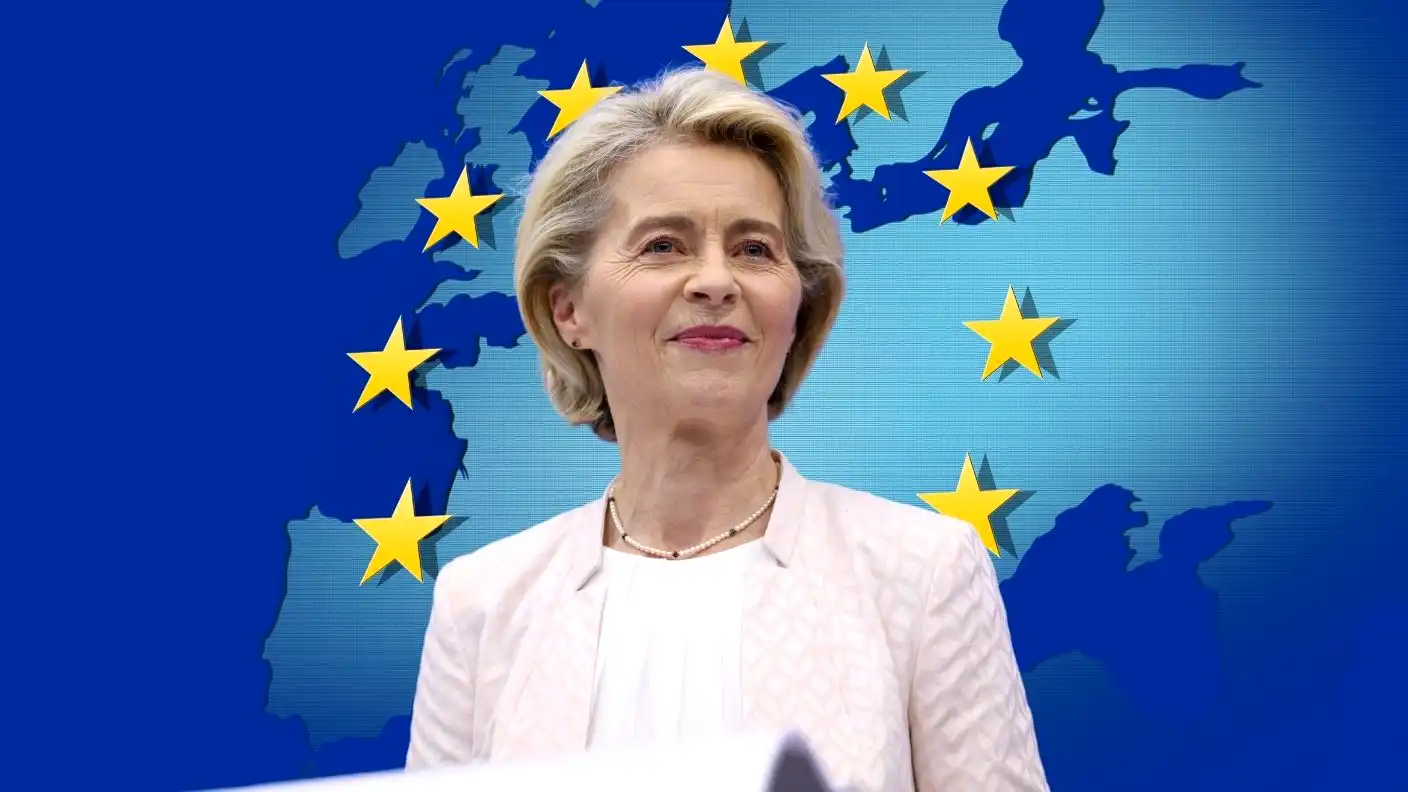
The European Union has officially initiated the largest single financial rescue package in its history, releasing the first multi-billion-euro payment to support Ukraine’s war-torn economy and defense industries. Speaking at a high-profile recovery conference on Thursday, European Commission President Ursula von der Leyen announced the immediate disbursement of €3.2 billion to Kyiv. The funding represents the first installment of the newly established €90 billion Ukraine Support Loan, a massive financial lifeline designed to span the next two years. The major announcement marks a critical transition from temporary aid to long-term, predictable funding as Ukraine enters the fifth year of its defensive war against Russia.
The historic announcement took place during the opening session of the Ukraine Recovery Conference hosted in the Polish port city of Gdańsk. The Baltic city, famously known as the birthplace of the Solidarity movement and a global symbol of resistance against oppression, served as a highly symbolic backdrop for the discussions. To study formulas to guarantee Ukraine’s recovery, von der Leyen met with European Council President António Costa, Polish Prime Minister Donald Tusk, and Ukrainian First Deputy Prime Minister Yulia Svyrydenko. The gathering emphasized Europe’s unbroken, long-term commitment to support Kyiv, proving that the continent stands united despite persistent geopolitical pressures.
During her public address, von der Leyen highlighted the staggering scale of the financial and military assistance that the community bloc has mobilized since the outbreak of hostilities in 2022. The European Commission President revealed that the European Union and its individual member states have collectively provided more than €200 billion in economic, financial, and military aid to Kyiv. She argued that building a prosperous and independent Ukraine tomorrow requires massive, proactive investments today. The newly initiated €90 billion loan serves as a powerful continuation of this support, ensuring that the country possesses the fiscal strength to maintain essential public services while defending its territory.
Alongside the immediate budget support, European officials announced a separate, highly anticipated military funding package to bolster Ukraine’s frontline capabilities. Von der Leyen confirmed that the European Union will begin disbursing the first installment of a €6 billion defense package specifically earmarked for domestic drone production in the coming days. By funding the manufacturing of unmanned aerial vehicles directly inside Ukraine, Brussels is helping the country build its own sovereign defense industry while reducing its reliance on foreign weapons supplies. This targeted military aid will allow the Ukrainian armed forces to procure critical reconnaissance and strike drones in high volumes.
The newly launched €90 billion macro-loan is structured to cover approximately two-thirds of Ukraine’s total estimated financial and budgetary needs through 2027. Under the legal framework approved by the European Parliament, the massive package is divided into two distinct operational segments. A total of €30 billion will be made available for macro-financial assistance and direct budget support to help the Ukrainian government patch its domestic deficits and fund public sector wages. The remaining €60 billion is strictly allocated to strengthen Ukraine’s defense capabilities, supporting the rapid procurement of military equipment and ammunition to counter ongoing attacks.
To secure the release of this first €3.2 billion tranche, the government in Kyiv had to successfully implement a series of strict, politically sensitive policy reforms. European officials confirmed that Ukraine has fulfilled seven specific conditions outlined in a bilateral memorandum of understanding signed in May. These domestic reforms included extending the national military levy, submitting draft legislation to tax incomes earned through global digital platforms, and improving public investment management. Additionally, Kyiv took major steps to further align its customs legislation with the European Union acquis, proving its commitment to transparency and fiscal responsibility even under the strains of war.
The newly released €3.2 billion is the first of three scheduled payments planned for the current year, which will collectively deliver €8.35 billion in macro-financial assistance to Kyiv by December. The European Commission plans to put up to €45 billion into circulation before the end of the year, with the remaining portion of the €90 billion instrument reserved for gradual disbursement through 2027. This phased rollout is being executed in close coordination with the International Monetary Fund and other global partners, ensuring that the financial relief remains tied to verifiable economic reforms that will improve Ukraine’s long-term fiscal management.
The successful launch of the macro-loan represents a major diplomatic triumph for Brussels after months of intense internal political disputes. The €90 billion package, originally agreed upon by European leaders in December, was repeatedly blocked by Hungary’s Kremlin-friendly Prime Minister, Viktor Orbán, who used his veto power to stall Western aid. However, following intense negotiations and the threat of alternative funding mechanisms, Budapest officially lifted its veto during an April summit in Cyprus, allowing the co-legislators to formally adopt the loan. This political resolution has reasserted the bloc’s unity, demonstrating that Europe can deliver crucial support when confronted with external threats.
The financial package works in tandem with an increasingly aggressive campaign of economic sanctions designed to starve Russia’s war machine of resources. European Council President António Costa used the Gdańsk summit to confirm that the bloc is preparing its next wave of economic restrictions, building upon the 20th sanctions package adopted in April. These economic measures aim to severely reduce Russia’s energy revenues, constrain its banking system, and restrict the operations of its shadow fleet of oil tankers. Costa emphasized that the EU remains fully committed to increasing economic pressure on Moscow, forcing the Kremlin to negotiate seriously toward a just and lasting peace.
Ultimately, the successful disbursement of the first €3.2 billion under the Ukraine Support Loan marks a highly significant turning point in the European Union’s foreign policy strategy. By converting a massive, multi-billion-euro loan package from a theoretical promise into active, real-world cash for budget support and drone production, Europe has demonstrated that its solidarity is here to stay. While the high costs of the war and the need for continuous national reforms present ongoing challenges, the coordinated effort in Gdańsk has established a robust, predictable foundation for Ukraine’s recovery. As the first drone funds prepare to flow in the coming days, the Single Market has proven that its economic weight remains a powerful weapon to defend European democracy.















