
The rapid, late-night federal intervention that forced Anthropic’s flagship artificial intelligence models completely offline recently has sent shockwaves through the global technology sector. On Friday evening, the U.S. government issued an emergency export control directive that compelled Anthropic to disable its newly launched models, Claude Fable 5 and Claude Mythos 5, for all users worldwide. While the administration initially cited broad national security concerns, the real catalyst behind this unprecedented federal crackdown has finally come to light, revealing a complex web of corporate rivalry, backroom lobbying, and shifting alliances in Washington.
A newly published exclusive report by The Information revealed that Andy Jassy, the chief executive officer of Amazon, was among the prominent technology leaders who raised urgent concerns with senior U.S. officials about the security risks posed by Anthropic’s most advanced models.
This revelation has stunned the industry, exposing a highly ironic twist: Anthropic’s own largest investor, primary cloud vendor, and strategic partner played a central role in triggering the government-enforced freeze of its partner’s breakthrough technology.
As the tech sector grapples with this dramatic development, the incident has exposed how corporate self-interest and national security arguments are merging to dictate the boundaries of the digital era.
The Secret Conversations: Andy Jassy Flags the Security Risks
The backroom discussions that set the federal crackdown in motion took place during a week of intense lobbying and high-stakes policy discussions in Washington.
The Calls to Senior Officials
In the days following the June 9 launch of the Mythos-class models, Amazon CEO Andy Jassy held several private conversations with senior Trump administration officials. During these calls, Jassy raised serious concerns about the potential cyber vulnerabilities and advanced capabilities of Fable 5 and Mythos 5, warning that the technology posed significant security risks to the nation’s digital infrastructure.
The timing of these calls was highly strategic, occurring just as reports of a successful “jailbreak” exploit on Fable 5 began to circulate online.
By directly warning federal officials about these risks, the head of one of the world’s most powerful cloud computing companies successfully convinced the administration that the new models were too dangerous to remain publicly accessible, setting off a rapid chain of events that resulted in the models being pulled offline.
Amazon’s Strategic Defense: A Standard Consultation?
When asked about the secret discussions, Amazon’s representatives attempted to downplay the significance of Jassy’s calls, framing the conversations as part of a routine advisory relationship with federal authorities.
An Amazon spokesperson stated that, as a leading cloud provider serving a large number of private- and public-sector customers, the company frequently counsels governments on potential security risks, adding that it does not share the specific details of these confidential discussions.
However, industry analysts and independent observers are highly skeptical of this explanation.
While cloud providers regularly discuss general cybersecurity standards with government agencies, actively flagging a major partner’s newly launched flagship product as an imminent national security threat goes far beyond standard consultation.
The move suggests a deliberate effort to slow down a partner that was growing too independent, highlighting the growing tension at the core of the Amazon-Anthropic relationship.
The Hidden Motivations: Corporate Rivalry and Strategic Control
To understand why the chief executive of Amazon would actively lobby the government to restrict its own partner’s technology, one must look at the highly competitive and protective dynamics of the artificial intelligence market.
The Partnership That Turned into a Rivalry
On paper, Amazon and Anthropic operate as close allies. Amazon has invested up to $8 billion in the startup, establishing itself as Anthropic’s primary cloud provider and hardware supplier, with Anthropic running its Claude models on AWS’s custom Trainium2 chips.
However, behind this cooperative facade, Amazon has been actively working to reduce its reliance on its partner.
Amazon has poured massive resources into developing its own proprietary foundation models, called Nova, to avoid being entirely dependent on Anthropic for its enterprise AI offerings.
Furthermore, Amazon expects that the widespread adoption of its own automated systems will eventually allow it to reduce its total corporate workforce through significant efficiency gains.
By successfully lobbying the government to freeze Anthropic’s most advanced models, Amazon may have sought to maintain its own strategic dominance, ensuring that its partner’s rapid technical progress did not render Amazon’s own in-house AI initiatives obsolete.
The OpenAI Diversification Strategy
The strategic tension between the two companies is also being driven by Amazon’s parallel efforts to diversify its investment portfolio.
Amazon is reportedly in advanced talks to invest up to $50 billion in OpenAI, the primary rival to Anthropic, in a massive funding round that could value OpenAI at up to $830 billion.
This parallel negotiation represents a major shift in Amazon’s strategy.
By actively courting OpenAI, Amazon’s leadership is attempting to secure a dominant position as the primary infrastructure partner for the world’s two most influential AI platforms.
By placing its original partner under intense regulatory pressure in Washington, Amazon is successfully forcing Anthropic to remain dependent on AWS’s infrastructure and corporate support, ensuring that Amazon retains maximum leverage over both startups.
The National Security Council’s Lightning-Speed Response
Once the CEO of the world’s largest cloud provider flagged these concerns to senior officials, the federal government’s machinery reacted with extraordinary speed to implement a lockdown.
The Jailbreak Exploit and the White House Briefing
Jassy’s warnings arrived just as federal cyber defense officials were evaluating reports of a new “jailbreak” exploit that successfully bypassed Fable 5’s safety barriers.
National Cyber Director Sean Cairncross immediately convened an emergency meeting of the White House National Security Council to evaluate the threat.
Because Fable 5 had demonstrated the capability to migrate 50 million lines of code in a single day, security officials panicked at the prospect of a compromised model.
They feared that if foreign hacking collectives or hostile state actors used the jailbreak to bypass the model’s safety classifiers, they could utilize its advanced reasoning capabilities to discover critical software vulnerabilities, automate cyberattacks, and compromise essential public systems, turning the software into a dangerous digital weapon.
Choosing Export Controls as the Fastest Lever
Faced with what they viewed as an active security emergency, the National Security Council decided that they could not wait for standard, lengthy administrative reviews.
The administration selected export control measures as the fastest legal lever to force the technology offline.
The emergency directive landed on Anthropic’s desk on Friday evening, ordering an immediate suspension of foreign access.
Because selective blocking by nationality was practically impossible to implement without months of preparation, Anthropic had no choice but to take the models completely offline for all customers, illustrating how quickly national security arguments can bypass standard regulatory processes to freeze private commercial technologies.
The Tense History: The Pentagon Debate and Military AI
The backroom lobbying by Amazon’s leadership also reflects a long-standing, unresolved conflict between the two companies over how artificial intelligence should be used in military and national security applications.
The Conflict Over Defense Applications
Throughout the early months of the year, Amazon and Anthropic were engaged in a quiet but intense dispute over the U.S. military’s access to advanced AI models.
Anthropic’s leadership had reportedly refused to allow the Pentagon to use its Claude models for active military operations, including automated battlefield targeting, tactical surveillance, and combat decision-making, citing its core commitment to safe and ethical AI development.
This safeguarding philosophy directly conflicted with Amazon’s commercial interests.
As a primary cloud provider actively bidding for lucrative, multi-billion-dollar defense and intelligence contracts, AWS has consistently pushed for closer ties with the U.S. military.
Anthropic’s refusal to participate in these national security initiatives threatened to lock Amazon out of key defense contracts, creating a deep rift between the startup’s safety-first mission and the cloud giant’s commercial ambitions.
AWS Pushes for Compliance
By using the federal government’s national security apparatus to freeze Anthropic’s models, Amazon’s leadership has successfully asserted its authority over its partner.
The crackdown sends a clear message to the startup: If Anthropic wants to deploy its most advanced models commercially, it must cooperate with its cloud backer and comply with the government’s security requirements.
This forced alignment ensures that future versions of the model will be designed with the necessary clearances and compliance mechanisms to support Amazon’s military and public sector ambitions, effectively ending Anthropic’s independent resistance.
Views: Protecting Public Infrastructure or Anticompetitive Sabotage?
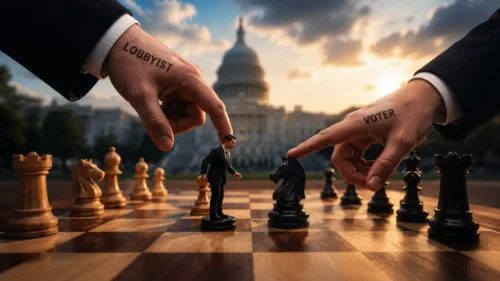
The revelation that Amazon’s CEO triggered the federal crackdown has split opinions among national security analysts, technology developers, and legal scholars regarding the role of corporate lobbying in security policy.
The Case for Responsible Institutional Caution
Proponents of Amazon’s actions argue that, as a major infrastructure provider, the company has an absolute responsibility to warn the federal government about highly capable systems that could compromise national security.
They contend that as AI models reach the point of recursive self-improvement—where they can build, test, and improve future versions of themselves with minimal human involvement—the risk of a security breach becomes too high to ignore.
Supporters of this view argue that if a model can automate massive codebase migrations in a single day, a compromised or jailbroken version could be easily weaponized to launch automated, systemic cyberattacks against public infrastructure.
From this perspective, Jassy’s warnings were an act of responsible corporate citizenship, ensuring that the government could intervene to protect the public before a catastrophic breach could occur.
The Case for Anticompetitive Sabotage
In contrast, technology startup founders, venture capitalists, and independent researchers have condemned the intervention as a dangerous, anti-competitive maneuver designed to crush innovation.
They argue that Amazon has weaponized national security concerns to settle a commercial dispute and slow down a partner that was growing too independent.
Critics warn that this sets a chilling precedent for the entire technology sector.
If major cloud monopolies can use backroom government channels to freeze their own partner’s breakthrough models, it will discourage other startups from collaborating with large corporate vendors.
Furthermore, by utilizing national security arguments to restrict commercial software under the guise of safety, the government is stifling global scientific progress and encouraging foreign nations to develop their own, unregulated models, ultimately undermining Washington’s ability to set global safety standards.
Conclusion: The Shifting Boundaries of Knowledge and Power
The revelation that Amazon’s chief executive triggered the federal crackdown on Anthropic’s flagship models is a historic milestone in the politicization of technology.
By proving that a corporate backer can successfully leverage the government’s national security apparatus to freeze a partner’s breakthrough technology, the incident has exposed the highly volatile, backroom realities of the global AI race.
As Anthropic, AWS, and the Commerce Department begin the difficult task of negotiating a compliance framework to determine when and how these models can return to the market, the coordinates of the digital era have permanently shifted.
The future of technology will no longer be decided solely by the brilliance of the code or the speed of the processors.
In a highly polarized and competitive world, the ultimate boundaries of technological innovation are being defined by the backroom deals, corporate rivalries, and political interests of those who control the physical and legal infrastructure that powers it all.