

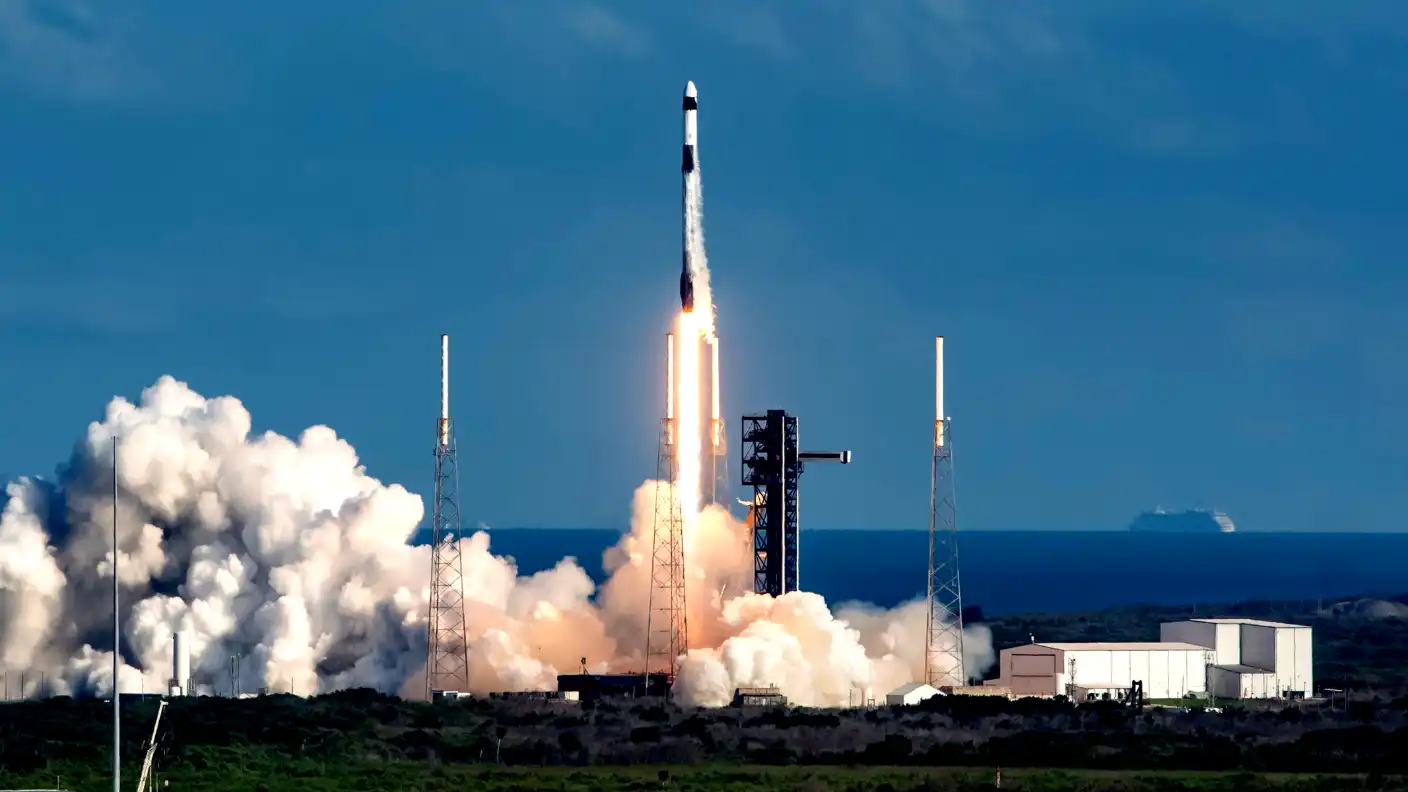
Australian retail investors are experiencing a massive wave of FOMO (fear of missing out) as Elon Musk’s rocket company, SpaceX, prepares to launch its historic initial public offering (IPO) on Wall Street. Since everyday Aussie investors have been locked out of direct pre-IPO shares for over a decade, they are now frantically flooding local brokerage platforms. They want to buy any proxy stock or exchange-traded fund (ETF) that holds even a tiny piece of the space giant before the official June listing.
The financial scale of this public offering has completely stunned the global markets. Underwriters led by Goldman Sachs and Morgan Stanley recently adjusted their target valuation for SpaceX to at least $1.8 trillion, with plans to raise to $75 billion. This massive target easily represents the largest initial public offering on record. Everyday Australian investors realize that this public debut is a once-in-a-generation financial event, and they do not want to watch from the sidelines. At the same time, institutional fund managers secure all the profits.
Interest in the massive investment grew even stronger after the company released its S-1 regulatory filing. The documents showed that SpaceX generated a massive $18.7 billion in total revenue in 2025, representing a healthy jump from the $14 billion it recorded in 2024. While the firm also reported a net loss of $4.94 billion last year due to heavy spending on expanding its artificial intelligence infrastructure, the revenue growth proves the immense power of its business model.
Because direct shares are hard to buy, Australian traders are using creative ways to get a piece of the action. Local brokerage platforms like Stake, SelfWealth, and CommSec reported a massive surge in trading volumes for a specialized US-listed trust called the Destiny Tech Joint Venture (DXYZ). This fund holds a direct, private portfolio of tech giants, with SpaceX sitting as its largest single holding. As the June IPO approaches, Australian buying has helped push DXYZ shares up by a massive 45 percent, as retail traders use the fund as a backdoor entry into the rocket company.
The investment frenzy has also spread directly to specialized exchange-traded funds. Australian investors are pouring millions of dollars into Cathie Wood’s famous ARK Space Exploration & Innovation ETF, which trades under the ticker symbol ARKX. Over the past month, local trade volume for this fund has jumped, driving the ARKX share price up by 8.5 percent. Retail investors are also buying up the Procure Space ETF, trading under the ticker symbol UFO, which surged 9.2 percent this week as traders look for any pocket of space-tech exposure.
This massive retail excitement highlights a larger trend in global finance. Financial institutions such as Morgan Stanley estimate that the global space market will grow from roughly $500 billion today to over $1 trillion annually by 2040. Investors have already poured over $1 billion into space-related funds globally this year alone, as they realize that space-based infrastructure is becoming vital for the future of telecommunications, national defense, and global internet networks.
At the center of this economic growth is Starlink, SpaceX’s highly successful satellite internet division. The company currently operates over 9,400 satellites in low Earth orbit, providing high-speed internet to millions of subscribers globally. This massive satellite network is also essential for Musk’s companies to compete against technology giants like Google and OpenAI in the artificial intelligence sector. This high-tech infrastructure makes the space sector a vital component of future global trade.
The geopolitical tensions surrounding global trade routes have also driven up interest in defense and aerospace technology in the Pacific region. Just this week, the Australian government announced a massive NZ$1.6 billion investment to upgrade its naval defense fleet and purchase high-tech military drones. This security panic has driven regional defense spending up by an extra 1.5% over the past two months. This heavy spending has created a highly lucrative environment for aerospace contractors, making space stocks even more attractive to local buyers.
Ultimately, the massive FOMO driving Australian investors proves that the commercial space economy has finally arrived. While some conservative financial advisers warn that the extreme hype could create a short-term bubble, everyday traders are determined to grab their piece of the pie before the final June deadline. If the SpaceX public offering successfully executes its performance-based strategy and stabilizes the market, it will secure a highly prosperous future for early investors and permanently change how the world views the final frontier.















