

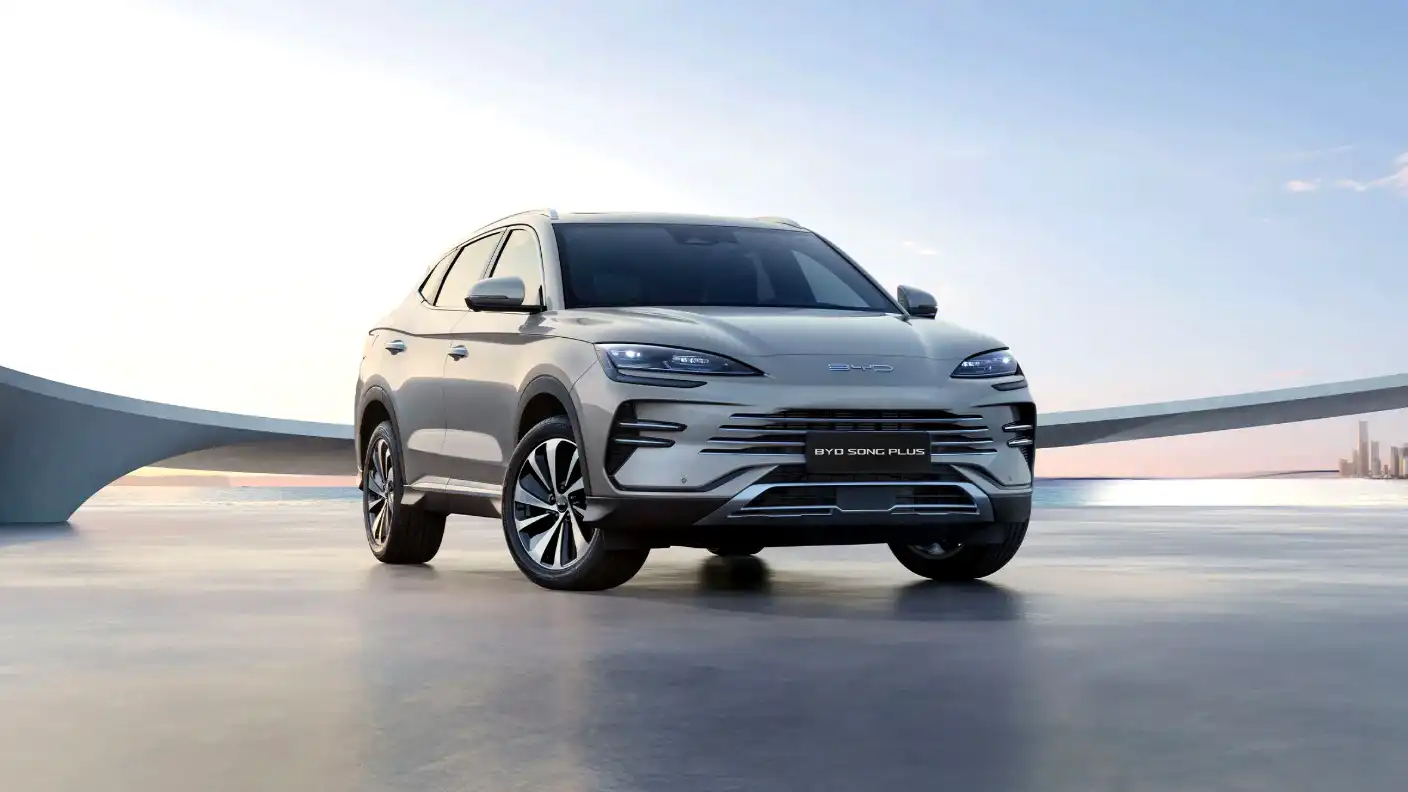
The world’s largest electric vehicle manufacturer has launched a major strategic initiative to establish a permanent, localized manufacturing footprint in Europe. On Wednesday, June 10, 2026, Chinese electric vehicle giant BYD announced it is seeking to acquire an existing, underutilized factory in Southern Europe for its second European plant. Speaking to reporters in Berlin during the highly anticipated European launch of the Dolphin G compact electric car, BYD Executive Vice President Stella Li confirmed that Spain sits high on the company’s shortlist of potential locations. This aggressive expansion strategy aims to help the brand bypass steep European Union tariffs on Chinese-made imports and secure a dominant position in the regional market.
The Chinese automotive giant is deliberately targeting existing European factories rather than building new facilities from the ground up. This approach represents a massive shift in corporate strategy, as Europe’s automotive industry has suffered for years from an industrial capacity surplus, particularly in Western Europe, where rising energy and labor costs have forced legacy carmakers to scale back operations. BYD is reportedly holding discussions with several European automakers, including Stellantis, to acquire underutilized production lines. Crucially, Stella Li emphasized that the company prefers to operate these acquired facilities independently. BYD intends to maintain full, autonomous control over its manufacturing processes, choosing to avoid complex joint-venture operations that would require seeking permission from foreign partners for day-to-day operational decisions.
While the search for a second European plant accelerates, BYD’s leadership has made it clear that starting production at its first European factory in Szeged, Hungary, remains the company’s absolute number-one priority. The massive, state-of-the-art facility in southern Hungary represents a key milestone for the brand, designed to reach an annual capacity of approximately 200,000 vehicles eventually. Workers are currently installing heavy manufacturing equipment inside the factory, which currently employs a diverse workforce of around 960 local specialists and international experts. The company expects to start full-scale series production at the Hungarian plant in the fourth quarter of this year, supplying the European market with locally built cars.
The upcoming launch of the Hungarian factory comes about a year later than the company’s original year-end 2025 target. Historically, BYD has moved at breakneck speed in building manufacturing bases in its domestic market, but the company has encountered unexpected regulatory and logistical delays in Europe. A similar delay has affected rival Chinese automaker Chery, which has repeatedly pushed back its own production timeline in Barcelona. Despite these initial setbacks, BYD successfully commenced trial production of passenger vehicles in Szeged earlier this year. The compact Dolphin Surf electric car, which aims to retail for under 20,000 euros in Europe, will be the first model to roll off the Hungarian assembly line.
To keep its financial and logistical resources focused on the European Union, BYD has decided to put its planned manufacturing base in Turkey on hold. In 2024, the automaker announced a massive $1 billion investment program to construct a major production plant in Turkey, targeting a launch by late 2026. However, Stella Li confirmed that the company has not yet begun construction on the Turkish factory and does not yet have a definite timeline for reviving the project. By pausing operations at the Turkey plant, the corporate leadership can fully focus its capital and engineering talent on ramping up the Hungary facility and acquiring a second factory within the EU.
Establishing local manufacturing hubs has become an existential necessity for Chinese automakers as the European Union adopts increasingly protectionist trade policies. In a bid to protect domestic legacy automakers, the European Commission recently hiked import tariffs on Chinese-made electric vehicles, raising the duty from a baseline of 10% up to an aggressive 25% or 27%, depending on the brand. This severe tariff barrier threatens to wipe out the price advantage of Chinese imports. By building its electric cars directly “in Europe, for Europe,” BYD can completely avoid these heavy import duties, ensuring that its highly competitive models remain affordable for European consumers.
BYD’s aggressive localized production strategy follows a period of spectacular sales growth across Europe. Last year, the brand’s European sales surged by an astronomical 270%, with consumers purchasing nearly 188,000 vehicles in search of affordable, high-quality alternatives to traditional internal combustion engine models. This powerful momentum has carried over into this year, with European sales rising by 144% year-to-date through May, exceeding 100,000 units. This rapid commercial expansion has helped the brand secure almost 1.5% of the highly competitive European electric vehicle market in record time, proving that European drivers have a strong appetite for the company’s battery technology.
As the global automotive market transitions toward clean energy, the decisions made by BYD’s leadership will have profound consequences for the European industrial landscape. By moving to take over underutilized factories in countries like Spain and Italy, the Chinese titan is not only solving its own tariff challenges but also throwing a financial lifeline to local communities facing factory closures. For European legacy carmakers, the arrival of Chinese manufacturing giants on their home turf represents a formidable competitive threat. Until local brands can develop more affordable electric models, BYD’s aggressive push to build its vehicles locally will likely cement its position as a dominant force in European mobility.