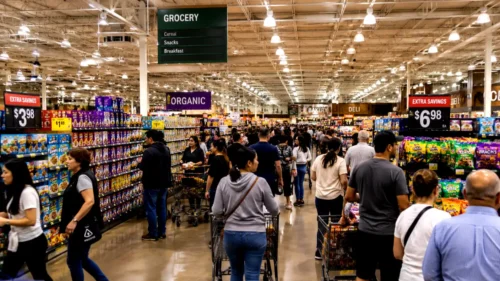


The high cost of groceries has become the single most painful economic issue for Canadian households. Over the past several years, families across the country have watched their weekly grocery bills climb, forcing many to alter their diets, turn to food banks in record numbers, or cut back on other essential household expenses. This widespread financial strain has placed immense political pressure on public officials to address the root causes of food inflation.
In response to this growing public frustration, the federal government recently unveiled a sweeping C$3.2 billion ($2.3 billion) National Food Security Strategy. Titling the multi-year plan “More Choice. More Control. More Canada,” officials aim to fundamentally overhaul how food is grown, processed, transported, and sold across the country.
By investing in new food terminals, expanding domestic greenhouse farming, funding independent food processors, and cracking down on anti-competitive grocery monopolies, Canada is attempting to rebuild its food sovereignty.
In a volatile global landscape defined by tariff threats, shipping delays, and geopolitical conflicts, this strategy represents a major effort to secure the nation’s food supply and protect consumers from international shocks.
The Scale of the Problem: Why Grocery Bills Are Sky-High
To understand the necessity of this massive policy intervention, one must examine the structural vulnerabilities that have left the Canadian food system exposed to persistent inflation.
The Price Surge and Import Reliance
Stark economic data support the financial pain inside Canadian supermarkets. Food prices in Canada have risen by approximately 31% since 2021, far outpacing general wage growth and leaving millions of low- and middle-income families struggling to afford fresh, nutritious items.
This domestic price surge is heavily exacerbated by Canada’s extreme reliance on foreign food imports. Despite possessing a vast territory of agricultural land, Canada relies on other countries for its essential daily food supplies:
- Fruits and Nuts: Canada imports approximately 88% of its total fresh fruit and nut supply from abroad.
- Vegetables: More than 72% of the fresh vegetables Canadians consume are grown outside the country.
- Global Ranking: While Canada ranks as the world’s ninth-largest exporter of agri-food products, it also ranks as the 11th-largest importer of agri-food products.
- The U.S. Monopoly: Half of all Canadian food imports come directly from a highly protectionist United States, leaving Canada’s food supply chain highly vulnerable to any sudden changes in American trade policy.
The Grip of the Grocery Oligopoly
Beyond reliance on imports, Canadian consumers face a highly concentrated domestic retail market that severely limits competition and drives up retail prices.
Just five massive supermarket chains—often referred to as the “Big Five”—control approximately 75% of the entire Canadian grocery market.
This market concentration makes it exceptionally difficult for small, independent grocers to survive. Because independent stores lack the massive buying power of corporate giants, they often must purchase supplies from their own competitors, who operate the dominant wholesale distribution networks.
Furthermore, the big chains frequently use restrictive property covenants in their retail leases to prevent rival grocery stores from opening nearby, effectively locking out competition and forcing local communities to shop exclusively at their outlets.
The Food Link Fund: Bypassing the Big Five
The central structural pillar of the new national food strategy is a massive investment designed to build a competitive, alternative wholesale network that bypasses the dominant retail chains.
Rebuilding Wholesale Infrastructure
The federal plan establishes the new Food Link Fund, committing C$1 billion over the next ten years to upgrade and expand Canada’s food infrastructure.
The primary target of this fund is the expansion of wholesale marketplaces, known as food terminals and regional food hubs.
A key focus of this initiative is the Ontario Food Terminal in Toronto. As the largest agricultural distribution center in Canada, this facility handles and distributes nearly two billion pounds of fresh fruits and vegetables annually to independent grocers, restaurants, and public institutions.
Under the new plan, the government will provide immediate funding to expand this terminal by the end of the year, allowing a larger volume of local produce to bypass corporate retail networks.
Creating Regional Food Hubs
To extend these benefits across the country, the national strategy sets ambitious targets to build new wholesale infrastructure in other provinces:
- New Terminals: The plan commits to constructing two new regional food terminals by the end of 2028.
- Regional Food Hubs: The government will fund the establishment or expansion of ten smaller regional food hubs across different provinces.
- Direct Access: These regional hubs will enable independent grocers, local farmers, and public institutions such as hospitals and schools to trade directly with one another at competitive wholesale prices, bypassing the expensive distribution networks controlled by the big retail chains.
Injecting Competition: Cracking Down on Anti-Competitive Practices
Alongside building physical infrastructure, the food security strategy includes a substantial regulatory effort to dismantle the corporate practices that keep grocery prices artificially high.
Boosting the Competition Bureau
The government is allocating nearly C$130 million to the Competition Bureau and the Competition Tribunal to investigate anti-competitive business practices in the grocery sector.
This funding represents a significant boost to the regulator’s investigative capacity, allowing officials to hire specialized analysts and legal experts to police corporate behavior.
The primary target of this regulatory crackdown is the widespread use of property controls.
Major grocery chains frequently write restrictive covenants into their commercial leases with shopping mall developers, legally prohibiting any competing food store, bakery, or independent market from renting space in the same plaza.
The Competition Bureau will use its new resources to investigate and dismantle these restrictive clauses, opening up premium retail spaces to independent competitors and expanding shopping options for consumers.
Mandatory Unit Price Labeling
To help consumers make more informed choices and combat the trend of “shrinkflation”—where food manufacturers reduce the size of a product while keeping the price the same—the strategy introduces a nationwide mandate for unit price labeling.
This regulation will require all major grocery retailers to display the cost of a product per unit of weight or volume (such as per 100 grams) on the shelf label.
This simple measure will allow shoppers to easily compare the value of different brands and packaging sizes, bringing greater transparency to the grocery aisle and preventing companies from hiding price increases behind smaller packaging.
Scaling Up Domestic Production: Greenhouses and Processing Funds
To reduce Canada’s reliance on imports and protect the country from global supply chain disruptions, the food strategy commits substantial capital to expand year-round domestic food production.
The C$750 Million Year-Round Farming Push
The federal plan earmarks C$750 million to expand the year-round production of fresh fruits and vegetables within Canada.
Because Canada’s cold climate historically limits the outdoor growing season, this funding will focus on subsidizing the construction and expansion of advanced greenhouses, vertical farms, and hydroponic growing facilities.
This clean-tech farming initiative is designed to be deployed across all provinces, with a specific focus on supporting year-round production in rural, remote, and northern communities.
By utilizing indoor farming technologies that operate independently of local weather conditions, these communities can dramatically reduce their reliance on expensive, intercontinental trucking routes, securing a steady supply of fresh, locally grown produce throughout the winter months.
Financing Domestic Processing Capacity
The government is also launching several targeted funding programs to rebuild Canada’s domestic food processing sector, which has steadily lost ground to foreign competitors over the past two decades.
First, the strategy creates a C$1 billion Agri-food Project Finance Fund administered through Farm Credit Canada. This fund will provide competitive loans and capital financing to help local companies construct and expand large-scale food processing plants in Canada, ensuring that Canadian-grown agricultural products are processed domestically rather than being shipped to the U.S. for packaging.
Second, a C$150 million Food Security Fund will provide grants and financial assistance to help small and medium-sized agri-food businesses upgrade their manufacturing equipment and adopt automated technologies to improve productivity.
Third, a C$100 million Collaborative Food Innovation Fund will support research and development partnerships between agricultural universities, local farmers, and food processors to develop new, sustainable food packaging and processing techniques.
Regulatory Modernization: Slashing Red Tape
To ensure that these capital investments translate into rapid project development, the strategy commits to a major overhaul of Canada’s agricultural regulatory environment.
The plan promises to speed up federal approvals for new seeds, livestock feed, eco-friendly fertilizers, and veterinary products, reducing the bureaucratic backlogs that have historically slowed down innovation in the Canadian agricultural sector.
By cutting this red tape, the government aims to help local producers bring new technologies and crop varieties to market faster, improving their competitiveness against international rivals.
Views: Will the Strategy Deliver, or Is It Too Late?
The publication of the national food security strategy has triggered a fierce debate among political strategists, consumer advocates, and agricultural economists regarding the plan’s long-term effectiveness.
The Sovereign Argument: Protection Against Global Shocks
Supporters of the strategy, including Prime Minister Mark Carney, argue that the C$3.2 billion investment is a necessary measure to protect national sovereignty in a rapidly changing world.
Carney defended the plan, stating that a country that cannot feed itself or fuel itself is inherently vulnerable to global shocks, supply chain disruptions, and sudden foreign tariffs.
Proponents of this viewpoint argue that the global food supply chain has become increasingly unstable due to Middle Eastern conflicts, rising transportation costs, and protectionist trade trends in the United States.
By investing in domestic processing, wholesale food terminals, and vertical greenhouse farming, Canada can insulate its domestic food market from these international crises, ensuring that Canadian families have access to stable, affordable food regardless of geopolitical turmoil.
The Skeptical Argument: The Reality of Oligopoly Power
Conversely, consumer advocacy groups and independent retail organizations express concern that a C$3.2 billion strategy spread over ten years is too small to break the deeply entrenched power of the grocery oligopoly.
They point out that major retail chains generate tens of billions of dollars in annual revenue, giving them the financial resources to adapt to or bypass new competition policies easily.
Critics also worry that without direct, short-term price controls or stronger windfall tax penalties on corporate grocery profits, the major chains will simply find new ways to maintain their high margins.
Some independent grocers argue that while funding for regional food hubs is a positive step, building new physical infrastructure will take years, meaning that consumers will not see any meaningful reduction in their grocery bills in the near term.
They urge the government to supplement the long-term strategy with immediate, direct financial support for low-income families, such as expanding the Canada Child Benefit, to help them cope with the crisis.
Conclusion: Reclaiming Control of the Dinner Plate
The federal government’s C$3.2 billion national food security strategy represents a historic and necessary attempt to re-engineer Canada’s agricultural and retail landscape.
By driving capital into wholesale infrastructure, subsidizing year-round greenhouse farming, and empowering the Competition Bureau to dismantle corporate monopolies, the plan addresses the structural vulnerabilities that have left Canadian consumers exposed to high food inflation.
As the program rolls out across the country, the plan’s ultimate success will not be decided by the announcements in Toronto, but by whether the average Canadian can walk down a grocery aisle and finally feel that their food supply is secure and affordable.
In an increasingly uncertain global environment, reclaiming control of the food system is no longer just an economic goal—it has become a vital national security priority to ensure that the nation can feed itself, protect its sovereignty, and secure its future from the kitchen table up.