

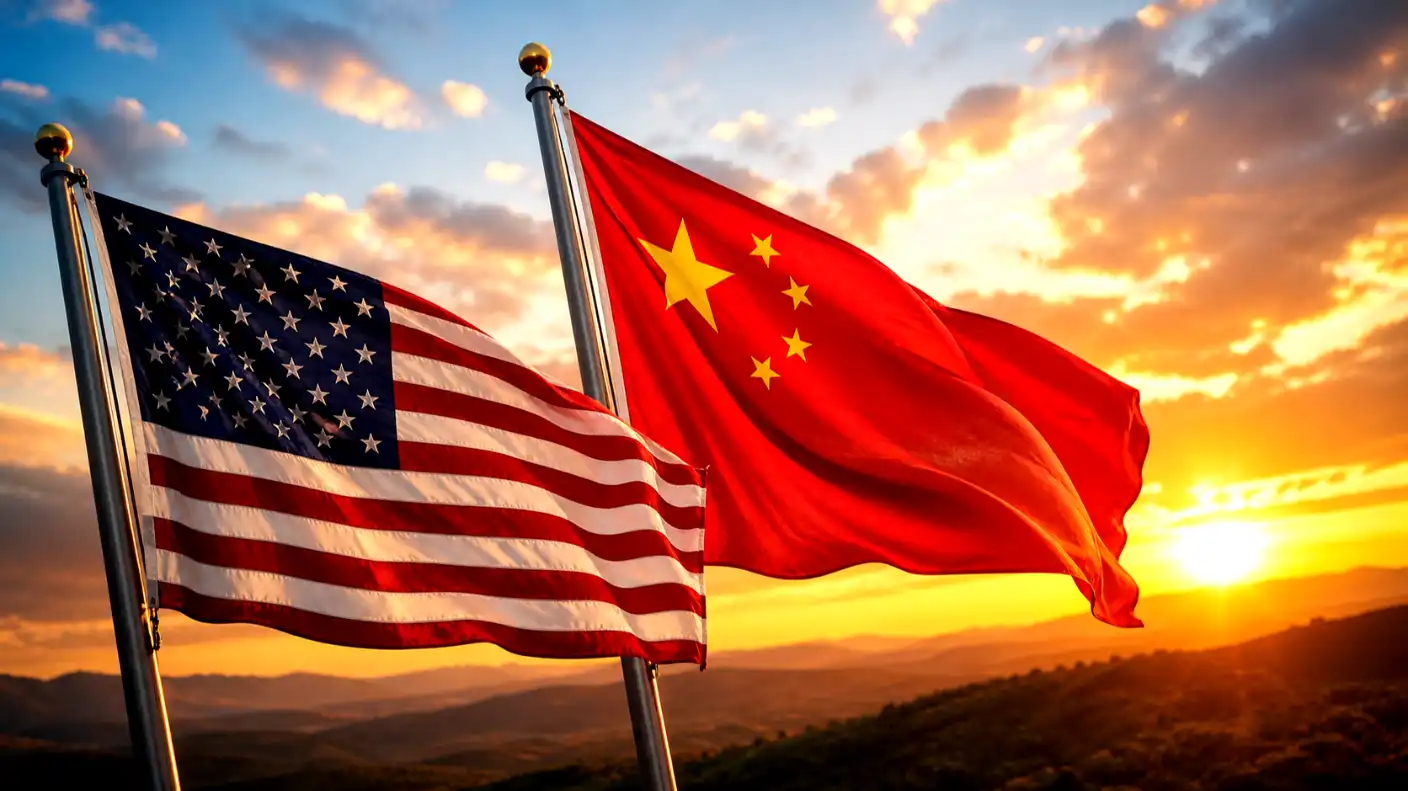
The trade war between the world’s two largest economies has escalated once again, threatening to damage the global technology supply chain permanently. On Saturday, June 13, 2026, the Chinese government expressed strong dissatisfaction and firm opposition after the United States Department of Defense added several of China’s most prominent technology and manufacturing firms to its military blacklist. Beijing accused Washington of overstretching the concept of national security, abusing state power, and using discriminatory regulatory lists to suppress Chinese enterprises unjustifiably. The high-profile designation has triggered immediate warnings of robust, retaliatory trade measures from Beijing, casting a dark shadow over recent efforts to stabilize bilateral relations.
The latest update to the U.S. military blacklist under Section 1260H of the National Defense Authorization Act marks a substantial expansion of Washington’s strategic trade restrictions. The Department of Defense added several world-renowned Chinese tech giants to the roster, including e-commerce pioneer Alibaba, internet search giant Baidu, and electric vehicle makers BYD and NIO. Shortly afterward, the U.S. government expanded the list further, adding the world’s largest solar panel manufacturers, including Trina Solar and JA Solar Technology. This expansive update has increased the total number of blacklisted Chinese entities on the roster to 188, up significantly from 134 in the previous official revision.
While the Section 1260H designation does not impose immediate export controls or completely prohibit these firms from doing business with American commercial buyers, it carries some long-term consequences. Under federal guidelines, starting June 30, 2026, the U.S. military and the Pentagon will face a strict, legally binding ban on directly procuring any products or services from the designated companies. Although most of these commercial tech firms do not sell directly to the U.S. military, analysts warn that the blacklist serves as a powerful precursor to more punitive financial measures. The newly designated companies represent billions of dollars in active global trade, with their combined assets accounting for nearly 1.5% of the global tech sector’s total market capitalization.
The sudden expansion of the blacklist represents a massive diplomatic setback, coming just weeks after a highly anticipated bilateral summit aimed at stabilizing relations. In mid-May, U.S. President Donald Trump traveled to Beijing to meet with Chinese President Xi Jinping, where both leaders reached a consensus to build constructive strategic stability and protect bilateral economic relations. China’s Ministry of Commerce pointed out that the Pentagon’s unilateral blacklist completely disregards the consensus reached by the two heads of state, warning that Washington is actively undermining the overall interests of bilateral economic and trade relations to score short-term political points.
State-run news agencies and nationalist commentators in Beijing have reacted to the blacklist with a mixture of intense anger and defiant pride. Chinese trade experts argued that the U.S. blacklist has become so broad and arbitrary that it now resembles a “roll of honor” for China’s advanced technology sector and new productive forces. They noted that companies specializing in consumer e-commerce, green energy vehicles, and solar panels have absolutely no connection to military production. By labeling these highly competitive commercial firms as national security threats, Washington is exposing its own anxiety over China’s rapid rise in high-end manufacturing.
The escalating trade restrictions are threatening to cause massive disruptions to global industrial supply chains, which are already struggling under the weight of geopolitical crises in the Middle East. The Chinese government emphasized that the U.S. move seriously disrupts the international economic and trade order, making it difficult for multinational companies to source critical components. Because China dominates the global manufacture of solar panels, electric vehicle batteries, and advanced electronics, shutting these firms out of Western supply chains will drive up production costs, delay clean energy transitions, and fuel global inflation.
Beijing has issued a blunt warning to the United States, demanding that Washington immediately stop its wrong practices and return to a stable, rule-based trading system. A spokesperson for China’s Ministry of Commerce warned that if the U.S. refuses to provide Chinese firms with fair, just, and non-discriminatory treatment, Beijing will inevitably retaliate with its own powerful countermeasures. Chinese trade authorities are already drawing up plans to restrict key exports of critical raw materials, such as rare earth elements and advanced battery components, which would instantly paralyze Western high-tech manufacturers and escalate the global trade war.
As the June 30 deadline approaches, the future of the U.S.-China commercial relationship remains highly volatile. The rapid expansion of the U.S. military blacklist proves that national security concerns will continue to override traditional trade commitments, locking both nations in a prolonged, costly economic standoff. For global businesses, the message is clear: they must prepare for a deeply divided market in which they must constantly navigate the regulatory crossfire between Washington and Beijing. Until both superpowers can find a way to establish genuine trust and respect fair market competition, this volatile conflict will continue to threaten global economic stability.















