

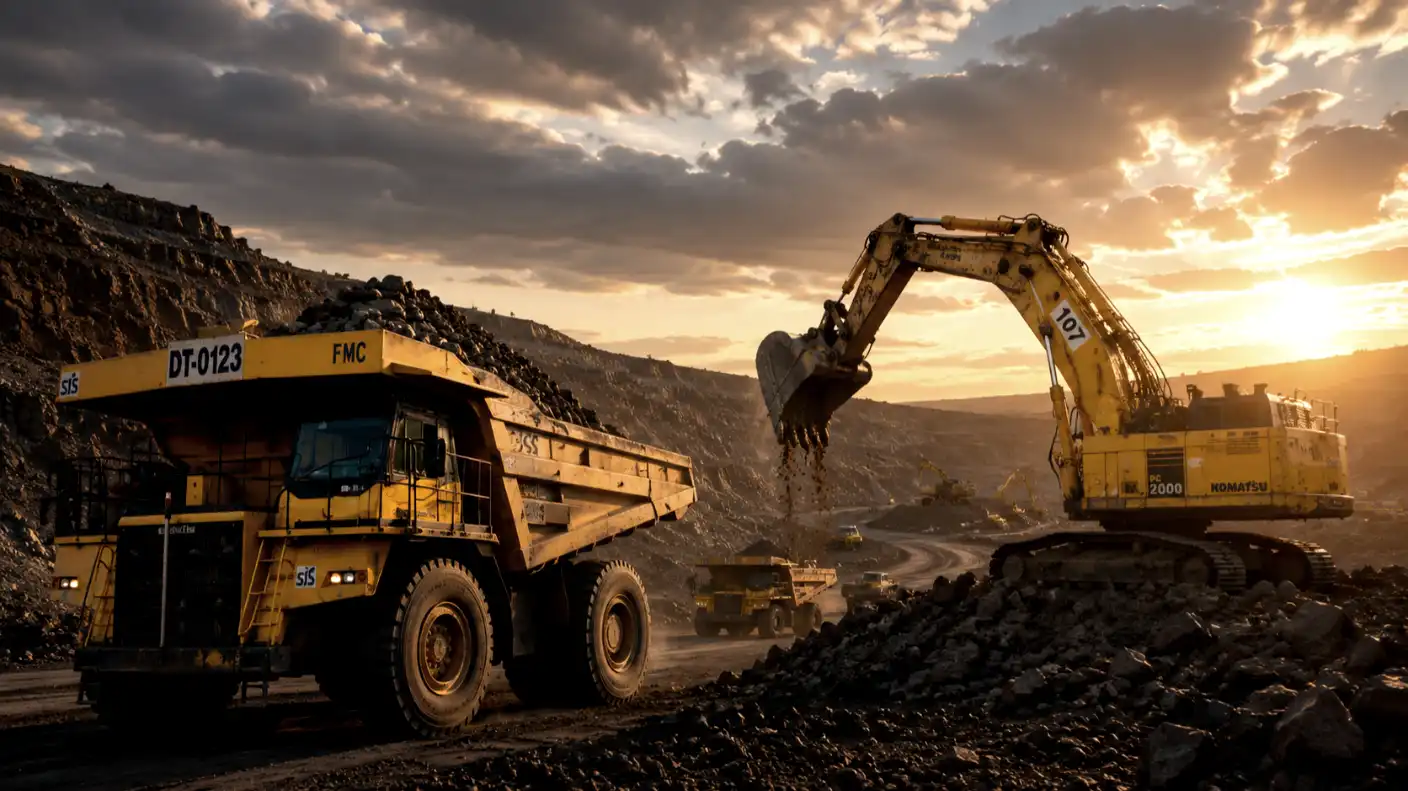
The catastrophic gas explosion at the Liushenyu coal mine in northern Shanxi province has killed at least 82 people. While Chinese authorities initially reported a death toll of 90, they revised the number down due to chaotic initial counting by the company after the blast. Even with the lower number, the tragedy stands as China’s deadliest mining accident since 2009. This horrific event is now testing the limits of President Xi Jinping’s aggressive push for national energy security.
For years, the Chinese government has pushed domestic coal production to record-breaking levels. Last year alone, the country produced a massive 4.83 billion metric tons of coal to fuel its heavy industries and shield its economy from global shocks. This world-beating coal output successfully protected the country from the worst of the energy crisis triggered by the ongoing US-Israeli war with Iran. However, this latest disaster raises uncomfortable questions about the human cost of forcing mines to operate at maximum capacity.
The timing of the disaster could not be worse for China’s energy market. The accident occurs just as the country enters the peak summer season, when air-conditioning demand sends electricity consumption soaring. Furthermore, major supply disruptions from Indonesia—a key coal exporter to China—have already left the domestic market incredibly tight. The widespread safety audits and mine shutdowns that always follow such a major disaster will likely further restrict supply, driving up energy costs.
The privately owned Liushenyu mine is located in the coal-rich Shanxi province and has an annual production capacity of exactly 1.2 million metric tons. Unlike the massive state-owned mines that feed power plants, Liushenyu produces mostly coking coal, which is a vital raw material for local steelmakers. While the mid-sized outfit accounts for only a tiny sliver of Shanxi’s massive annual output of 1.3 billion tons, Chinese regulations still classify the explosion as an extremely serious accident. With global coking coal prices surging by an additional 1.5% this week amid market panic, the incident has sent shockwaves through the local industrial sector.
The blast occurred late on Friday, May 22, 2026, when 247 miners were working underground. The sudden gas explosion trapped dozens of workers deep inside the mine shafts. In the immediate chaos, the operating firm, Shanxi Tongzhou Coal & Coke Group, completely lost track of its employees, leading to the inaccurate initial death toll. County officials later confirmed that, besides the 82 dead, 128 injured workers are currently hospitalized, while exactly 35 miners managed to escape completely unharmed. Two workers remain missing.
The government reacted swiftly to the tragedy, arresting several executives from the Tongzhou Group and shutting down all 4 coal mines owned by the conglomerate. President Xi Jinping ordered an all-out emergency response, demanding that local authorities verify the exact count of missing workers and prevent secondary casualties. State media has called on officials to reverse the dangerous tendency of prioritizing industrial development and energy output over basic human safety.
The disaster highlights a persistent, unresolved conflict at the heart of China’s economic policy. While the central government demands record-breaking coal production to secure national power supplies, national mine safety regulators are simultaneously cracking down on over-stressed, aging facilities. This double pressure leaves mine managers in a virtually impossible position: they must meet aggressive output targets while keeping their safety records completely clean.
Even after investing billions of dollars into wind and solar projects, coal remains the absolute backbone of China’s energy mix. Coal power plants still generate roughly 60% of the nation’s electricity. With global energy shipping through the Strait of Hormuz blocked, China cannot afford to slow down its coal production. As Vice Premier Zhang Guoqing travels to Shanxi to oversee the aftermath, Beijing faces a difficult balancing act: maintaining the energy supply that keeps the country running, without sacrificing more lives on the altar of production.















