

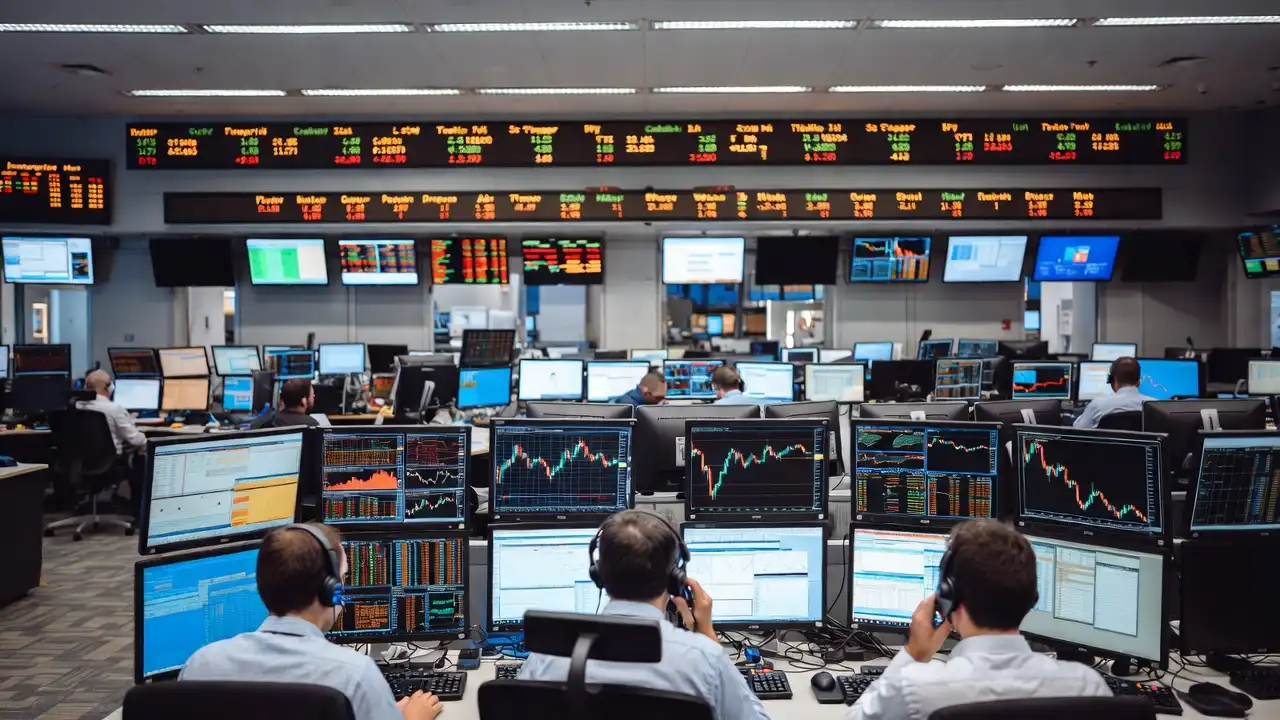
Mainland Chinese investors are pulling capital out of Hong Kong stocks at a record pace, dealing a severe blow to the city’s financial markets. According to the latest market data released on Wednesday, June 3, 2026, Chinese retail and institutional investors have steadily liquidated their holdings in Hong Kong-listed equities. This sudden capital flight reflects a profound shift in investment sentiment, as onshore traders grow increasingly impatient with Hong Kong’s lackluster performance. At the same time, a spectacular rally in mainland-listed technology and semiconductor shares is acting as a powerful magnet, wooing massive sums of capital back onshore to chase immediate gains in the rapidly expanding artificial intelligence sector.
The physical scale of this capital flight is unprecedented, setting off major alarm bells across Asian financial hubs. Onshore exchange-traded funds (ETFs) tracking Hong Kong equities recorded a staggering 25 billion yuan ($3.7 billion) in net capital outflows last week alone. Bloomberg-compiled data show that this massive redemption is the largest weekly capital exit from these funds on record. This dramatic outflow marks a complete, sudden reversal from the steady, multi-billion-dollar inflows that supported Hong Kong’s stock market throughout most of last year, illustrating how quickly retail momentum can turn in the face of shifting technological trends.
At the heart of this mass exodus is a severe, months-long period of market underperformance that has thoroughly exhausted investor patience. For four consecutive months, Hong Kong stocks have consistently lagged behind their mainland-listed peers, making the city’s market look increasingly unattractive. While global investors originally hoped that Hong Kong’s cheap valuations would spark a sustainable, long-term bull market, the reality has been far more disappointing. As the Hang Seng Index stalled and failed to clear key resistance levels, mainland investors chose to cut their losses, preferring to deploy their cash in more active and lucrative markets where prices are moving upward.
The weekly ETF redemptions are part of a broader, highly coordinated retreat that began earlier in the spring. In May 2026, mainland Chinese investors turned net sellers of Hong Kong equities through the Stock Connect mutual market access program for the first time in nearly three years. Data compiled by Bloomberg shows that onshore traders sold a net HK$3.6 billion (approximately $459 million) of Hong Kong shares last month. Although this monthly outflow is relatively small compared with the average monthly inflows of nearly HK100 billion recorded over the past two years, the shift represents a historic break in a years-long trend in which mainland capital served as the primary pillar of support for Hong Kong’s equity market.
While Hong Kong’s blue-chip stocks dither, a powerful technology rally on the mainland is capturing the attention of the entire domestic trading community. Since the start of April, China’s tech-heavy STAR 50 Index has surged by nearly 40%, fueled by massive state support and intense investor enthusiasm for artificial intelligence hardware and software. Onshore semiconductor developers, software engineers, and hardware manufacturers have emerged as the most immediate and visible beneficiaries of this rapid technological expansion. Faced with the choice between a stagnating Hang Seng Index and a booming onshore technology sector, mainland investors are rapidly shifting their assets to ride the AI wave.
This sudden redirection of funds highlights a fundamental transformation in how mainland Chinese investors view the Hong Kong market. For much of the past decade, institutional asset managers and retail traders have treated Hong Kong as an essential venue for long-term strategic asset allocation, accumulating massive, permanent stakes in global Chinese internet giants such as Tencent Holdings. However, that long-term investment thesis has largely broken down. Today, investors increasingly view the Hong Kong market as a highly tactical, short-term trading venue. Capital flows have become increasingly volatile, with investors using highly liquid exchange-traded funds to execute rapid, short-term sector rotations rather than building long-term equity positions.
This lack of investment support is compounding a series of domestic economic challenges facing Hong Kong’s financial district. The ongoing global trade friction, rising interest rates, and a sluggish local property market have already strained business confidence across the city. Historically, a booming stock market provided a vital wealth effect that supported local retail spending and high-end services. However, with mainland capital fleeing back to Shanghai and Shenzhen, the Hong Kong Exchanges and Clearing building has seen a notable drop in average daily trading volumes. This reduction in liquidity threatens to prolong the city’s economic stagnation, making it highly difficult for local companies to raise new capital.
The shift back onshore also coincides with a series of new, highly restrictive capital control policies implemented by Beijing. China’s central government recently extended its strict outbound investment curbs to individual retail investors, aiming to keep national savings within the domestic banking system to support local industrial upgrading. By making it more difficult for ordinary citizens to move money offshore through traditional channels, these regulations have naturally funneled domestic capital toward mainland-listed assets. For the massive pool of Chinese household savings, which currently sits at over $18 trillion in deposits, onshore AI and semiconductor stocks represent the only accessible high-growth investment outlet.
As the summer trading season progresses, the future of Hong Kong’s stock market remains deeply uncertain. While some contrarian value investors argue that Hong Kong stocks now screen as incredibly cheap compared to international peers, cheap valuations alone are rarely enough to spark a market turnaround without a fresh catalyst. Unless Beijing implements a massive, coordinated fiscal stimulus package or the onshore AI boom suddenly loses its momentum, Hong Kong will likely struggle to attract the heavy capital inflows it needs to stage a sustainable recovery. For now, the global financial community must accept a new reality: the days of easy mainland capital supporting Hong Kong’s market have faded, as the allure of artificial intelligence keeps Chinese money firmly at home.















