

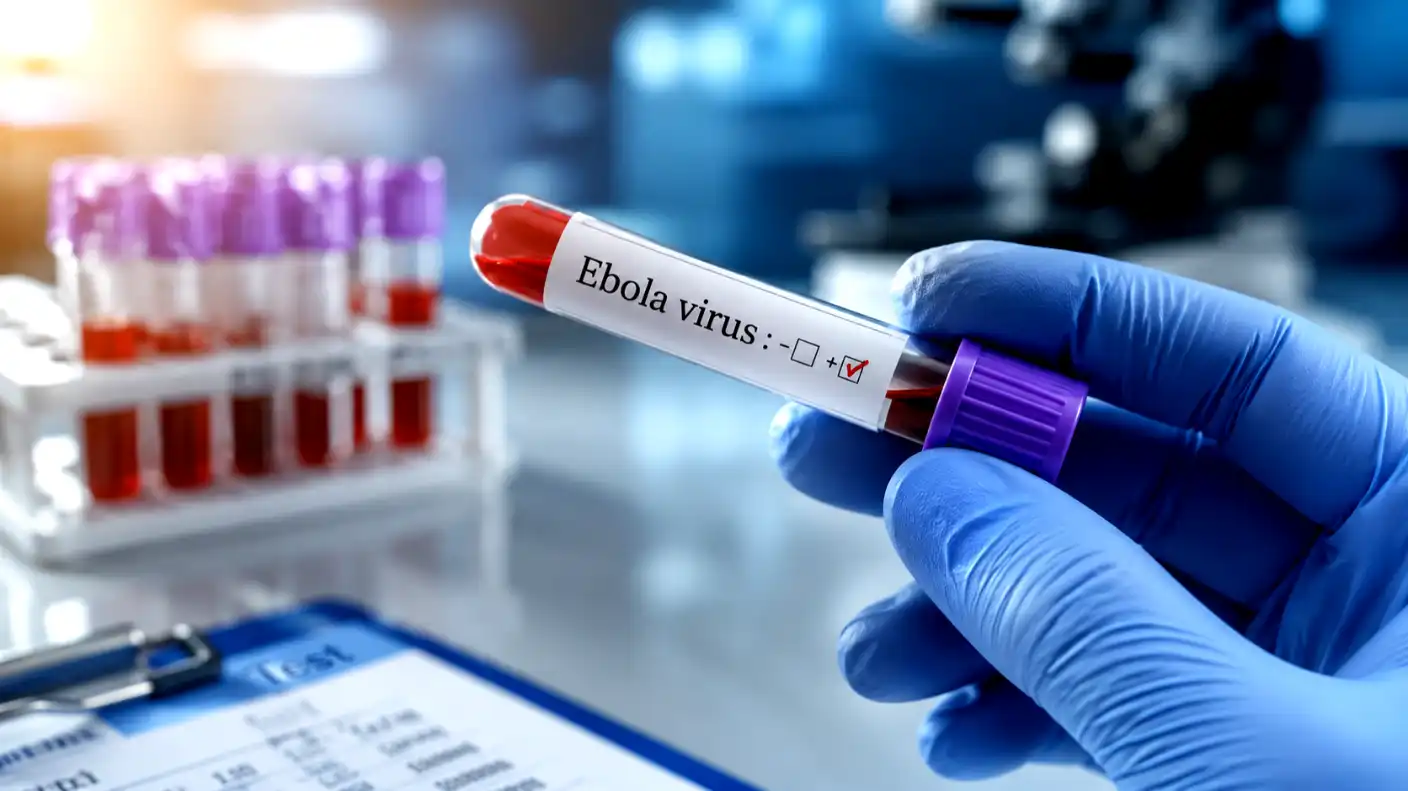
The international response to the rapidly growing Ebola epidemic in Central Africa has hit a dangerous operational bottleneck, leaving health workers unable to track the true spread of the virus. On Wednesday, June 10, 2026, the World Health Organization (WHO) revealed that three major diagnostic laboratories in the Democratic Republic of Congo (DRC) have completely run out of critical testing supplies. The severe shortage has forced technicians to suspend all diagnostic operations, leaving hundreds of high-risk blood samples from suspected patients waiting in backlogs. This critical breakdown in the medical pipeline occurs as the highly lethal and rare Bundibugyo species of the virus continues to spread rapidly through densely populated eastern provinces.
According to the latest situation report from the international health agency, dated June 7 and released on Tuesday night, the depletion of supplies has paralyzed the network of decentralized labs that responders built to accelerate the response. The affected facilities include laboratories in Bukavu and Lwiro in South Kivu province, as well as a major testing facility in Goma, the capital of North Kivu. All three laboratories have completely exhausted their stock of reagents—the essential chemical substances that technicians require to run molecular polymerase chain reaction (PCR) tests. The labs cannot resume diagnostic operations until fresh shipments of these specialized chemical agents arrive from international manufacturing hubs.
The halt in local testing comes as the epidemic reaches increasingly alarming proportions. On Tuesday evening, June 9, 2026, the Congolese Ministry of Health announced that the number of confirmed Ebola cases in the country had climbed to 598. The official death toll has also surged, with authorities confirming 115 fatalities among the infected. This means that the current outbreak carries a case-fatality rate of nearly 19.2% among confirmed patients, which stands in stark contrast to the 1.5% average fatality rate of typical regional seasonal viral infections. Meanwhile, neighboring Uganda has reported 19 confirmed cases and two deaths, primarily among individuals who crossed the border from Congo before authorities enforced strict quarantine rules.
A primary reason behind the severe diagnostic crisis is the specific pathogen driving the current epidemic. The outbreak involves the Bundibugyo ebolavirus, a rare and highly dangerous variant that behaves differently from the more common Zaire ebolavirus strain. Early in the outbreak, which was officially declared on May 15, 2026, existing diagnostic tests failed to identify the virus because developers had designed them specifically to detect the Zaire strain. Although experts at the National Institute of Biomedical Research in Kinshasa eventually developed and deployed specialized tests, these custom kits are far harder to manufacture and distribute under emergency conditions, leading to these frequent supply shortages.
Compounding the testing crisis is the complete absence of ready-made medical defenses against this specific strain of the virus. Unlike the Zaire strain, which doctors can prevent or treat using established vaccines like Ervebo and existing monoclonal antibodies, the Bundibugyo ebolavirus has no approved vaccines or licensed treatments. This clinical gap forces emergency medical teams to rely entirely on basic public health interventions, such as isolating patients, tracing contacts, and conducting safe, dignified burials. The lack of ready medical tools has placed an enormous burden on local public health systems, which are already struggling under the weight of a prolonged humanitarian crisis.
The emergency response efforts face extreme challenges on the ground due to ongoing military conflict and deep public distrust in eastern Congo. The worst-hit provinces of Ituri, North Kivu, and South Kivu have suffered from decades of armed violence, which severely restricts the movement of medical teams and slows down the delivery of essential supplies. In many rural communities, misinformation and fear have sparked intense resistance to health interventions. Angry crowds have repeatedly attacked burial teams and targeted isolation clinics, forcing more than 25 highly infectious patients to flee facilities. Because of this persistent insecurity, health workers struggle to complete basic epidemiologic investigations.
This natural disaster will undoubtedly place an immense economic burden on the southern and eastern regions of the DRC, which are already struggling to rebuild their public infrastructure. Economists from regional development banks estimate that the long-term cost of clearing debris, repairing damaged highways, and rebuilding schools and hospitals could easily exceed $1 billion due to rising reconstruction costs. The sudden disruption also threatens the local agricultural sector, which produces vital export crops for the national economy. To mitigate the economic shock, the central government is preparing to tap into national emergency calamity funds to provide immediate relief and cash assistance to displaced families.
The high risk of international transmission has forced neighboring countries to take drastic precautions. The WHO declared the outbreak a Public Health Emergency of International Concern shortly after its confirmation to mobilize global resources. To organize the global defense, the Africa Centers for Disease Control and Prevention and the WHO launched a joint six-month emergency response plan on June 5. This massive operational initiative aims to raise $518 million in emergency response funds to support containment operations, purchase personal protective equipment, and deploy specialized medical staff to the worst-hit provinces between June and November 2026.
As the countdown to contain the virus continues, health leaders agree that local community trust and reliable testing remain the most powerful weapons against the disease. When communities refuse to report active cases or bypass safe burial rules out of fear of quarantine, the virus spreads unchecked, regardless of available resources. For the joint response plan to succeed, international agencies must work closely with local leaders to ensure public health measures respect local traditions while strictly enforcing sanitation protocols. Until the government can secure its supply chains, resolve laboratory shortages, and restore trust, the region will likely remain trapped in this dangerous cycle of containment and contagion.















