

A sudden shift in momentum is taking place inside the headquarters of the European Central Bank. For months, businesses and consumers across the eurozone were hoping that a period of high borrowing costs was finally drawing to a close. However, a powerful intervention from one of the central bank’s most influential policymakers has shattered those expectations, sending a clear message to financial markets that the battle against inflation is far from over.
In an interview with a prominent German weekly newspaper, European Central Bank Executive Board member Isabel Schnabel declared that further interest rate increases will likely be necessary to tame stubborn price pressures and steer inflation back down to the target level of 2.0%.
The remarks represent a significant hawkish turn in the central bank’s communications. Schnabel warned that despite recent policy actions, the eurozone’s current interest rates are not yet restrictive enough to cool down the economy. She also pushed back against the idea that a potential geopolitical easing in the Middle East would allow policymakers to lower their guard, asserting that the underlying inflationary damage to global supply chains has already been done.
Why Current Borrowing Costs Are Not Restrictive Yet
To many households and businesses struggling with high mortgage rates and expensive corporate credit, the idea that interest rates are not high enough may seem surprising. However, from a central banking perspective, the current policy stance is still failing to put enough downward pressure on economic demand.
In June, the central bank’s Governing Council decided to raise its three key interest rates by 25 basis points, pushing the benchmark deposit rate up to 2.25%. While this move was designed to signal a commitment to price stability, Schnabel argued that this level is still not doing enough to actively restrict economic activity.
For monetary policy to be considered truly restrictive, interest rates must be high enough to discourage borrowing, slow down consumer spending, and curb corporate expansion. When these activities slow down, price increases naturally moderate as businesses lose the power to raise prices.
According to Schnabel, the eurozone economy is currently showing relative resilience. This resilience, while positive for employment, means that overall demand remains too robust to pull inflation down to the desired 2.0% level. Because the domestic economy has not cooled sufficiently, the central bank has the necessary economic breathing room to implement further rate hikes without the fear of triggering an immediate economic collapse.
The Geopolitical Catalyst: Energy Supply Shocks and the Strait of Hormuz
The primary force driving this renewed inflationary pressure is a severe geopolitical crisis in the Middle East. The ongoing war in Iran has had a devastating impact on global commodity markets, most notably through the prolonged closure of the Strait of Hormuz.
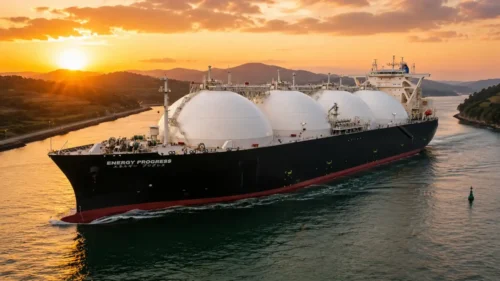
This vital maritime shipping lane, which handles a significant portion of the world’s daily oil and liquefied natural gas shipments, has been closed for four consecutive months. The blockade has triggered a massive energy supply shock, forcing European energy buyers to search for alternative, much more expensive fuel sources.
Initially, central bank officials had hoped that the conflict would be resolved quickly and that energy prices would rapidly return to normal. However, that baseline scenario has proved overly optimistic. The persistence of the energy shock has fundamentally altered inflation dynamics across the eurozone.
The May Inflation Surge
The direct consequences of this energy blockade became clear in the inflation data for May. Headline inflation in the euro area accelerated to 3.2% year-on-year, moving significantly further away from the central bank’s medium-term target of 2.0%.
Even more concerning for policymakers was the behavior of core inflation, which strips out volatile energy and food prices. Core inflation rose to 2.5% in May, up from 2.2% in April. At the same time, services sector inflation—which is closely tied to wage growth and domestic demand—climbed to 3.5%.
These numbers indicate that the initial energy price shock is no longer confined to electricity bills and gasoline stations. Instead, higher fuel and transport costs are actively passed through to other areas of the economy, including restaurant meals, hair salon appointments, and transport services. When inflation spreads so deeply into the service sector, it becomes incredibly sticky and difficult to eradicate.
The Risk of De-Anchoring Expectations
For central bankers, the ultimate nightmare is a phenomenon known as the de-anchoring of inflation expectations. This occurs when consumers and businesses lose faith in the central bank’s ability to control prices.
If households expect inflation to remain at 3.0% or 4.0% for the next several years, workers will demand much higher wages to protect their purchasing power. To fund these higher labor costs, businesses will raise the prices of their final products, creating a self-reinforcing wage-price spiral.
By stating that “looking through” the energy shock is no longer an option, Schnabel made it clear that the central bank must act aggressively. Even if a diplomatic ceasefire is reached in the Middle East tomorrow, the disruption to global supply chains and the rise in household inflation expectations have already occurred. Policymakers must use higher interest rates as a tool to anchor these expectations before a destructive wage-price spiral takes hold.
Inside the June Rate Hike: A Pre-Emptive Insurance Move
The decision to raise interest rates by 25 basis points on June 11 was not an easy one for the Governing Council. It represented a major turning point, as some officials had previously dropped hints that a rate cut might be on the horizon.
Ultimately, the hawkish faction of the board, led by Schnabel, managed to convince their colleagues that a preemptive rate hike was necessary as an insurance policy. With core inflation rising and geopolitical risks escalating, the council needed to show the public that its commitment to price stability was absolute.
Upward Revisions to Inflation Forecasts
Alongside the June rate decision, the central bank released its updated quarterly macroeconomic projections. These new forecasts revealed a significant worsening of the medium-term price outlook compared to the estimates published in March.
The baseline staff projections now foresee headline inflation averaging 3.0% in 2026, before slowly declining to 2.3% in 2027 and finally hitting the 2.0% target in 2028. For core inflation, the projections are equally stubborn, forecasting an average of 2.5% in both 2026 and 2027, and 2.2% in 2028.
These figures show that even with the June rate hike and another projected increase later in the year, inflation is expected to remain above the central bank’s target for the next two years. For hawkish policymakers, this is an unacceptable timeline that requires a much more forceful and persistent monetary response.
Downward Revisions to Economic Growth
While inflation forecasts were revised upward, economic growth projections for the eurozone were cut significantly. The updated baseline now sees economic growth at an average of just 0.8% in 2026, before picking up to 1.2% in 2027 and 1.5% in 2028.
This downward revision reflects the heavy toll that the Middle East conflict is taking on consumer confidence, real incomes, and business investment. European households are facing a squeeze on their purchasing power due to higher energy bills, while businesses are postponing capital expenditures due to the highly uncertain geopolitical outlook.
This combination of rising inflation and slowing growth has put the central bank in an incredibly difficult position, forcing it to navigate a classic stagflationary dilemma.
A Deeply Divided Governing Council: Hawks vs. Doves
The prospect of further interest rate hikes has exposed deep divisions within the 26-member Governing Council, as policymakers clash over the correct path forward.
The Hawkish Coalition
Schnabel is far from alone in her belief that the central bank must continue to tighten its monetary policy. She is backed by a powerful coalition of Northern and Central European central bank chiefs who share her deep-seated fear of inflation.
The head of Germany’s central bank recently echoed Schnabel’s concerns, noting that the price outlook in Europe has worsened further. He argued that because the energy shock is proving to be incredibly strong and persistent, the central bank cannot simply hope for the best. He asserted that a further interest rate step would be necessary even if the geopolitical situation in the Middle East were to ease quickly.
Similarly, Ireland’s central bank governor warned that policymakers need to get ahead of the inflation curve or risk the problem becoming far more acute. He argued that doing nothing in the face of rising services inflation would be a historic mistake that would require even more painful rate hikes in the future. The central bank chief of Belgium also signaled his support, indicating that another rate increase is highly likely before the end of the year.
The Cautious Doves
On the other side of the debate, several southern European policymakers are urging extreme caution. They point out that the eurozone economy actually contracted slightly in the first quarter of 2026, and that credit growth to private businesses has ground to a virtual halt.
These officials worry that by raising interest rates further, the central bank risks pushing the fragile economy into a deep, prolonged recession. They argue that the current inflation is being driven entirely by supply-side shocks—specifically, the closure of the Strait of Hormuz—rather than excessive domestic demand.
In their view, raising borrowing costs cannot reopen shipping lanes or lower the price of oil. It can only harm local businesses and increase unemployment. They believe the central bank should hold rates steady and give the economy time to adjust to the energy shock, rather than piling more financial pressure on already struggling families.
The Financial Market Reaction and the Path to July
Schnabel’s comments have had an immediate impact on European financial markets. Government bond yields across the eurozone rose on Wednesday, as investors quickly adjusted their expectations for the future path of interest rates.
Prior to the interview, market investors had been split on whether the central bank would raise rates again at its upcoming policy meeting in late July. Following Schnabel’s explicit warning that “more hiking is needed,” traders are now fully pricing in a 25-basis-point rate hike in July, with a high probability of another increase by the end of the year.
The euro also found support on the news, strengthening against the US dollar and other major currencies. A higher interest rate path in Europe makes euro-denominated assets more attractive to international investors, helping to limit any near-term downside for the single currency.
However, the path forward remains highly unpredictable. Schnabel herself acknowledged that the timing and size of any future rate hikes will ultimately depend on a combination of war, inflation, and growth. The central bank will continue to follow a strict data-dependent, meeting-by-meeting approach, refusing to commit to any pre-determined path.
Navigating a High-Interest-Rate Era
The latest communications from Frankfurt make one thing abundantly clear: the era of cheap money is not returning anytime soon. European businesses and households must prepare for a prolonged period of high borrowing costs as the central bank prioritizes its inflation target over short-term economic growth.
For companies, this high-rate environment means that the cost of funding new projects, refinancing existing debt, and managing cash flows will remain elevated. Businesses will need to be incredibly disciplined with their capital, focusing on efficiency and productivity rather than relying on cheap credit to fuel growth.
For consumers, high interest rates will continue to put pressure on household budgets, keeping mortgage rates high and restricting access to consumer credit. This will likely keep domestic retail sales and consumer spending subdued for the remainder of the year.
While the human and economic costs of high interest rates are undeniable, the central bank believes that the alternative—allowing inflation to run out of control—would be far more damaging in the long run. By taking a stand and signaling a willingness to raise rates further, the European Central Bank is attempting to secure the inflation anchor and guide the eurozone toward a more stable and predictable economic future.