

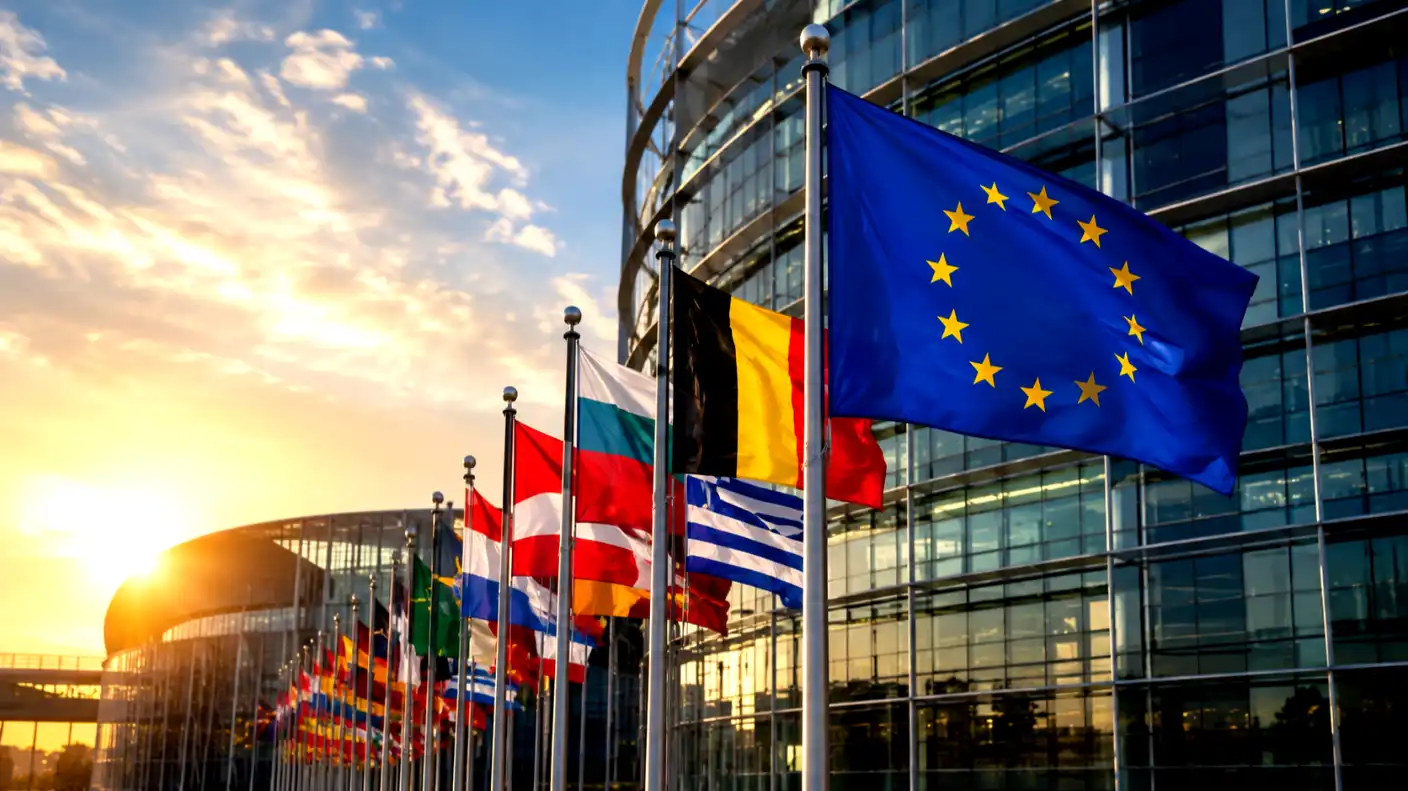
A major financial conflict is currently unfolding inside the headquarters of the European Union, setting the stage for one of the most difficult and divisive negotiations in the history of the bloc. Gathering in Brussels for a high-stakes, two-day summit, the heads of state of the 27 EU member nations have officially begun the battle over how to finance and allocate the union’s next seven-year budget.
The Multiannual Financial Framework, which will govern the bloc’s long-term spending from 2028 to 2034, has run into a wall of intense regional disputes.
The scale of the funding challenge is immense. While the European Commission has proposed a comprehensive spending plan valued at nearly €2 trillion, the very first concrete proposal to kick off the negotiations has drawn fierce criticism from both sides of the economic spectrum.
Richer northern nations, which pay more into the budget than they receive, are demanding deep spending cuts and refusing to act as an open cash machine.
Conversely, southern and eastern European nations, which rely on EU funds to upgrade their infrastructure and support their agricultural sectors, warn that any sudden funding cuts will cause a devastating economic contraction.
To bridge this massive gap and prevent a severe funding shortage, the EU is scrambling to identify new, independent revenue sources that can bypass national treasuries.
However, as the debate shifts toward creating new taxes on carbon, corporate profits, and electronic waste, the budget battle is exposing a deep and volatile divide over the future of European sovereignty, integration, and security.
The Scale of the Struggle: Frugal Payers versus Needy Beneficiaries
The primary source of friction at the summit is the starkly different way in which member states evaluate the purpose and size of the common budget.
The Northern Demand for Fiscal Discipline
For the wealthier nations of Northern Europe, including the Netherlands, Germany, Sweden, and Denmark, the proposed €2 trillion budget represents an unacceptable fiscal burden.
Because these countries are “net contributors”—meaning they pay significantly more into the central EU budget than they receive back in the form of subsidies or development grants—their governments face intense domestic political pressure to limit their contributions.
During the opening sessions of the Brussels summit, these “frugal” nations expressed strong dissatisfaction with the initial spending proposals.
The Dutch delegation, led by their energy and climate ministers, argued that the proposed budget was simply too high and failed to demonstrate sufficient financial discipline.
The net payers are demanding that the EU focus on cutting administrative bloat, reducing agricultural subsidies, and ensuring that every single euro of public funds is spent with maximum efficiency, rather than continuously asking national taxpayers to fund broader European integration.
The Southern and Eastern Defense of Cohesion
On the other side of the economic divide, the net beneficiaries of Southern and Eastern Europe are preparing a fierce defensive campaign to protect their traditional funding streams.
Countries like Greece, Italy, Spain, and Poland rely heavily on the EU’s Cohesion Policy and Common Agricultural Policy to fund infrastructure upgrades, subsidize local farmers, and close the wealth gap with their richer northern neighbors.
Greek Prime Minister Kyriakos Mitsotakis publicly warned that the EU’s ambitious geopolitical goals must be matched by an ambitious common budget.
Beneficiary nations argue that any sudden, steep cuts to cohesion and agricultural funds would weaken the EU’s single market, increase regional disparities, and slow down economic growth across the continent.
They contend that at a time when Europe is facing high inflation and sluggish growth, maintaining robust development funding is a necessary investment in the long-term stability of the entire union.
The Cy-Pres Compromise: The “Nego-Box” Triggers a Backlash
The opening salvos of the budget battle were fired after the Cyprus presidency of the European Council introduced the first concrete negotiating framework, known as the “Nego-Box,” to guide the discussions.
The Thirty-Two Billion Euro Cut
To kick off the negotiations and find a middle path between the two opposing camps, the Cyprus presidency proposed a compromise that trims the European Commission’s original budget proposal by approximately 2.0%.
This adjustment represents a direct cut of €32.8 billion from the proposed €2 trillion spending plan.
However, the specific areas targeted by these cuts have drawn immediate and sharp criticism from both sides.
To appease the net beneficiaries, the Cyprus proposal reallocates a larger share of the remaining funds back to traditional agricultural subsidies and regional cohesion programs.
But to fund this shift, the plan slashes spending on next-generation innovation, digital research, and common defense technology.
A Backward-Looking Budget?
For the net contributors and technology advocates, this compromise represents a major step backward.
They argue that by cutting funding for research, green technology, and military mobility to protect traditional farming subsidies, the EU is building a backward-looking budget that fails to address the competitive challenges of the modern global economy.
“A budget that cuts innovation to fund 20th-century agriculture is not fit for the challenges of 2030,” one northern diplomat complained on the sidelines of the summit.
Critics argue that if Europe wants to compete with the massive, state-subsidized technology sectors of the United States and China, it must prioritize funding for advanced semiconductors, artificial intelligence, and clean energy, rather than allowing regional political interests to lock in outdated spending patterns.
The New Geopolitical Reality: Defense and the Ukraine Burden
The current budget debate is significantly more complex than previous negotiations because the geopolitical landscape of Europe has changed completely since the last seven-year framework was agreed upon.
The Massive Defense Funding Emergency
The primary driver of this changing reality is the urgent need to rebuild Europe’s military and defense capabilities.
Following years of military cuts, European leaders are realizing that their armed forces lack the ammunition stockpiles, logistics networks, and advanced technology needed to defend the continent independently.
The scale of the required investment is staggering.
European Commission President Ursula von der Leyen recently estimated that Europe needs to invest an additional €500 billion in its defense industry over the coming decade to achieve strategic readiness.
Furthermore, a comprehensive security report prepared by former Finnish President Sauli Niinistö recommended that at least 20% of the entire EU budget should be dedicated directly to security, military mobility, and climate disaster response.
Funding the Reconstruction of Ukraine
To compound these defense pressures, the EU must also find a way to fund the long-term, multi-billion-euro reconstruction of Ukraine and sustain its financial stability during the ongoing war of attrition.
Because traditional national budgets are already stretched to their limits, adding these massive, geopolitical funding requirements to the seven-year budget is forcing policymakers to explore completely new financial structures, including the possibility of issuing common European debt to fund shared defense projects.
The Search for “Own Resources”: Bypassing National Budgets
To bridge the massive funding gap and reduce the pressure on the national treasuries of the net payers, the European Commission is looking to bring in new, independent revenue streams, known legally as “own resources.”
The Four Hundred Fifty-Nine Billion Euro Fiscal Gap
If the European Union fails to identify and implement these new revenue streams, and if national contributions remain capped at their current levels, the bloc faces a massive €459 billion fiscal gap over the next seven years.
This funding shortfall would force the EU to implement devastating cuts across all major programs, severely undermining its ability to execute its climate, digital, and defense initiatives.
To prevent this fiscal disaster, the European Commission has proposed a portfolio of five new “own resources” designed to raise approximately €58 billion annually for the central budget, reducing the need for direct national contributions.
The Five Proposed Revenue Streams
The proposed new revenue sources are highly innovative but politically contentious, as they represent a major expansion of the EU’s direct taxing authority:
- Emissions Trading System (ETS) Revenues: The Commission wants to channel part of the revenue generated from the expanded EU carbon market into the central budget. This includes the new “ETS2” system, set to begin operating in 2027 to cover road transport and buildings, which is expected to raise €9.6 billion annually.
- Carbon Border Adjustment Mechanism (CBAM): The EU is preparing to collect a carbon levy on imported goods (such as steel, cement, and fertilizers) from nations with weaker climate policies, ensuring that foreign producers face the same carbon costs as EU firms.
- The E-Waste Levy: A specialized tax on electronic waste to encourage circular economy practices.
- Tobacco Excise Share: A unified share of national tobacco excise taxes.
- The Corporate Resource for Europe (CORE): A highly controversial proposal that would require all EU-based companies with an annual turnover above €100 million to pay an annual, flat-sum corporate contribution to the central budget, generating an estimated €6.8 billion annually.
While expert groups argue that carbon and environmental levies are genuine EU resources because emissions are cross-border problems, poorer Eastern European nations are expressing deep concern over these proposals.
They argue that because their economies rely more heavily on fossil fuels, they will end up contributing a disproportionate share of the carbon revenues to the central budget, effectively transferring wealth from East to West and worsening regional inequalities.
The Political Urgency: The End of 2026 Deadline
While the current Multiannual Financial Framework does not legally expire until the end of 2027, European leaders are under intense political pressure to reach a firm agreement by the end of this year.
Evading the Election Trap
The primary driver behind this tight schedule is the heavy calendar of national elections scheduled to take place next year.
In 2027, several of the most influential EU member states—including France, Italy, Spain, Poland, Greece, Finland, and Estonia—will hold critical parliamentary or presidential elections.
If the budget negotiations drag into next year, they will inevitably become hostages to these domestic election campaigns.
National politicians will be highly reluctant to approve any budget increases or compromise on regional funds while fighting for their political survival, leading to a complete paralysis of the negotiation process.
To prevent this outcome, the current leadership is pushing to finalize the framework by December, ensuring that the programming of funds can take place promptly and that pre-financing can begin without delay.
The Role of the Irish Presidency
If the current summit ends in a stalemate, as many analysts expect, the responsibility for managing the next phase of the negotiations will fall to Ireland, which assumes the rotating EU presidency in July.
The Irish presidency will use the feedback from the Brussels summit to draft a revised, highly detailed compromise proposal for the next major gathering of EU leaders in October, keeping the pressure on member states to reach a unanimous agreement before the end of the year.
Conclusion: The Ultimate Test of European Integration
The high-stakes battle over the European Union’s €2 trillion seven-year budget represents far more than a simple technical negotiation over subsidies and grants.
It is the ultimate test of European integration, solidarity, and geopolitical ambition in an increasingly dangerous and competitive world.
As the divisions between the frugal net contributors of the North and the net beneficiaries of the South and East continue to widen, the EU’s leadership must find a way to reconcile these opposing national interests with the collective responsibility of defending the continent.
Whether the final budget is funded through higher national contributions, new corporate taxes, or innovative carbon levies, the outcome of this historic cash battle will define the political and economic structure of Europe for the next decade.
Ultimately, the final compromise will prove whether the 27-nation bloc is capable of putting real money behind its geopolitical promises, or if regional divisions will continue to limit Europe’s ability to finance its own security, prosperity, and future.















