

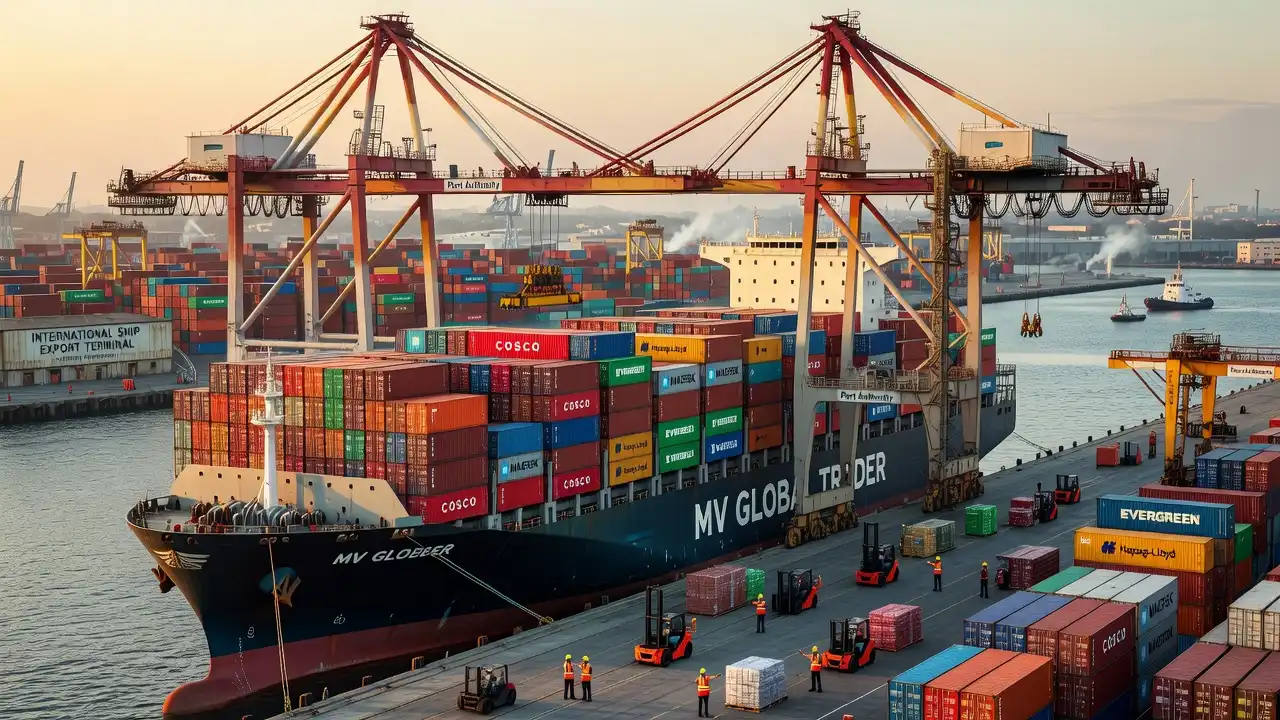
The highly integrated economic corridor between the European Union and the United States is experiencing a historic and painful contraction. After decades of serving as the primary engine of global commerce, transatlantic trade has run into a wall of aggressive tariffs and protectionist policies. New trade statistics paint a sobering picture of this economic decoupling, revealing that the value of goods exchanged between the two blocks has dropped significantly.
As European lawmakers prepare for a highly contentious parliamentary vote to implement their side of a controversial trade deal with Washington, exporters across the continent are already counting the costs. The sharp decline in trade is not only hurting key European industries but also dragging down the bloc’s overall export performance, forcing European leaders to confront a difficult choice between accepting unequal trade terms and risking a full-scale trade war with their largest partner.
Unpacking the First Quarter Slump: The Eurostat Data
The economic impact of the new tariff environment is no longer a future prediction; it has become a measurable reality on corporate balance sheets across Europe.
The Thirty Percent Value Contraction
According to the latest trade data released by Eurostat, the European Union saw a 30% decline in the value of goods exchanged with the United States in the first three months of the year compared with the same period last year. This massive contraction represents one of the steepest declines in transatlantic trade history, illustrating how quickly import duties can disrupt long-established supply chains.
Despite this sharp decline, the United States remains the European Union’s single largest export market. During the first quarter, the EU exported approximately €120 billion worth of goods to the U.S., which still represents roughly 19% of the bloc’s total export value. However, the loss of nearly a third of this trade volume has sent shockwaves through European industrial hubs, leaving many manufacturers struggling to find alternative buyers for their products.
Sectors in the Line of Fire
The drop in transatlantic trade has hit several of Europe’s most valuable and politically sensitive export sectors exceptionally hard:
- Automotive Industry: German car manufacturers, who have long been a target of political complaints in Washington, have seen their U.S. sales decline significantly. The ongoing threat of additional vehicle import tariffs has forced companies like Volkswagen, BMW, and Mercedes-Benz to adjust their export strategies.
- Pharmaceuticals and Semiconductors: High-tech sectors that rely on seamless, rapid trade flows to manage international research and assembly networks have faced severe disruptions, resulting in higher costs and longer delivery times.
- Agriculture and Luxury Goods: Traditional European exports, including wine and specialty cheeses, have been hit with punitive duties. Some high-quality cheeses now face import taxes as high as 30%, making them far too expensive for average American consumers and severely hurting agricultural communities in France, Italy, and Spain.
The Turnberry Scotland Agreement: A Heavily Criticized Deal
The direct cause of this trade slump is a highly controversial trade agreement negotiated under intense political pressure.
The Backstory of the Deal
The current tariff structure was established last summer during a meeting between U.S. President Donald Trump and European Commission President Ursula von der Leyen at Trump’s Turnberry golf resort in Scotland. Faced with the threat of sweeping, across-the-board tariffs on all European goods, the Commission President agreed to a preliminary deal to pacify Washington.
However, the Turnberry agreement has faced intense criticism within Europe for being deeply unbalanced. Under the terms of the deal, the United States maintains a 15% tariff on a wide range of European industrial and agricultural goods.
In contrast, the European Union is required to eliminate its own import duties on U.S. industrial products. Many European lawmakers argue that this arrangement is entirely one-sided, forcing Europe to open its markets to American competitors while receiving nothing in return but high taxes.
Debunking the Deficit Myth
To justify these aggressive tariffs, the administration in Washington has consistently complained about a massive trade deficit with Europe, claiming that the U.S. runs a shortfall of more than €300 billion in its commerce with the EU.
While this deficit is real in the trade of physical goods, the administration’s calculations completely ignore the services sector. When factoring in the massive volume of American digital, financial, and consultancy services exported to Europe, the actual trade balance looks very different.
In reality, the actual shortfall in goods is closer to €200 billion, and when services are included, the European Union’s overall trade surplus with the United States drops to just €21 billion. By ignoring the services sector, Washington has used incomplete data to justify a highly aggressive protectionist policy.
The Legislative Battle in Brussels and the Sunset Clause
As the deadline to implement the Turnberry agreement approaches, a major political battle is unfolding within the European Parliament.
The June Sixteenth Vote
European Union lawmakers are scheduled to hold a final vote on June 16 to implement the European side of the trade deal formally. The vote is expected to be exceptionally close, as many Members of the European Parliament are furious over what they view as a capitulation to economic coercion.
The debate has grown even more tense following recent threats from Washington. The U.S. administration recently proposed a new round of 10% tariffs on various trading partners, including the EU, claiming that insufficient European efforts to curb trade in goods produced using forced labor are hurting U.S. commercial interests.
The European Commission quickly rejected these threats as completely unjustified, pointing out that European laws banning products linked to forced labor are among the most stringent in the world.
For many European lawmakers, these new threats prove that accepting an unequal trade deal will not protect Europe from future pressure, as Washington will simply find new excuses to impose tariffs whenever it suits its domestic political interests.
The Five-Year Sunset Clause
To address these concerns and provide a safety valve for European industries, negotiators have managed to insert a strict sunset clause into the agreement’s text. Under this provision, the entire trade deal will automatically expire on December 31, 2029, unless both the European Union and the United States formally agree to renew it.
While this clause ensures that the agreement will undergo a thorough, periodic review, it also adds to the long-term investment uncertainty for multinational corporations.
Knowing that the rules of transatlantic trade could change completely in a few years, many businesses are hesitant to make large-scale capital investments or build long-term supply chains across the Atlantic, further depressing the economic relationship.
Global Ripple Effects: How the US Slump Shakes EU Exports
The sharp contraction in trade with the United States is not an isolated event. Because the U.S. is the primary engine of global consumption, the transatlantic slump is dragging down Europe’s economic performance worldwide.
A Broad Global Contraction
The decline in trade with Washington has contributed directly to a 9% overall decline in the value of European Union exports to the rest of the world compared to the first quarter of last year. This broad contraction shows that European manufacturers are struggling to find alternative markets to replace their lost American sales.
At the same time, European exporters are facing declining demand in other major global markets:
- China: European exports to China fell by 8% during the first quarter, driven by a slowing Chinese economy and rising domestic competition in sectors like electric vehicles and industrial machinery.
- Turkey: Trade with Turkey also contracted by 8%, reflecting economic challenges and high inflation within the Turkish market.
- Iran: The steepest decline was recorded in trade with Iran, which plummeted by 44%. This dramatic drop was driven by tight international sanctions related to Iran’s nuclear program, regional conflicts, and human rights violations.
The Bright Spot: Indonesia and the CEPA Deal
Amidst this widespread global export contraction, Europe has recorded one highly significant success story. European exports to Indonesia surged by 23% during the first quarter.
This rapid growth was driven directly by the finalization of the Comprehensive Economic Partnership Agreement between the EU and Indonesia. The CEPA systematically slashes or removes import tariffs on the vast majority of European industrial and agricultural goods, proving that traditional, rules-based free trade agreements remain highly effective at boosting economic growth when both sides are committed to cooperation.
Views: Autonomy, Colony, or Managed Capitulation?
The ongoing trade crisis has sparked intense debate among European political leaders, economists, and strategists over the future of Europe’s economic sovereignty.
The Warning of Enrico Letta
A highly influential perspective comes from former Italian Prime Minister Enrico Letta, who recently published a comprehensive report on the future of the European single market. Letta delivered a blunt warning to European leaders, stating that Europe must rapidly integrate its financial, energy, and telecommunications markets or risk becoming an economic colony of the United States and China.
Letta argued that individual European nations are far too small to compete independently with global superpowers that rely on massive domestic markets and aggressive state subsidies.
Without a unified, highly efficient single market, European companies will continue to lose ground to their American and Chinese rivals, leaving the continent vulnerable to economic coercion and reducing its geopolitical influence.
The Debate Over Strategic Autonomy
Within the European Parliament, lawmakers are deeply divided on how to respond to Washington’s aggressive trade policies. Proponents of implementing the Turnberry agreement argue that accepting the deal, despite its flaws, is a necessary act of political pragmatism.
They contend that a 15% tariff is far preferable to a full-scale trade war, and that stabilizing relations with Washington is essential to protecting European jobs and preventing a severe recession.
Conversely, critics of the deal argue that accepting unequal terms sets a highly dangerous precedent. They contend that by capitulating to tariff threats, the European Union is signaling that it can be bullied into opening its markets without receiving reciprocal access.
These skeptics argue that Europe should focus on building its own strategic autonomy, strengthening its trade ties with rising economies in Asia and Latin America, and using defensive trade tools to retaliate against foreign protectionism, rather than locking itself into an unbalanced transatlantic partnership.
Conclusion: Redefining European Economic Autonomy
The dramatic 30% drop in trade value with the United States represents a historic turning point for the European Union. For decades, European policymakers assumed that the transatlantic economic partnership was built on a shared commitment to open markets and rules-based trade.
The current tariff reality has dismantled that assumption, revealing that Europe remains highly vulnerable to unilateral shifts in U.S. domestic policy.
As the June 16 vote approaches, the European Union must recognize that its traditional economic model, which relies heavily on exporting goods to a single dominant consumer market, is no longer sustainable.
To thrive in a more protectionist world, Europe must focus on completing its own single market, diversifying its global trade partnerships, and developing the strategic tools necessary to defend its economic interests.
The current crisis is a clear signal that the era of easy transatlantic trade has ended, and that Europe’s future prosperity will depend entirely on its ability to build a unified, self-confident, and truly autonomous economy.















