

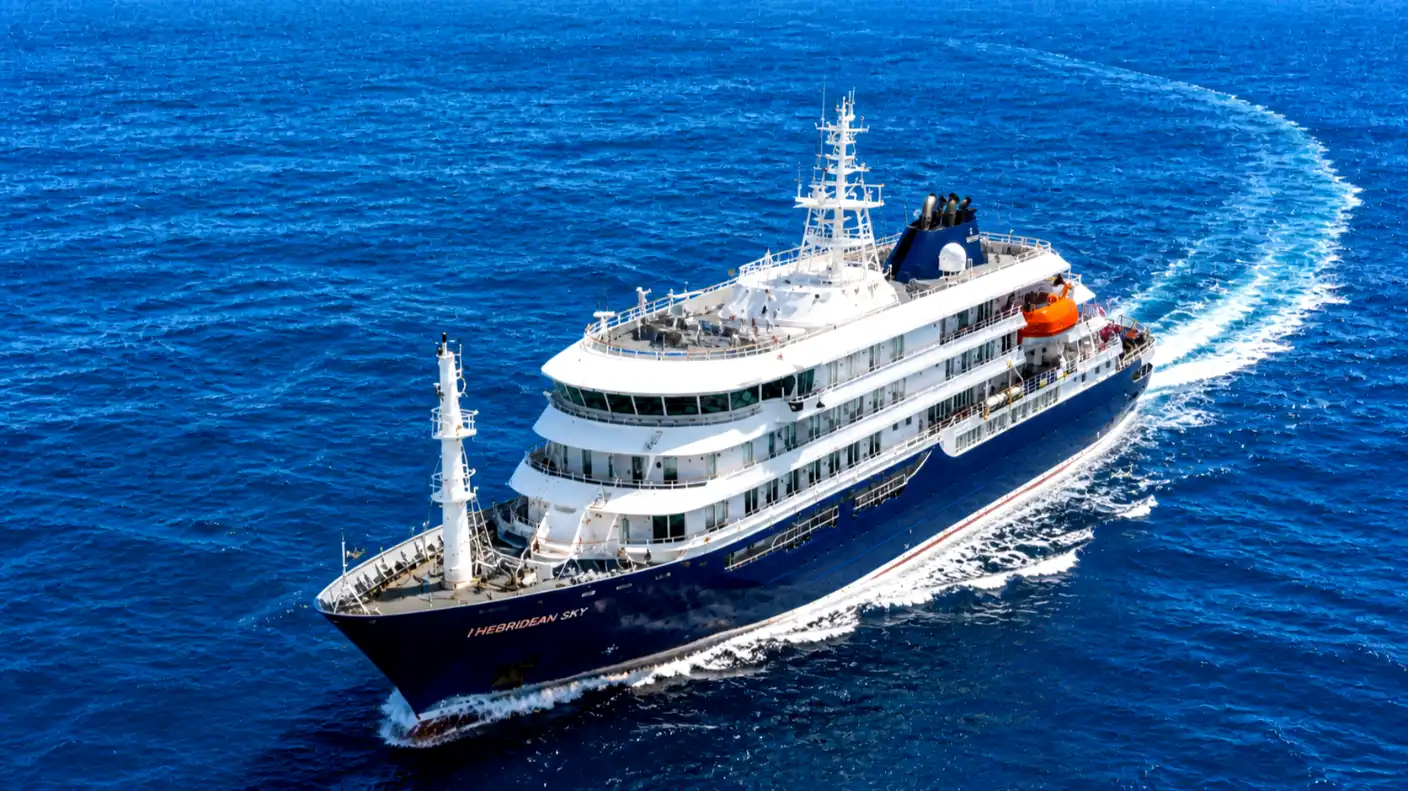
Health officials across Europe are taking no chances with a terrifying new disease outbreak. The European Centre for Disease Prevention and Control announced that all passengers trapped on a virus-stricken cruise ship are now considered high-risk contacts. The agency issued this strict precautionary measure just hours before the MV Hondius cruise ship dropped its anchor. The massive vessel is expected to arrive on Sunday morning off the coast of Tenerife, a popular Spanish island.
The health agency released rapid scientific advice on Saturday to help handle the crisis smoothly. Officials confirmed that passengers showing absolutely no symptoms will still face strict travel rules. These healthy travelers cannot just buy a ticket and jump on regular commercial flights to get home. Instead, their respective home countries must arrange special, isolated transport planes to repatriate them safely. Once they finally arrive home, every single passenger must enter a mandatory self-quarantine period.
Dozens of different countries spent the weekend scrambling to prepare their emergency evacuation teams. The massive rescue operation plans to pull citizens off the MV Hondius early Sunday morning, targeting a start time around 0630 to 0700 GMT. The medical situation on board the ship remains incredibly tense. The World Health Organization reported on Friday that exactly 8 people have fallen seriously ill during the voyage.
The illness strikes fast and hits hard. Sadly, 3 of those 8 sick passengers have already died from the infection. The victims include an older Dutch couple and 1 German national. Medical teams confirmed that exactly 6 of the 8 sick individuals definitely contracted the hantavirus. Doctors are currently treating the remaining 2 sick passengers as suspected cases while they await final lab results to confirm the exact virus.
The European Centre for Disease Prevention and Control offered some hope to returning passengers. While doctors will label everyone as high-risk the moment they step off the gangway in Tenerife, that label might change. The agency stated that local health officials in the home countries will evaluate each person individually upon return. Depending on who the passenger interacted with on the ship, their home country might downgrade their risk level after a few days of observation.
The agency laid out clear rules for handling anyone who appears to be sick. They urged all medical teams to prioritize symptomatic passengers the second they arrive on dry land. These individuals need immediate medical assessment and advanced blood testing. Depending on how sick they feel, these patients might isolate in specialized hospital rooms right there in Tenerife. If they need better care, governments will launch dedicated medical evacuation flights to bring them to advanced hospitals back home.
Hantavirus outbreaks rarely happen on massive cruise ships. Under normal circumstances, humans contract the virus by inhaling dust contaminated with infected wild rodents. However, in extremely rare cases, the virus can mutate and transmit directly from person to person through close contact. Despite the terrifying situation on the ship, local health authorities assure the general public that the overall risk of the virus spreading across Europe remains very low.















