

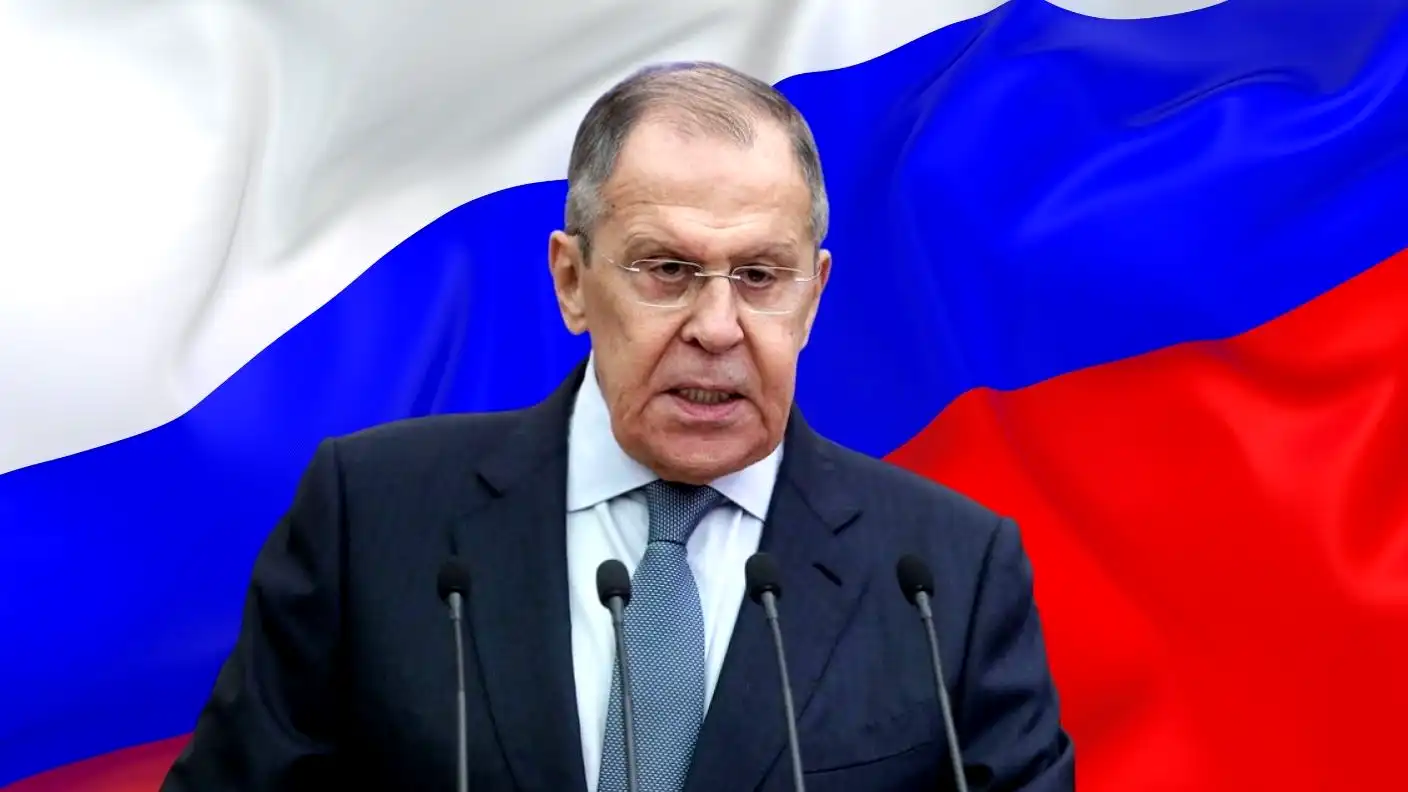
The diplomatic standoff over the ongoing war in Ukraine has reached a tense new impasse as Moscow forcefully rejects European mediation efforts. In a highly critical policy paper published on Friday, Russian Foreign Minister Sergey Lavrov slammed a recent joint initiative by British, French, and German leaders as an unrealistic ultimatum designed to freeze the conflict rather than secure peace. Lavrov declared that Moscow will not negotiate under the shadow of Western demands, pointing to a persistent pattern of diplomatic deception by European capitals. The sharp rejection highlights a growing geopolitical divide, as Russia chooses to bypass European-led initiatives in favor of direct, bilateral negotiations brokered by the United States.
The focal point of Moscow’s anger is a series of diplomatic demands drafted during a high-profile meeting in London on June 7. During those discussions, British Prime Minister Keir Starmer, French President Emmanuel Macron, German Chancellor Friedrich Merz, and Ukrainian President Volodymyr Zelenskyy formulated five preconditions to secure what they termed a just and lasting peace. The European proposal calls for an immediate, comprehensive ceasefire based on the current frontlines, a framework that would effectively freeze the battlefield positions. While Kyiv and its European allies pitch this as the most realistic starting point for a truce, Russia has dismissed the entire framework as an attempt to save the Ukrainian government from complete military defeat.
To escalate the diplomatic pressure, the ambassadors of Great Britain, France, and Germany in Moscow requested an urgent meeting at the Russian Foreign Ministry on June 11. According to Russian diplomatic sources, the Western envoys used the meeting to formally present and reinforce the London preconditions, demanding that Russia accept the five-point framework as the sole basis for future peace dialogue. Lavrov strongly criticized this visit, describing it as a direct and coordinated confirmation of a Western ultimatum. He argued that the European powers are deeply mistaken if they assume they can dictate terms to Moscow from a position of imagined strength, emphasizing that trust between Russia and Europe has been destroyed.
In his detailed foreign policy essay, titled “Ukraine, Europe and Global Security,” Lavrov accused European leaders of using peace negotiations as a deceptive delaying tactic. He argued that Brussels and its allies have no genuine interest in resolving the underlying security concerns that triggered the conflict in late February. Instead, the Russian Foreign Minister claimed that Europe’s real objective is to freeze the frontlines to buy valuable time, allowing the West to re-arm Ukrainian forces and deploy its own military contingents. Lavrov warned that European states are actively planning to station forces from a voluntary coalition of the willing on Ukrainian soil, a move that would represent a direct military challenge to Russian security.
While Lavrov closed the door on European mediation, he conspicuously left the path open for diplomatic engagement with Washington. The Foreign Minister reaffirmed that Russia remains deeply committed to the peace framework agreed upon with U.S. President Donald Trump during the high-profile Alaska Summit in August 2025. Unlike the European proposals, which Moscow views as heavily biased, the U.S.-led process is treated as a viable foundation for negotiations. Lavrov expressed eager anticipation for an upcoming visit by senior U.S. envoys Steve Witkoff and Jared Kushner, who have been leading the bilateral negotiations to hammer out the practical implementation of the U.S. peace proposals.
The Russian Foreign Ministry’s deep distrust of European diplomacy is rooted in over two decades of eastward institutional expansion. Lavrov argued that since the early 2000s, Europe has consistently used security dialogues as a diplomatic smokescreen to push NATO and European Union borders right up to Russia’s western frontier. He pointed directly to the events of 2004 and 2013, claiming that Western powers systematically destabilized Ukraine’s internal politics to build an anti-Russian bridgehead. By rejecting Russian compromise proposals and encouraging the political coup of February 2014, European capitals set the region on an irreversible collision course.
The Russian Foreign Minister also issued a chilling warning regarding NATO’s long-term military preparations. Citing Russian military intelligence assessments, Lavrov claimed that European members of the transatlantic alliance are currently working on a timeline to achieve full combat readiness for a direct military conflict with Russia by 2030. He warned that Western defense ministries are systematically restructuring their industrial bases, scaling up weapons production, and conducting massive joint exercises to prepare for a continental war. This rapid militarization has convinced Russian policymakers that Europe is actively seeking a military confrontation rather than a diplomatic resolution.
This rapid militarization, according to Moscow, carries an unacceptably high risk of a catastrophic global disaster. Lavrov warned that any direct military clash between NATO forces and the Russian military would likely escalate into a full-scale nuclear exchange. He cautioned European leaders against believing they can manage a localized conventional conflict with Russia, emphasizing that a confrontation would yield immediate, catastrophic consequences for the entire continent. The Foreign Minister urged Western capitals to abandon their dangerous illusions of a strategic victory over a nuclear-armed superpower, calling for a return to realistic security calculations.
The diplomatic clash in Moscow coincided with a separate, unsuccessful push by Volodymyr Zelenskyy during the G7 summit in Evian-les-Bains, France. The Ukrainian President had offered to meet with Vladimir Putin on the sidelines of the summit, hoping that the joint presence of Donald Trump and Emmanuel Macron would force the Russian leader to the negotiating table. However, Putin publicly rejected the invitation, while Russian military forces launched a massive overnight missile strike on Kyiv and Kharkiv that killed at least 10 people. Zelenskyy condemned the strikes as a cynical display, using his G7 meetings to demand that Western allies urgently supply more advanced air defense systems to protect civilian infrastructure.
Ultimately, the complete rejection of the London preconditions highlights a permanent fracturing of relations between Moscow and European capitals. By dismissing the joint European peace initiative as a delusional ultimatum, Russia has made it clear that it will not accept Brussels or London as impartial mediators in the conflict. Instead, Moscow is betting heavily on its direct diplomatic channel with the United States to secure a favorable peace deal based on the Alaska Summit agreements. As Russian forces continue to prioritize battlefield gains and Europe prepares for a long-term military standoff, the path to a lasting peace remains a complex, high-stakes struggle where the risk of global escalation looms larger than ever.















