

The post-pandemic recovery of the European manufacturing sector suffered a notable setback in May 2026. According to the latest survey data from S&P Global and Hamburg Commercial Bank released on Monday, June 1, 2026, Eurozone factory activity lost significant upward momentum. Industrial expansion slowed to its weakest pace in months as demand for European goods stagnated and severe supply disruptions triggered a fresh wave of inflation. While the manufacturing sector remains in expansion territory for the fourth consecutive month, the cooling trend suggests that the sudden boost in manufacturing activity seen earlier in the spring might have been a temporary spike rather than a sustainable economic turnaround.
The headline S&P Global Eurozone Manufacturing Purchasing Managers’ Index fell to 51.6 in May from a near four-year high of 52.2 in April. Although the final reading of 51.6 landed slightly higher than the preliminary flash estimate of 51.4, it still represents a sharp two-month low. Economists use the 50-point threshold to separate expansion from contraction, meaning that European factories are still growing, but at a far more tentative pace. The drop in the headline index reflects a broad cooling of the industrial complex across the currency bloc, forcing policymakers and investors to re-evaluate the strength of the Eurozone’s economic rebound.
The cooling trend is evident in the manufacturing output index, which fell to 51.3 in May from 52.3 in April, marking a four-month low. This drop comes on the heels of a sudden halt in new sales. In April, manufacturers recorded their fastest growth in new orders in four years, a surge driven largely by companies aggressively stockpiling inventory. However, that stockpiling frenzy completely faded in May. New orders stagnated in the month, while export orders suffered a fresh decline. Without a steady stream of domestic and international buyers, factories had no choice but to scale back their production schedules.
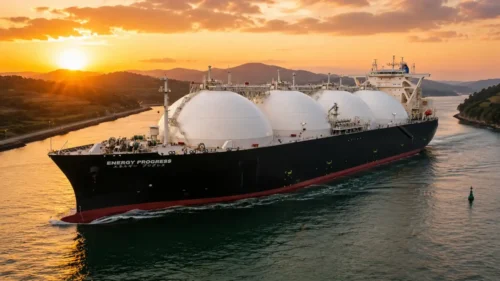
To make matters worse, Eurozone manufacturers are facing a brutal surge in production expenses. Input cost inflation accelerated in May at the fastest pace seen since May 2022, creating a major headache for factory owners. A primary driver of these rising costs is the ongoing military conflict in the Middle East, which has severely disrupted global shipping lanes and forced the effective closure of the vital Strait of Hormuz. Because shipping lines must divert cargo around Africa, energy prices and raw material shipping costs have soared, forcing European companies to pay significantly more to secure essential components.
Faced with these severe cost pressures, manufacturers are quickly passing the burden onto their customers. The rate of output charge inflation—the prices factories charge for their finished goods—climbed in May to its highest level in three-and-a-half years. This rapid increase in factory-gate prices raises major red flags for the European Central Bank, which is trying to steer inflation back to its 2% target. If manufacturers continue to hike prices to protect their profit margins, these costs will eventually feed directly into consumer prices, potentially forcing central bankers to keep interest rates higher for longer to cool down the economy.
The S&P Global report also highlighted a major deterioration in supply chains, with delivery times stretching to their longest since June 2022. Normally, when suppliers face delays, it indicates a booming economy where high demand is overworking vendors. However, the current delays stem from regional geopolitical crises rather than high economic demand. Interestingly, because of the PMI’s mathematical construction, these longer delivery times contributed positively to the headline 51.6 reading. Without this technical boost, the actual state of Eurozone manufacturing would look significantly weaker, hiding the true extent of the demand slowdown under the guise of shipping delays.
The prolonged period of weak demand and rising costs continues to take a heavy toll on the manufacturing workforce. Factory employment across the Eurozone declined once again in May, extending a painful contraction trend that has now lasted for three consecutive years. With production momentum slowing and profit margins squeezed by energy shocks, industrial firms are remaining highly cautious about their headcount. Instead of hiring new workers, many manufacturers are reducing their payrolls, freezing recruitment, or declining to replace retiring staff to trim operating expenses and stay competitive in a challenging market.
The overall Eurozone slowdown hides a sharp divergence between the region’s two largest economies, Germany and France. Germany’s manufacturing PMI offered a tiny sliver of hope, rising slightly to 50.1 in May from a preliminary estimate of 49.9, suggesting that the German industrial machine has barely managed to grind back into expansion territory. In contrast, France’s manufacturing sector took a massive hit. The French PMI plunged from 52.8 in April to 49.7 in May, crossing back below the critical 50-point line into contraction. This sharp drop highlights the intense downward pressure facing French factories and threatens to drag down the wider economic recovery of the currency union.
As Eurozone manufacturers enter the summer, the road ahead looks increasingly bumpy. The combination of stagnant order books, soaring energy costs, and fractured global supply chains has created a highly challenging environment for industrial growth. While business sentiment remains slightly optimistic about the next twelve months, the reality on the factory floor is one of consolidation and caution. Unless global shipping routes stabilize and domestic consumer demand recovers, European factories will likely struggle to regain the impressive growth momentum they enjoyed earlier in the spring, leaving the bloc’s overall economic recovery on shaky ground.