

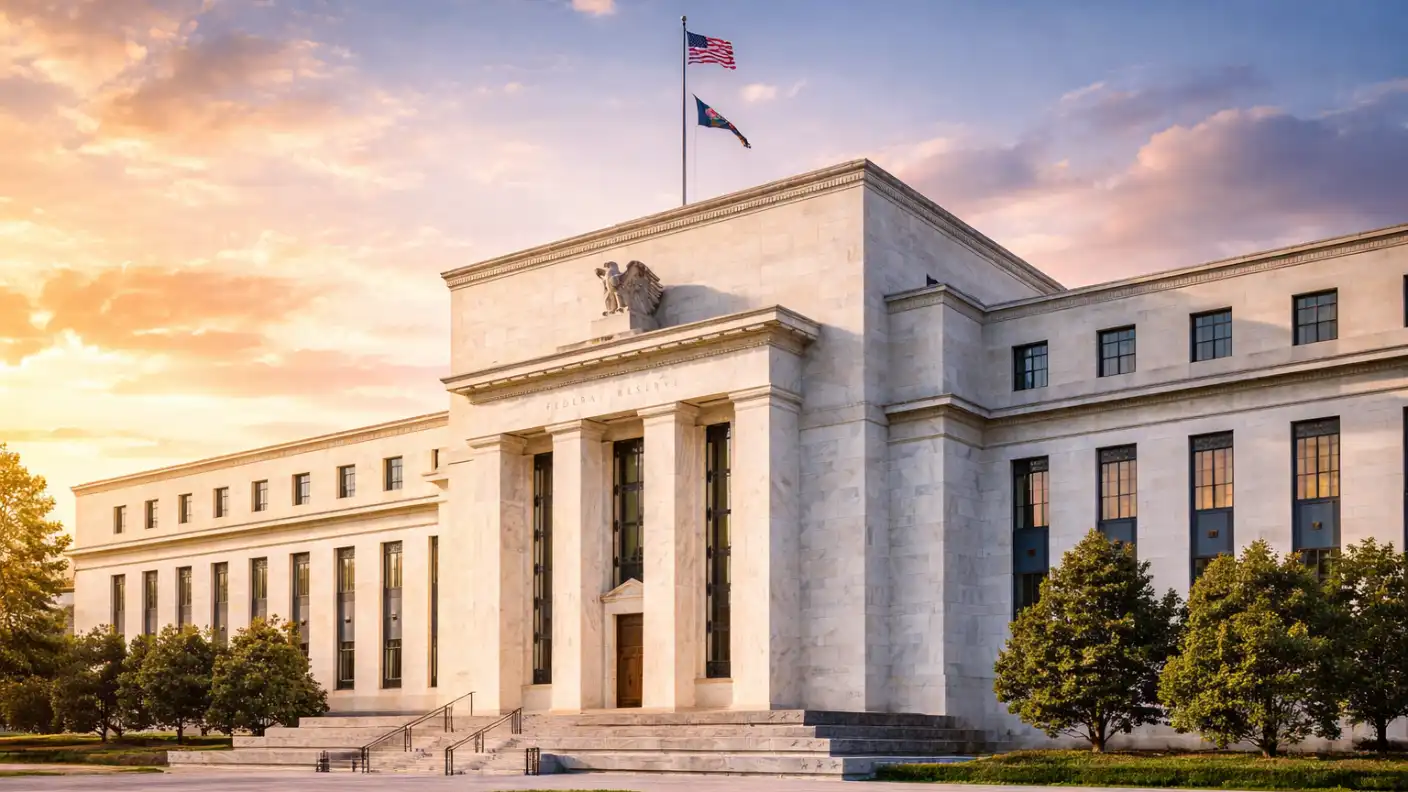
The global financial community is closely watching the transition of power at the world’s most influential central bank. At the conclusion of a highly anticipated two-day policymaking meeting, the Federal Reserve is widely expected to keep its benchmark interest rate unchanged, holding borrowing costs steady in the range of 3.50% to 3.75%. This decision marks the first major policy test under the leadership of the new Federal Reserve Chairman, Kevin Warsh, who recently took the helm amid a storm of economic and political pressures. While investors initially hoped for a pivot toward cheaper credit, stubborn consumer price increases are forcing the central bank to maintain a cautious stance, leaving little room for immediate rate cuts.
Warsh stepped into his role following an intense public campaign by President Donald Trump’s administration, which repeatedly criticized his predecessor for maintaining high interest rates. Although the White House handpicked Warsh to steer the economy toward a lower-rate environment, the economic reality on the ground has made that path extremely narrow. Inflation has surged to its highest level in more than three years, registering a hot 3.8% in April and rising to a yearly increase of 4.2% in May, according to consumer cost indexes. This persistent upward pressure makes it nearly impossible for the new chairman to justify an immediate rate cut, even with direct political scrutiny hanging over the central bank’s independence.
The primary driver of this recent inflation spike is a massive energy supply shock that rattled global trade earlier this year. The military conflict with Iran severely disrupted commercial shipping lanes through the Strait of Hormuz, a critical maritime chokepoint that handles approximately 20% of the world’s oil and liquefied natural gas. The resulting blockade sent crude prices soaring and caused gasoline prices to jump by more than a dollar per gallon. Even though a tentative peace agreement has recently pushed Brent crude futures back down to around $80 per barrel, the domestic economy is still absorbing the secondary price increases, squeezing household budgets and complicating the central bank’s calculations.
Given these inflationary headwinds, the Federal Open Market Committee is expected to adopt a much more neutral tone in its official post-meeting policy statement. Observers believe the committee will scrub its previous wording that favored a bias toward cutting rates, replacing it with language that keeps options open for potential rate hikes. Minutes from the committee’s April meeting revealed that a majority of policymakers already felt that an increase in borrowing costs might be necessary if inflation continues to hover above the long-term 2% target. Removing the easing bias signals to Wall Street that the central bank is prepared to keep rates elevated for an extended period.
The decision to hold rates steady highlights growing ideological divisions within the central bank’s policy-setting committee. During the April meeting, the committee held the benchmark rate unchanged by an 8-4 vote, marking the first time since October 1992 that four voting members dissented against a policy decision. This level of internal division underscores the deep split between officials who want to raise rates immediately to crush inflation and those who advocate for patience. While Warsh has historically favored lower rates to support economic growth, he will likely have to build a consensus among these deeply fractured factions.
Beyond interest rate decisions, Warsh is expected to use his first meeting to begin a sweeping overhaul of how the central bank communicates with the public. During his confirmation hearings, Warsh was highly critical of forward guidance, particularly the “dot plot”—a quarterly chart that shows where individual policymakers expect rates to be in the future. He argued that publishing these forecasts unnecessarily locks the committee into rigid paths and limits its flexibility. Financial analysts expect that Warsh will choose not to submit his own projections for this meeting’s dot plot, signaling a shift away from public forecasting in favor of incremental deliberation.
In line with his desire to lower the central bank’s public profile, Warsh is also considering reducing the frequency of his press conferences. Currently, the chairman holds a live press briefing after each of the eight annual policy meetings. Warsh has openly suggested that central bank officials talk too much, creating unnecessary market noise while adding very little substance to the actual policy debate. He is reportedly exploring a plan to cut the number of annual press conferences in half, returning to the schedule of four briefings per year that was originally established when the practice first began.
While the central bank is set to pause at this meeting, a growing number of private sector economists believe that borrowing costs will have to go up before the year is out. A recent poll of former central bank staff and financial experts showed that 17 of 32 respondents expect a quarter-percentage-point rate hike by December, as the resilient labor market and robust consumer spending continue to keep inflation hot. These analysts argue that unless the current labor market cools down significantly, the central bank will have no choice but to lift borrowing costs to prevent high inflation from becoming permanently embedded in the economy.
This tension between rising prices and political pressure will serve as a crucial test of the institution’s independence. President Trump has repeatedly claimed he should have a say in monetary policy decisions, and he signaled that he expects Warsh to deliver the cheap credit that the business community desires. However, if the new chairman caves to political pressure and cuts rates prematurely while inflation runs double the official target, he risks severely damaging the central bank’s credibility. Conversely, raising rates could trigger a public clash with the White House, echoing the rocky relationship of his predecessor, Jerome Powell, who continues to serve as a voting member of the board.
Ultimately, the inaugural policy meeting of the Warsh era represents a delicate balancing act. The central bank must navigate a highly complex economic landscape marked by an energy-driven inflation spike, a strong domestic labor market, and intense political scrutiny. By keeping interest rates steady for now, the new chairman is buying valuable time to assess how the temporary peace agreement in the Middle East and the cooling of global oil prices will feed into domestic consumer costs. How Warsh communicates this wait-and-see approach during his afternoon press conference will set the tone for his entire chairmanship, showing whether he can successfully steer the economy through its most challenging inflationary cycle in decades.















