

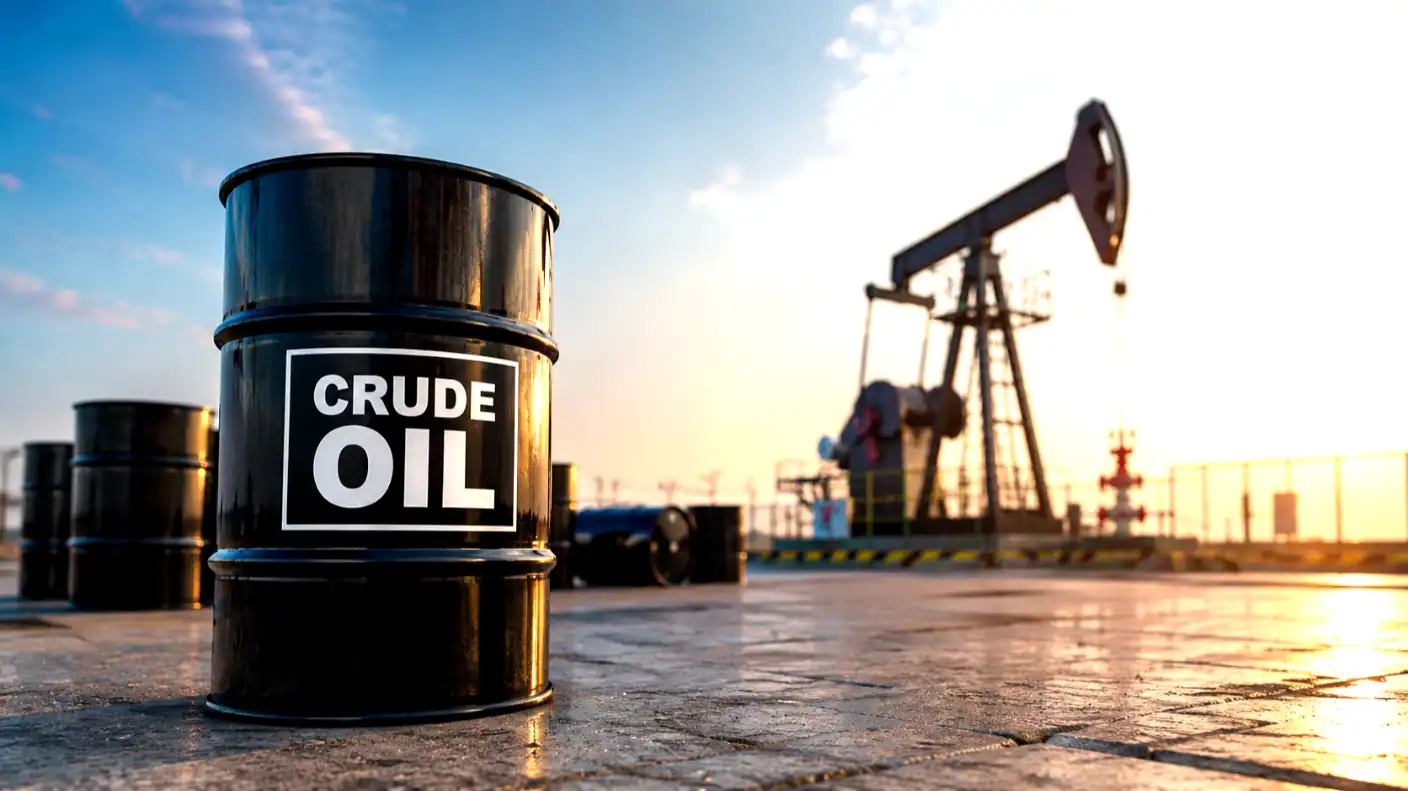
The fragile peace in the Middle East faced its most severe test on Monday, June 8, 2026, as global oil prices surged nearly 5% following highly provocative military actions. Financial markets reacted with immediate panic after the Israeli military struck a major petrochemical plant and other energy-linked targets inside southwestern Iran. This confrontation directly retaliated against an earlier Iranian missile barrage directed at Israel, threatening the temporary regional ceasefire that took effect on April 8. The sudden escalation has dimmed hopes for a negotiated end to the 100-day-old war, pushing global crude benchmarks close to their highest levels in months.
The financial reaction across global trading desks was swift and severe. In early trading, Brent crude futures expiring in August advanced 4.7% to settle at $97.44 per barrel. Simultaneously, the U.S. West Texas Intermediate (WTI) crude futures contract climbed 4.5% to sit at $94.62 per barrel. This massive upward movement completely erased the modest losses of the previous Friday, when energy traders had briefly sold off positions on hopes that diplomatic backchannels would yield a de-escalation. Instead, the sudden physical exchange has forced investors to price in a substantial risk premium.
The price jump directly reflects the severity of Israel’s military targets inside Iranian territory. The Israeli Air Force confirmed that its warplanes launched precision strikes on military installations in central and western Iran, alongside a highly sensitive petrochemical facility near the southwestern city of Mahshahr. This operation represents the first direct military strike on an Iranian energy infrastructure site since the United States brokered the April ceasefire. A provincial official in southwestern Iran confirmed that the attack caused noticeable damage to sections of the Mahshahr complex, though state media downplayed the overall operational impact.
The current spiral of violence began on Sunday, June 7, 2026, when Israel carried out airstrikes against the outskirts of Beirut, targeting a residential area in Lebanon’s capital. In immediate retaliation for the Beirut bombings, Iran launched multiple missile barrages directed toward northern Israel. This missile exchange shattered a fragile truce that Lebanon and Israel had agreed to just days earlier on June 3, following tense negotiations in Washington. Because Iran has consistently made a Lebanese ceasefire a primary condition for any wider peace deal with the United States, the renewed fighting in Beirut directly triggered the broader military reaction.
The rapid escalation took place in direct defiance of explicit warnings from Washington. U.S. President Donald Trump had reportedly urged Israeli Prime Minister Benjamin Netanyahu to refrain from retaliating against Iran’s missile barrage to preserve ongoing diplomatic negotiations. In a series of public statements, Trump insisted that an agreement to end the wider war remained well within reach, boasting that he called the shots in the relationship. However, Netanyahu’s decision to proceed with the strikes on Iranian soil exposed the limits of U.S. leverage over its regional ally, complicating Washington’s efforts to finalize a comprehensive treaty.
Energy analysts warn that the true danger to global oil prices lies in the potential closure or heavy restriction of the Strait of Hormuz. The narrow waterway handles approximately 20% of the world’s daily oil and liquefied natural gas consumption, making it the most critical maritime choke point in the world. Adding to the market’s anxiety, Iran’s ambassador to Moscow stated on Monday that the strait would remain open only under new conditions. The ambassador noted that Iran and Oman plan to impose a transit fee, effectively introducing “tariffs on the strait” for commercial vessels. If implemented, these new fees will permanently drive up global shipping costs.
Amid the growing supply crisis, OPEC+ ministers held an emergency meeting on Sunday and agreed to their fourth oil output target increase in four months. However, energy analysts quickly dismissed the decision as having close to zero physical impact on the market. Most OPEC+ members cannot meet their current targets due to the ongoing blockade of the Strait of Hormuz, which prevents them from shipping their crude. Furthermore, ongoing Ukrainian drone strikes have significantly eroded Russia’s production and refining capacity, ensuring that global crude supplies will remain exceptionally tight regardless of official quota increases.
The combination of shipping restrictions and military strikes has forced global oil refiners to search for alternative crude supplies. With millions of barrels of Middle Eastern oil trapped behind the Strait of Hormuz, refiners in Europe and Asia are paying massive premiums to secure immediate cargoes from West Africa, the North Sea, and South America. This scramble has driven up physical cash prices far faster than futures contracts, threatening to spark a severe new wave of inflation that will hit retail gasoline and diesel prices within weeks.
As trading continues, the outlook for global energy markets remains highly volatile and dependent on the next military move. While President Trump continues to push for a diplomatic breakthrough, the deep distrust between Jerusalem, Tehran, and Washington ensures that the security situation remains incredibly fragile. For global consumers, the immediate consequence of this geopolitical deadlock is a direct rise in fuel and transportation costs. Until negotiators can secure an enforceable peace agreement that fully reopens the Strait of Hormuz, global energy markets will remain highly sensitive to sudden, dramatic price spikes.















