

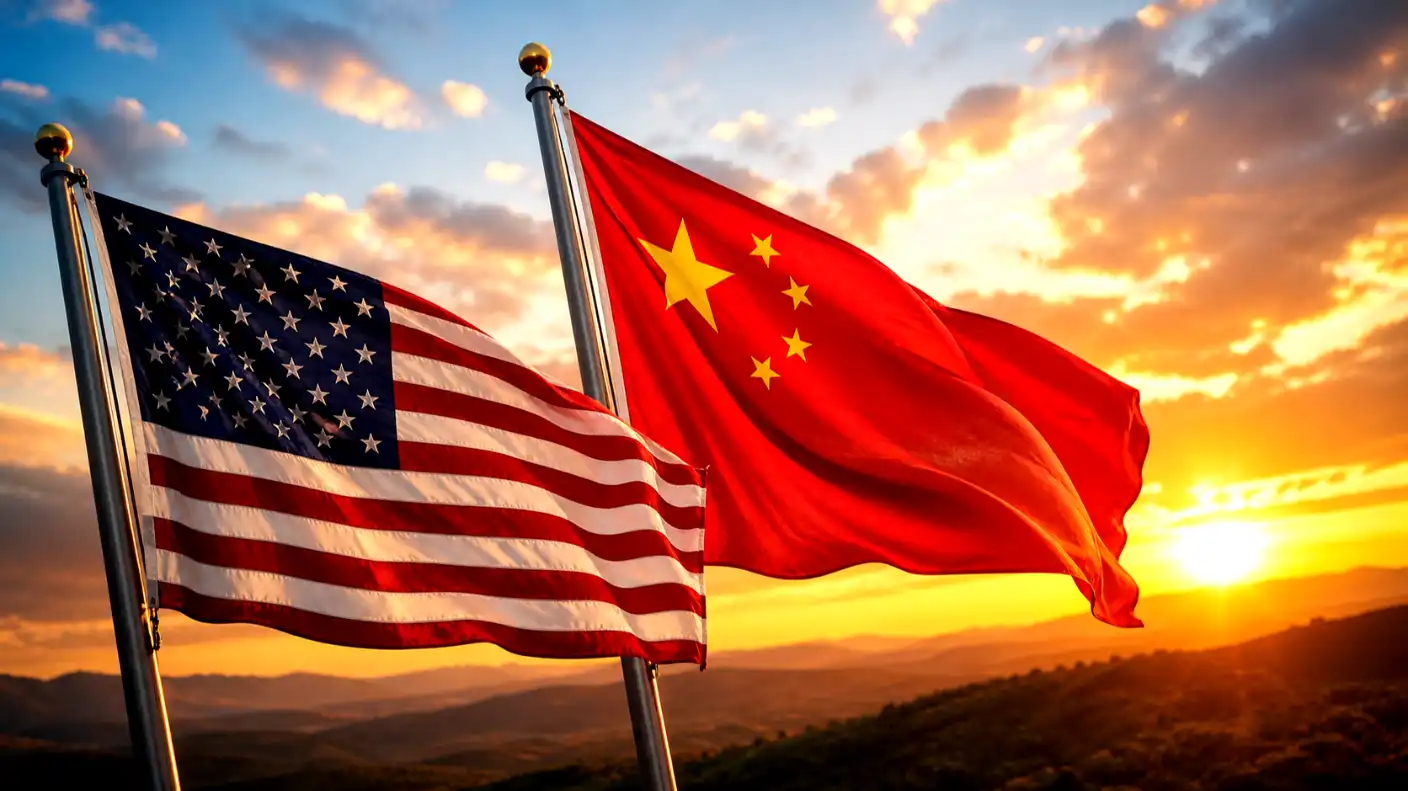
Military representatives from China and the United States recently held face-to-face meetings in Hawaii, focusing on critical communication channels to avoid catastrophic miscalculations in the Pacific. The working group meeting, organized under the long-standing Military Maritime Consultative Agreement (MMCA), took place from May 28 to May 29, 2026. According to a statement released on Monday night by the People’s Liberation Army Navy, both sides described the two-day session as candid, constructive, and respectful. This latest diplomatic interaction reflects a coordinated effort to stabilize bilateral ties following a high-profile summit between Chinese President Xi Jinping and U.S. President Donald Trump in Beijing last month.
The Hawaii meetings served as a vital operational check-in, allowing military leaders from both global superpowers to address dangerous close-encounter incidents in international airspace and busy shipping lanes. Guided by the strategic consensus reached during the Beijing summit, the delegations discussed how to build a constructive relationship of stability despite deep political disagreements. On a practical level, representatives evaluated the effectiveness of the Rules of Behavior for Safety of Air and Maritime Encounters, a regulatory framework first established to prevent collisions and close calls between patrol planes and naval warships in the Indo-Pacific.
Both military delegations agreed that maintaining open lines of communication directly benefits frontline naval and air units operating in highly contested regions like the East and South China Seas. According to the Chinese Navy’s official statement, effective exchanges help military personnel carry out their missions in a far more professional and safer manner. By deepening mutual understanding at the operational level, both Washington and Beijing hope to prevent tactical maneuvers from spiraling out of control. This shared desire to avoid misperception is especially crucial as both countries ramp up their military presence and surveillance operations across the Western Pacific.
While the atmosphere at the Hawaii meetings remained professional, deep strategic divisions were still fully on display. During the talks, the Chinese delegation voiced strong, formal opposition to U.S. activities that it believes threaten its national security. Specifically, Beijing firmly opposes any military actions carried out under the pretext of “freedom of navigation and overflight” near its coastlines. Chinese naval representatives warned that close-in reconnaissance, naval harassment, and provocative incursions targeting China must stop to ensure long-term regional stability, asserting that such operations actively undermine the spirit of maritime safety.
The Chinese navy further emphasized that Beijing will continue to firmly safeguard its national territorial sovereignty, maritime rights, and maritime interests in accordance with its domestic laws and international regulations. At the same time, Chinese representatives maintained that their country remains committed to upholding regional peace, stability, and prosperity. This dual approach of defending sovereignty while keeping channels of dialogue open highlights the delicate balancing act China is pursuing as it expands its maritime capabilities to counter what it views as external encirclement and containment.
The context of these talks in Hawaii is highly significant, given the rapid military buildup on both sides of the Pacific. At a recent security forum in Singapore, U.S. defense officials raised alarms over China’s historic military expansion and expanding activities across the Asia-Pacific region. The Pentagon has urged regional allies to increase their defense budgets to as high as 3.5% of their gross domestic product (GDP) to strengthen deterrence against a potential conflict. With Washington pushing for higher military spending among its partners, Beijing has pointed to these moves as evidence of a Cold War mentality that destabilizes the regional balance of power.
Despite these public warnings and rising defense budgets, both countries recognize that a total breakdown in military communication carries unacceptable risks. Historically, the MMCA mechanism, which began in 1998, has served as a key safety valve during periods of high diplomatic friction. When direct military-to-military channels are cut off, the risk of a minor pilot error or a close ship maneuver escalating into a major international crisis rises exponentially. By keeping the MMCA active, both administrations are signaling to the international community that they are responsible global actors capable of managing their intense rivalry safely.
The implementation of the Beijing summit’s agreements also extends beyond maritime safety into other areas of bilateral cooperation. Since the meeting between President Trump and President Xi, working groups have also discussed strategic issues such as climate change, narcotics control, and the safety of artificial intelligence. While these diplomatic initiatives are still in their early stages, they represent a conscious effort to build guards around the bilateral relationship. For the business community and international shipping industries, any progress toward stabilizing the U.S.-China relationship is welcome news, as a conflict in the Pacific would instantly disrupt trillions of dollars in global trade.
Ultimately, the Hawaii meetings demonstrate that, while a full diplomatic breakthrough remains unlikely, both nations remain committed to maintaining the guardrails of peace. The next rounds of the MMCA working group will likely address even more specific operational rules as technologies such as unmanned naval drones and autonomous surveillance systems become more common in the Pacific. For now, the successful completion of the Hawaii talks shows that both Washington and Beijing prefer managed competition over an accidental war, choosing to keep talking even as they prepare their forces for the challenges of a highly uncertain future.















