
A profound technological revolution is currently sweeping through the global defense and aerospace industries, permanently altering how nations plan to secure their airspace. During a highly anticipated international aerospace exhibition held recently in Berlin, a new class of advanced, artificial intelligence-powered military aircraft emerged as the central attraction.
Known to defense planners as collaborative combat aircraft, or simply wingman drones, these uncrewed platforms represent the latest generation of aerial defense weapons designed to fly in close cooperation with piloted fighter jets.
The rapid development of this technology is a direct response to the lessons of modern warfare, particularly the ongoing conflict in Ukraine, which has demonstrated the critical importance of low-cost drones, electronic warfare, and resilient sensor networks.
As European nations launch massive rearmament campaigns to upgrade their military capabilities, aerospace companies are competing fiercely to secure their positions in what is expected to become one of the largest procurement categories in modern military history.
By taking center stage at major defense exhibitions, these autonomous wingmen are proving that the future of air superiority will not be decided by individual human pilots alone, but by the seamless, intelligent integration of manned and uncrewed systems.
The Loyal Wingman System: Re-Engineering Manned-Unmanned Teaming
The introduction of collaborative combat aircraft represents a major departure from traditional drone technology, introducing a new level of speed, autonomy, and tactical capability to the battlefield.
The Mechanics of Collaborative Combat Aircraft
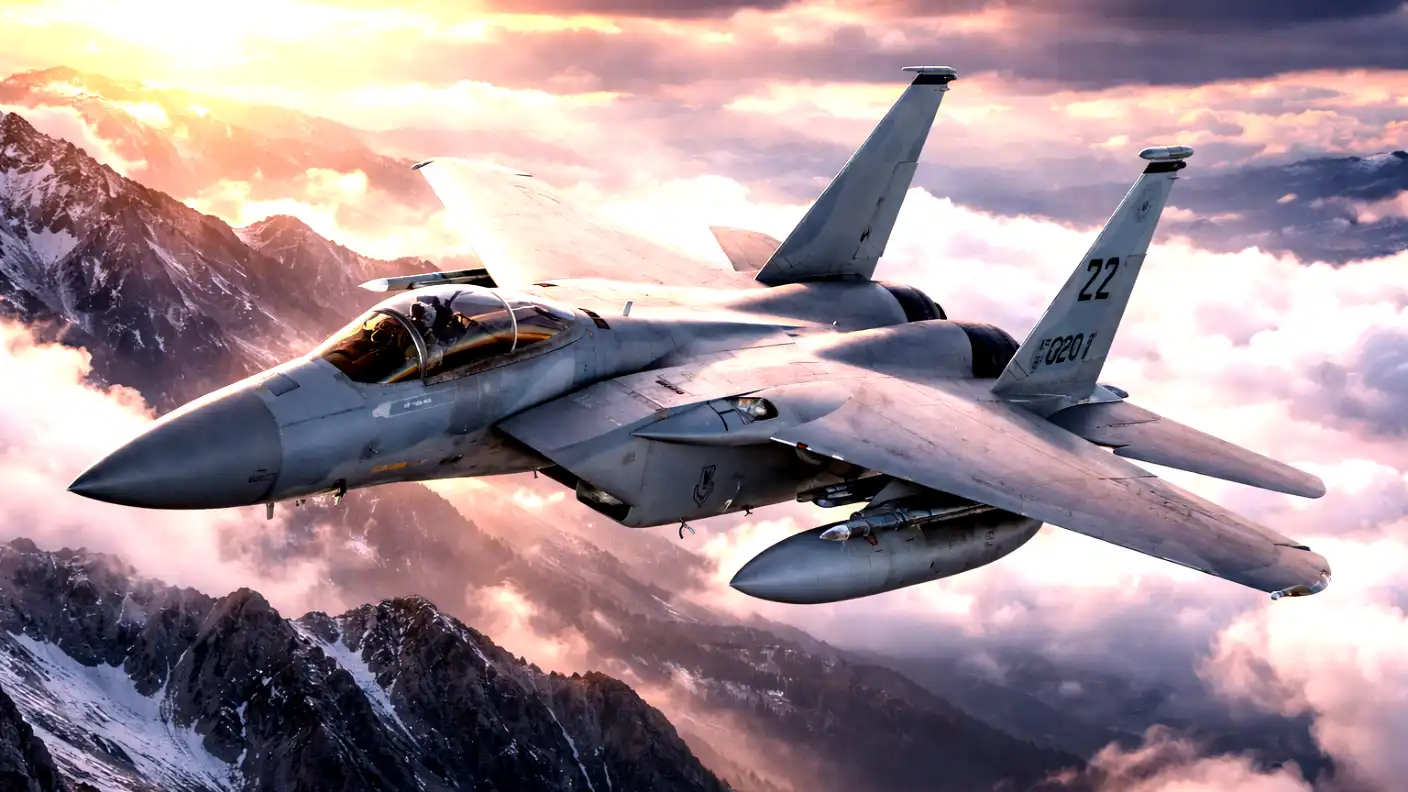
Unlike traditional, slow-moving surveillance drones that are controlled remotely by ground operators, wingman drones are high-performance, uncrewed jets designed to fly at near-supersonic speeds alongside fifth- and sixth-generation piloted fighter jets like the F-35 or the Eurofighter Typhoon.
These uncrewed aircraft range in size from small, agile interceptors to large platforms that are as big as conventional fighter planes.
These aircraft operate as part of a highly integrated “loyal wingman” system, flanking the piloted lead aircraft in a tight, coordinated formation.
By utilizing advanced, real-time communication links and secure data sharing networks, the uncrewed wingmen can adapt their flight paths, speeds, and tactical positions automatically to match the movements of the manned fighter, providing the pilot with a highly responsive, flexible, and protective shield.
Fusing Data and Multiplying Force
The primary operational value of these uncrewed jets is their ability to act as force multipliers, significantly extending the reach and survivability of expensive piloted aircraft:
First, they can fly far ahead of the manned fighter into highly contested, hostile airspace, acting as the eyes and ears of the squadron.
Equipped with advanced sensor arrays, infrared cameras, and active radar systems, they can detect enemy air defense networks, track incoming threats, and feed that information back to the human pilot.
Second, they can carry powerful electronic warfare payloads, including active jammers designed to disrupt enemy radar tracking and communication networks.
By blinding the enemy’s defense systems, the wingmen can create a safe, electronic corridor for the manned fighter to execute its mission.
Third, these uncrewed jets can carry and launch their own weapons, including air-to-air and air-to-ground missiles.
This firepower allows them to engage hostile targets independently under the direction of the human pilot, who remains the ultimate authority, ensuring that the human commander can execute complex, high-risk combat operations without having to put themselves in direct danger.
The Big Players: Bidding for the Skies of Tomorrow
The massive financial potential of this new procurement category has triggered a fierce competition among the world’s leading aerospace and defense contractors, who are rushing to showcase their latest designs to government buyers.
Boeing’s Ghost Bat and the German Timeline
Boeing is currently leading the race with its MQ-28 Ghost Bat, an uncrewed jet developed primarily by its Australian division.
Company representatives insist that the Ghost Bat is not a mere drone, but a highly advanced, uncrewed combat jet designed specifically to enhance the capabilities and survivability of piloted platforms.
The MQ-28 is engineered to provide real-time situational awareness, analyze complex battle space data, and send high-quality, decision-making information back to the human pilot.
To strengthen its position in Europe, Boeing has partnered with the German defense giant Rheinmetall to build and customize the technology for European air forces.
During the Berlin exhibition, Boeing representatives confirmed that they are actively marketing the Ghost Bat to the German Luftwaffe, claiming that the system could be fully operational and in active service by 2029, providing Germany with a rapid, off-the-shelf solution to modernize its air defense network.
Airbus’ Ravenstorm and the Long-Term Vision
Airbus, the European aerospace champion, has responded with its own highly ambitious “Wingman” stealth drone concept, unveiling a sleek, full-scale mock-up of an uncrewed jet designed to accompany the Eurofighter Typhoon.
The Airbus design features advanced stealth characteristics, internal weapon bays, and a modular nose section that allows operators to rapidly swap out different sensor and electronic warfare packages depending on the mission requirements.
However, Airbus is operating on a significantly longer development timeline.
Company representatives confirmed that their flagship wingman model, the U760b Ravenstorm, is not expected to enter active military service until the 2030s.
Despite the longer wait, Airbus is pitching its system as a more integrated, European-sovereign solution that will be built entirely within the continent, appealing to governments that are eager to reduce their reliance on American military technology.
General Atomics and the Prototyping Wave
At the same time, General Atomics is actively advancing its own collaborative combat aircraft technology.
The company’s YFQ-42A prototype is currently undergoing intensive flight testing and was selected by the United States Air Force to receive specialized funding and development support.
By demonstrating that its autonomous systems can perform highly complex maneuvers and integrate seamlessly with existing U.S. military data links, General Atomics is positioning itself as a dominant player in the global race to define the future of air superiority.
The AI Brain: The Struggle for Sovereign Control
The rapid development of autonomous wingmen is also driving a fierce, underlying struggle over who controls the software, algorithms, and artificial intelligence that act as the brain of these systems.
Helsing and the Battle for Software Sovereignty
To operate successfully in a highly chaotic combat environment, wingman drones must rely on advanced artificial intelligence to navigate, analyze sensor data, and coordinate their movements without constant human input.
This AI agent must be capable of making split-second decisions to avoid obstacles, react to enemy electronic jamming, and prioritize targets.
This reliance on advanced software has triggered an intense debate over technological sovereignty.
Stephanie Lingemann, the head of the air domain at the German defense artificial intelligence startup Helsing, told reporters that the AI agent must be developed and controlled in a sovereign fashion.
European military planners are deeply concerned that if they purchase uncrewed systems that rely on U.S.-controlled AI algorithms, they will lose the ability to customize, audit, or operate their own weapons systems independently during a crisis, making the development of a domestic, European AI brain a top strategic priority.
Salvaging the Future Combat Air System
This struggle for technological sovereignty is also shaping the political relationships between Europe’s major military powers.
Recently, France and Germany decided to shelve their plans to co-develop a joint, next-generation piloted fighter jet under the Future Combat Air System program, following years of industrial disagreements and disputes over work-share allocation.
However, both governments are actively working to salvage the technology developed under the program.
They are shifting their focus toward co-developing a related, uncrewed wingman drone system and a unified, secure battle space data network.
By focusing on uncrewed systems and software integration rather than an expensive, piloted stealth fighter, Paris and Berlin hope to build a shared, European-controlled technological foundation that can support their respective air forces, proving that autonomous flight is the common ground where European allies can still collaborate.
The Economics of Attrition: Why Cheap Wings Matter
Beyond the technological innovations, the rapid rise of collaborative combat aircraft is being driven by the harsh economic and material realities of modern attritional warfare.
The Astronomical Cost of Modern Manned Fighters
Modern, piloted stealth fighter jets are among the most expensive, complex machines ever constructed by humanity:
- Procurement Costs: A single fifth-generation or sixth-generation fighter jet can cost well over $100 million to manufacture.
- Pilot Training: Training a single combat pilot requires years of intensive instruction and millions of dollars in resources.
- Replacement Bottleneck: If a manned fighter is shot down, replacing the pilot and the aircraft can take years, creating a severe bottleneck that can quickly deplete an air force’s operational capacity during a prolonged conflict.
Building high-Volume, Expendable Fleets
In a prolonged war of attrition, military forces must be prepared to accept significant material losses.
Uncrewed wingman aircraft offer a highly attractive, cost-efficient solution to this problem because they are designed to be “attricitable”—meaning they are cheap enough to be lost in combat without causing a major financial or strategic disaster.
By utilizing advanced, low-cost manufacturing techniques and modular designs, aerospace companies can produce these uncrewed jets at a fraction of the cost of a manned fighter.
This cost advantage allows militaries to construct large, high-volume fleets of autonomous wingmen to accompany a small number of expensive, piloted fighters.
In a high-risk combat scenario, the uncrewed wingmen can be sent ahead to draw enemy fire, absorb missile attacks, and overwhelm hostile air defenses, protecting the valuable manned fighters and the lives of the pilots, and rewriting the economic calculations of aerial warfare.
Views: The Strategic Opportunities and Ethical Risks of Autonomous Flight
The rapid development of AI-powered military aircraft has divided opinions among military planners, aerospace executives, and international relations specialists regarding the future of warfare.
The Case for Strategic Modernization
Proponents of collaborative combat aircraft argue that the technology is an absolute necessity to maintain national security and keep pace with the rapid technological advances of global adversaries.
They contend that as countries like Russia and China develop highly sophisticated, long-range air defense networks and their own autonomous systems, Western air forces must modernize to survive.
Supporters argue that autonomous wingmen are the ultimate defense asset, allowing militaries to project power, expand their search grids, and conduct high-risk missions without placing human lives at risk.
They believe that by pairing the high-speed data analysis of AI with the strategic decision-making of a human pilot, the Western alliance can maintain its air superiority and deter future aggression, proving that the technology is a vital and responsible investment in regional stability.
The Case for Caution and Ethical Regulation
In contrast, international legal scholars, ethical organizations, and human rights advocates express deep concern over the rapid militarization of artificial intelligence in the skies.
They warn that delegating critical combat tasks—such as target identification, threat analysis, and automated flight coordination—to complex AI algorithms could lead to catastrophic errors on the battlefield.
Critics argue that AI systems are inherently vulnerable to software bugs, data corruption, and unexpected “hallucinations” when exposed to the chaotic and unpredictable conditions of real-world combat.
If an autonomous wingman misidentifies a civilian airliner as a hostile target, or if its communication link is hacked by an adversary, the consequences could be devastating.
They urge governments to implement strict international regulations and legal frameworks to ensure that humans remain in control of all lethal decisions, warning that the unmonitored deployment of fully autonomous weapons systems risks triggering an uncontrollable, high-tech arms race that could threaten the future of humanity.
Conclusion: The Shifting Coordinates of the High-Altitude Battlefield
The rapid rise of “wingman” drones in Europe’s rearmament program represents a historic turning point for the global aerospace and defense industries.
By proving that uncrewed, AI-powered jets can fly in close coordination with piloted fighters to carry sensors, jammers, and weapons, the technology is completely redefining the rules of aerial warfare.
As major contractors like Boeing, Airbus, and General Atomics race to deliver their latest designs to government buyers, the high-altitude battlefield is undergoing a profound rebalancing.
The ultimate success of modern air forces will no longer be decided solely by the individual bravery of their pilots or the raw speed of their fighters.
In a highly connected and complex world, the future of air superiority will depend entirely on the seamless, intelligent integration of manned and uncrewed systems, proving that the nation that can successfully manage the cooperation of humans and machines will control the skies of tomorrow.