

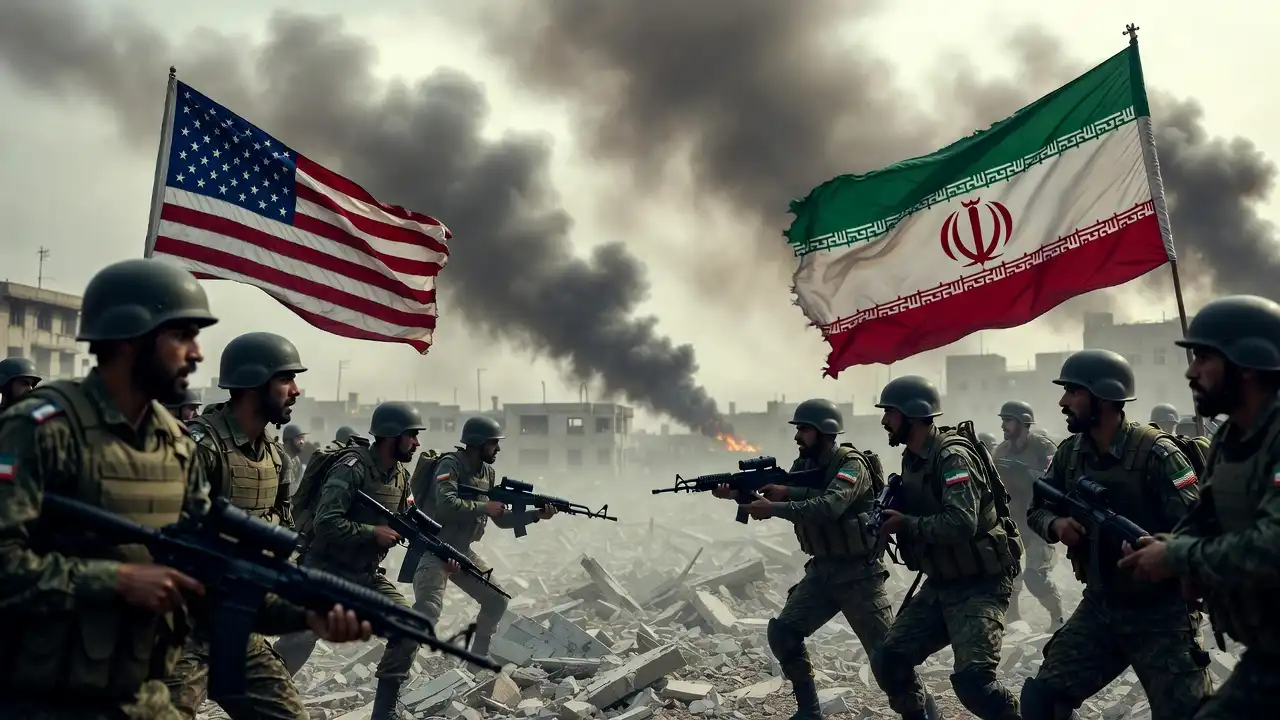
The United States and Iran have reached a tentative agreement to end their devastating 15-week-old war, but the path to a lasting peace remains highly unstable. Speaking on the sidelines of the G7 summit in the French lakeside town of Evian-les-Bains, U.S. President Donald Trump warned that the newly brokered ceasefire is not a final agreement. He declared that he is ready to resume the military campaign if Iran fails to meet expectations. The warning came just as world leaders gathered in France to discuss the fragile truce, while fresh violence in southern Lebanon threatened to derail the entire diplomatic effort before the formal signing ceremony in Switzerland.
Trump chose the global stage of the G7 summit to project a position of strength, downplaying the agreement as a temporary memorandum of understanding rather than a permanent peace treaty. “If I don’t like it, we’ll go back to shooting at them, dropping bombs on their head,” Trump told reporters during a bilateral meeting with Egyptian President Abdel Fattah el-Sisi. He repeated the warning, emphasizing that if Iranian authorities do not behave, U.S. forces will immediately resume dropping bombs. This aggressive rhetoric highlights the domestic pressure Trump faces from political rivals and military hawks within his own party. Critics argue that the conflict has achieved few of Washington’s initial goals, as the Iranian government remains in power and Tehran retains its enriched uranium and ballistic missile systems.
The temporary deal, which the two countries digitally signed over the weekend, extends a shaky ceasefire that began in April for another 60 days. This window aims to give negotiators time to draft a permanent treaty. Under the current terms, the United States will lift its crippling naval blockade of Iranian ports, allowing Iran to export its oil once again. In return, Tehran has agreed to reopen the Strait of Hormuz, a critical maritime passage through which 20% of the world’s oil and natural gas supplies flow. Energy markets responded swiftly to the news of the reopening, with Brent crude oil prices falling below $80 per barrel, representing their lowest level since the conflict began on February 28. Meanwhile, stock markets reacted with relief as the S&P 500 jumped by 1.9%.
Despite the skepticism at home, G7 leaders from Canada, France, Germany, Italy, Japan, and the United Kingdom threw their support behind the agreement. French President Emmanuel Macron welcomed the development, calling it a very good deal that halts a period of severe economic instability. However, the allies also stressed that a follow-up agreement must address Iran’s ballistic missile program and regional activities. The G7 leaders announced that they stand ready to help implement the accord. A European coalition led by Britain and France is preparing to deploy naval forces to help secure shipping lanes once commercial traffic resumes through the Strait of Hormuz. Trump also used the summit to deny rumors that the U.S. would contribute to a rumored $300 billion reconstruction fund for Iran, stating firmly that Washington will not put up even 10 cents.
A major threat to the survival of the agreement comes from southern Lebanon, where the truce calls for a halt to hostilities between Israeli forces and the Iran-backed militant group Hezbollah. The conflict has already displaced more than 1 million people in the region. Although the memorandum outlines a ceasefire, Israel did not join the negotiations. Israeli Prime Minister Benjamin Netanyahu made it clear that his country retains the right to use military force and will keep troops in southern Lebanon as long as necessary. Iranian officials have warned that any continued Israeli military presence in Lebanese territory constitutes a direct violation of the ceasefire agreement.
The reality on the ground in southern Lebanon reflects this dangerous tension. While fighting has slowed down, it has not stopped completely. Lebanese state media reported fresh Israeli airstrikes and artillery fire hitting several southern towns. Security sources in Lebanon noted that Hezbollah launched two drone attacks targeting Israeli forces in the south, which Israel later confirmed had injured 5 of its soldiers. In the city of Nabatieh, weeks of bombardment have reduced entire blocks to rubble, leaving the area looking like the devastated Gaza Strip. Local council member Khodr Kodeih reported that although some displaced residents tried to return to inspect their homes, the fresh strikes forced them to flee once again, leaving the city empty.
Meanwhile, ordinary citizens in Iran are greeting the news of the ceasefire with exhaustion rather than celebration. While political leaders in Tehran have declared the interim deal a major diplomatic victory over Washington, the civilian population continues to suffer from severe economic hardship. Months of war and blockades have crippled local businesses and sent the cost of basic goods soaring. Many citizens feel that a 60-day extension offers little comfort. Amir, a 34-year-old media production company owner in Isfahan, described the mood of his compatriots as grim. He explained that 99% of the people are merely in survival mode, living day by day with no real vision of what the future holds.
The next critical step in this diplomatic process will take place on Friday, when high-ranking American and Iranian officials plan to meet across the Swiss border to formally sign the memorandum. The signing ceremony will set off a 60-day countdown for both nations to negotiate a permanent resolution to the war, which has already claimed the lives of more than 7,000 people. The stakes could not be higher. If the truce fails, or if the ongoing border skirmishes in southern Lebanon trigger a larger regional war, both Washington and Tehran have made it clear that they are prepared to return to all-out conflict. For now, the world watches with anxiety as diplomats race against the clock to secure a lasting peace.















