

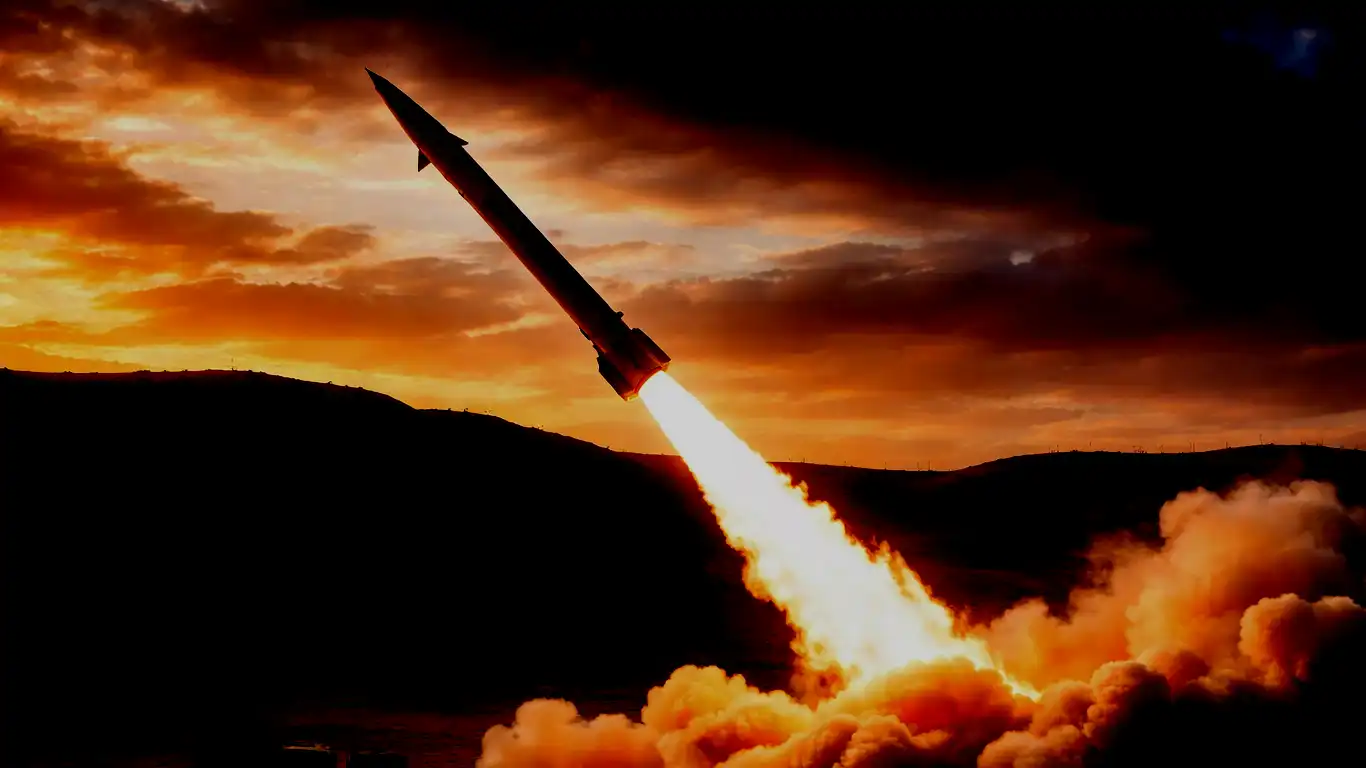
The fragile peace in the Middle East faced its most severe test on Sunday, June 7, 2026, when Iran launched a major barrage of ballistic missiles directly at Israel. This dramatic bombardment shattered a tenuous ceasefire that had held the region together since early April. Air raid sirens sounded across northern Israel and Haifa as defense batteries scrambled to intercept the incoming targets. The direct military exchange marks a dangerous escalation in the region’s 100-day war, pushing the United States, Israel, and Iran back to the brink of a full-scale conflict just as negotiators were nearing a permanent peace agreement.
The missile launches occurred just hours after Israeli warplanes struck the southern suburbs of Beirut, a heavily populated district known as Dahiyeh. The controversial airstrike represented the first time that the Israeli military targeted Lebanon’s capital since the ceasefire agreement took effect on April 8, 2026. According to the Lebanese Health Ministry, the strike on a residential apartment building killed at least two people and wounded up to 20 others. Israel defended the strike as retaliation for the Iran-backed militant group Hezbollah firing rockets toward northern Israeli border towns earlier in the day. However, the bombing violated Washington’s explicit requests to stand down, triggering immediate threats of retaliation from Tehran.
Iran’s powerful Revolutionary Guard described the missile strike as a decisive “warning” to Jerusalem. Iranian state broadcaster IRIB confirmed the launches and warned that military strikes would continue if Israel launched any further attacks on Lebanon. In Tehran, parliamentarians and security officials adopted a highly aggressive stance. Ebrahim Rezaei, the spokesperson for the Iranian parliament’s security committee, warned of a “decisive and painful” response to the Zionist regime. Meanwhile, parliament speaker and top negotiator Mohammad Bagher Ghalibaf declared that all U.S. military bases and assets in the region had now become legitimate targets because Washington had failed to restrain its close ally.
The Israel Defense Forces (IDF) immediately activated its multi-layered air defense systems to counter the incoming threat. Israeli military spokesperson Daniel Hagari reported that the Iron Dome and Arrow defense batteries successfully intercepted the majority of the ballistic missiles. However, he cautioned that the country’s defense is “not hermetic.” While the explosions lit up the night skies over the West Bank and northern Israel, local authorities reported no immediate casualties or major structural damage. Despite the successful interceptions, the IDF chief of staff and top commanders remained in emergency situational assessments to prepare for a potential secondary wave of attacks.
The sudden flare-up sent immediate shockwaves through global financial and commodity markets. On Sunday evening, U.S. stock index futures tumbled, with Dow Jones Industrial Average futures shedding more than 200 points, or 0.4%, as investors rushed toward safe-haven assets. Concurrently, global energy markets braced for supply disruptions. West Texas Intermediate (WTI) crude prices jumped more than 3% in after-hours trading, climbing toward $94 a barrel compared to Friday’s close of around $90 a barrel. The threat of a wider conflict that could close the strategic Strait of Hormuz—the transit route for 20% of the world’s daily oil supply—has forced energy traders to price in a substantial geopolitical premium.
The escalating military threat also severely disrupted regional civil aviation. Following the missile launches, Israeli authorities temporarily suspended all incoming and outgoing flights at Ben Gurion International Airport near Tel Aviv to protect passenger planes from stray missiles. Shortly afterward, Iranian civil aviation officials took similar precautions, suspending domestic and international flights at Tehran’s main airport. These rapid airport closures left thousands of international travelers stranded and highlighted how quickly localized military clashes can disrupt global logistics and transit networks.
The escalation prompted a flurry of urgent, behind-the-scenes diplomatic activity from U.S. President Donald Trump, who is eager to preserve ongoing peace talks. In a series of phone calls and public statements on Sunday night, Trump urged both sides to pull back from the edge. Trump told Israeli Prime Minister Benjamin Netanyahu not to strike back, warning that a counterattack would spark an endless cycle of violence that would ruin the progress toward a comprehensive treaty. Trump also publicly addressed the Iranian leadership, stating on social media that they had shot their missiles and must now return to the negotiating table to finalize a deal.
Before Sunday’s missile exchange, the United States, Israel, and Lebanon had made significant progress during a fourth round of trilateral talks held in early June. Negotiators had agreed to a tentative ceasefire framework that required Hezbollah to withdraw all operatives from the South Litani sector and stop targeting Israeli border towns. However, Hezbollah’s refusal to adhere to a partial ceasefire and Israel’s subsequent decision to strike Dahiyeh completely derailed the process. Iranian officials have consistently insisted that any permanent deal to end the war must also address the conflict in Lebanon, making a separate peace agreement nearly impossible to achieve.
As the Middle East war reaches its 100th day, the international community remains highly anxious about the prospects of a wider regional war. While President Trump continues to push for a diplomatic breakthrough, the deep distrust between Jerusalem and Tehran ensures that the security situation remains incredibly volatile. For global markets, the ongoing threat of a major military escalation represents a massive economic risk. Until Washington can secure an enforceable agreement that binds both state actors and non-state proxies, the region will likely remain trapped in this dangerous cycle of direct missile strikes, border clashes, and economic instability.















