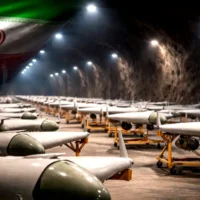


A dramatic escalation in Middle Eastern military activity has driven fresh volatility in global energy markets, threatening the fragile diplomacy currently underway behind closed doors. On Wednesday, June 3, 2026, the United States military and regional authorities reported multiple major missile and drone attacks targeting international infrastructure and naval assets in the Persian Gulf. The sudden resurgence of active fighting, highlighted by a direct strike on a commercial airport in Kuwait, has effectively shattered the quiet of a months-long, fragile ceasefire. With these events, Iran’s war hostilities are flaring once again, driving up global energy prices and pushing any hopes for a finalized peace deal into a deep, uncertain stalemate.
The most alarming development of Wednesday’s escalation occurred in the early morning hours, when a wave of Iranian drones and missiles struck Kuwait International Airport. According to Kuwait’s state news agency, the unexpected attack caused “severe damage” to the airport’s Terminal 1 (T1) building, forcing aviation authorities to immediately divert all incoming and outgoing commercial flights to neighboring hubs. Regional emergency services reported that the strike caused multiple injuries among airport staff and travelers, though the full extent of the casualties and structural damage remains limited under tight government security. The targeting of Kuwait represents a significant expansion of the conflict, directly punishing a major U.S. ally that hosts vital American military installations.
While the attack on Kuwait’s commercial terminal succeeded in causing disruption, U.S. Central Command (CENTCOM) reported that American and allied forces successfully defeated several other major Iranian missile barrages across the region. According to an official statement from CENTCOM, Iran launched multiple ballistic missiles toward several regional neighbors on Wednesday, but almost all failed to hit their intended targets. Two Iranian missiles fired at Kuwait fell short or broke apart in mid-flight. In comparison, joint U.S. and Bahraini air defense forces intercepted three ballistic missiles heading directly for Bahrain, where the U.S. Navy’s Fifth Fleet headquarters is located.
In immediate response to these attempted attacks on its regional partners and maritime trade, the United States military launched precision retaliatory strikes against Iranian assets. American warplanes targeted military installations on Qeshm Island, a strategically vital island situated directly in the narrow Strait of Hormuz. CENTCOM officials confirmed that the self-defense strikes targeted and destroyed several radar arrays and missile launch pads that Iranian forces had been using to coordinate attacks on civilian shipping. This direct strike on Iranian territory marks a significant increase in tactical risk, as the U.S. seeks to enforce its naval blockade of Iran’s southern ports.
Tehran offered its own justification for the sudden escalation, claiming its actions were defensive responses to prior American aggression. According to reports from Iranian state media, the Revolutionary Guard Corps (IRGC) navy targeted a commercial vessel named “Panaya” with anti-ship missiles near the Strait of Hormuz. The IRGC claimed that the missile strike was a direct response to a U.S. attack on an Iranian oil tanker earlier in the week. In a strongly worded public statement, the IRGC warned that any further U.S. attempts to disrupt the security of the Strait of Hormuz or enforce a unilateral port blockade will carry a heavy physical price for the American military.
The return of active military conflict in the Gulf sent immediate shockwaves through international financial markets, driving oil prices up by more than 1% during early trading on Wednesday. Brent crude futures rose $1.05, or 1.09%, to trade at $97.05 a barrel, while U.S. West Texas Intermediate (WTI) crude climbed $1.01, or 1.08%, to settle at $94.77 a barrel, with both benchmarks reaching their highest levels in a week. Energy analysts warned that the stalling of peace negotiations, combined with the ongoing closure of the Strait of Hormuz, has forced traders to price a high risk premium back into benchmark prices as the global economy enters the peak summer demand season.
This sudden price surge is unfolding against an increasingly tight global supply landscape, compounding pressure on energy markets. According to market sources citing data from the American Petroleum Institute, U.S. crude oil inventories fell for a seventh consecutive week, dropping by a massive 6.8 million barrels for the week ending May 29, 2026. This prolonged drawdown of commercial inventories suggests that Western nations are rapidly depleting their emergency stockpiles to offset the loss of Middle Eastern supplies, leaving energy markets highly vulnerable to sudden, unexpected supply shocks as the summer driving season begins.
The sudden flare-up in hostilities has deal-makers scrambling to save a tentative peace process that appeared close to completion just last week. Officials from both Washington and Tehran had previously indicated that they had reached a tentative initial agreement to halt the war. However, neither side has signed off on the memorandum of understanding, and the diplomatic track has since stalled. While Iranian media reported on Tuesday that Tehran has not exchanged any direct messages with Washington for several days, U.S. President Donald Trump has publicly insisted that talks remain ongoing, creating a confusing climate of mixed messages and diplomatic uncertainty.
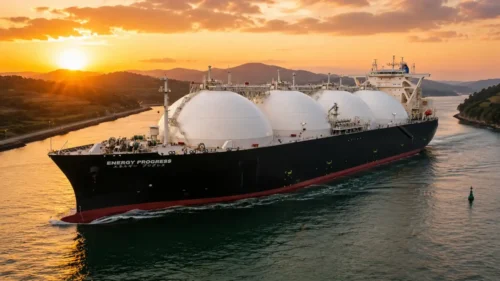
Even if diplomats successfully salvage the peace talks and sign a formal truce, shipping experts warn that normal maritime commerce will not resume quickly. ANZ Bank senior commodity strategist Daniel Hynes pointed out that any physical effort to reopen the Strait of Hormuz faces extraordinary challenges because Iranian forces have heavily mined large portions of the vital waterway. The Strait of Hormuz handled approximately 20% of the world’s daily crude oil and liquefied natural gas shipments before the war erupted on February 28, 2026. Hynes noted that while some bold commercial vessels have recently attempted the journey, total transits remain significantly below pre-conflict levels due to the high risks and astronomical insurance premiums.
In the end, the devastating missile strikes on Wednesday prove that the war in the Middle East remains a volatile conflict with the potential to trigger global economic chaos. As both the United States and Iran trade heavy blows and peace negotiations remain deadlocked, civilian infrastructure like Kuwait’s commercial airport continues to pay the highest price. Until both administrations can sign the tentative peace agreement, clear mines from the shipping lanes, and restore regional security, the global energy market will remain highly vulnerable to sudden shocks, keeping the entire world on the brink of an all-out economic and military crisis.