

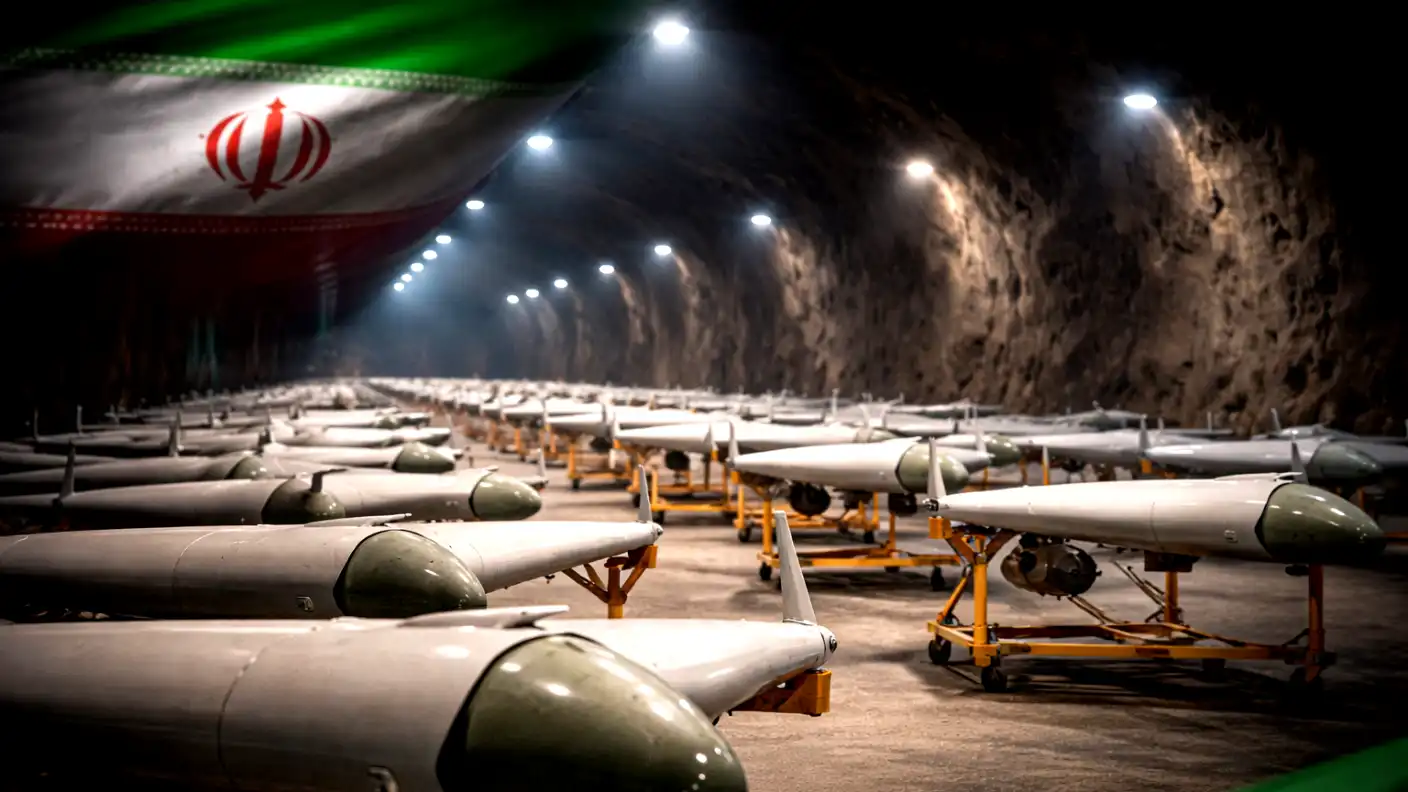
The delicate diplomatic efforts to end the devastating conflict between Washington and Tehran are on the verge of collapsing. On Tuesday, June 2, 2026, a senior Iranian military commander issued a stern warning to the United States and its NATO allies, boasting that Iran still holds major unused military “trump cards” that it has yet to deploy on the battlefield. Speaking to state-affiliated media, Brigadier General Mohammad Jafar Asadi dismissed Western claims that the war has significantly crippled Iran’s defensive capabilities. This aggressive rhetoric comes at a highly precarious moment, as crucial Iran war negotiations hang by a thread following a sudden decision by Tehran’s hardline factions to suspend indirect communications with U.S. mediators.
Brigadier General Mohammad Jafar Asadi is not a minor political commentator, but a highly influential veteran within the Islamic Revolutionary Guard Corps (IRGC). Asadi currently serves as the deputy inspector of the Khatam al-Anbiya Central Headquarters, Iran’s highest unified military command center. Born in 1948, Asadi fought extensively during the brutal eight-year Iran-Iraq war in the 1980s and later commanded Iranian forces operating in Syria. His public intervention on Tuesday serves as a direct message from the very top of Iran’s military establishment, signaling that the armed forces are prepared to resume active hostilities if Washington demands a total diplomatic surrender.
In his highly publicized interview, Asadi addressed reports that U.S. and Israeli airstrikes had heavily damaged Iran’s domestic defense industries during the three-month-old war. While he acknowledged that some industrial facilities had suffered minor damage, he insisted that military manufacturing remains completely intact. Asadi revealed that the actual factories producing ammunition, missiles, and support equipment for the armed forces operate in locations completely hidden from the enemy’s sight. He claimed that the U.S. and its intelligence allies have absolutely no knowledge of these hidden military sites, allowing Tehran to maintain a highly acceptable level of defense production.
Strikingly, General Asadi asserted that Iran’s greatest strategic advantage does not lie in its massive missile arsenal, but in the ideological commitment of its population. He made a bold public declaration, stating that the country’s armed forces have absolutely no need to develop atomic bombs. Instead, he described the millions of Iranian citizens who have packed public squares and demonstrated in the streets for more than 90 consecutive nights as Tehran’s ultimate “atomic bomb.” By framing public mobilization as a powerful defensive shield, the commander sought to project an image of national unity, even as international sanctions continued to push the domestic economy into a steep free fall.
The general’s defiant remarks arrived just 24 hours after a major political shift in Tehran disrupted the peace process. On Monday, June 1, 2026, Iranian state media confirmed that Tehran had officially suspended its indirect negotiations with the United States. Diplomatic sources identified hardline military factions closely linked to acting IRGC commander Ahmad Vahidi as the force behind Monday’s suspension. The Vahidi faction has reportedly grown increasingly frustrated with what they perceive as U.S. bad faith, arguing that Washington has repeatedly violated the terms of the temporary ceasefire that has been in place since early April.
At the heart of the current diplomatic deadlock is the escalating military situation in southern Lebanon, where Israeli forces are pursuing an active ground incursion. Hardline Iranian leaders have made a complete, guaranteed halt to Israeli operations against their ally, Hezbollah, a non-negotiable condition for any temporary peace agreement. Fars News Agency reported on Tuesday that Iran’s last communication to U.S. mediators before the suspension was a clear and uncompromising warning regarding Lebanon. Because the United States continues to provide diplomatic cover and heavy weaponry for Israel’s northern offensive, the IRGC hardliners chose to pull out of the talks to signal their refusal to abandon their regional partners.
Despite the highly publicized breakdown in communication, U.S. President Donald Trump has vigorously denied that the peace process is dead. In a late-night post on his Truth Social platform on Monday, Trump dismissed reports of a suspension as complete fabrication and fake news. He claimed that conversations between the United States and Iran have continued daily, asserting that negotiators have been speaking today, yesterday, and every day over the past week to hammer out an interim deal. Trump, who is under intense domestic pressure to end a highly unpopular war that has sent global energy prices soaring, urged the public to relax, promising that the situation will work out well.
The Trump administration’s optimistic rhetoric is part of a broader, highly aggressive “maximum pressure” diplomatic strategy. Last month, White House Deputy Chief of Staff Stephen Miller boasted in a Fox News interview that the United States holds all the cards in the ongoing standoff, claiming that the IRGC has been militarily defeated on the battlefield. Miller warned that Trump is prepared to use raw American military might to enforce the administration’s non-proliferation goals if Tehran attempts to resume its nuclear enrichment program. Foreign policy experts suggest that the White House is deliberately downplaying the pause in negotiations to present any future agreement as a total strategic victory.
Meanwhile, other senior IRGC commanders are warning that if the U.S. chooses to resume the war, they will face a completely different kind of military conflict. IRGC spokesman Brigadier General Hossein Mohebbi announced on Tuesday that Iranian forces are far better prepared for war now than they were before the April ceasefire took effect. Mohebbi revealed that Iran has used the two-month truce to repair damaged installations and significantly expand its operational capabilities. He warned that if the U.S. returns to the military arena, the entire geography of the battlefield, the types of weapons used, and the very nature of the operations will change dramatically, extending far beyond the Middle East.
Ultimately, the escalating war of words between Washington and Tehran highlights the extreme fragility of the current ceasefire in the Middle East. While President Trump continues to promise a swift diplomatic breakthrough, the defiant rhetoric of senior IRGC commanders like General Asadi shows that Iran’s military leadership is not ready to surrender. As both nations continue to expand their military readiness and trade hostile warnings, the margin for error along the shipping lanes of the Persian Gulf remains razor-thin. Unless mediators can quickly bridge the gap between Trump’s public pressure and the IRGC’s red lines, the temporary truce could easily shatter, dragging the region back into a catastrophic, full-scale war.















