

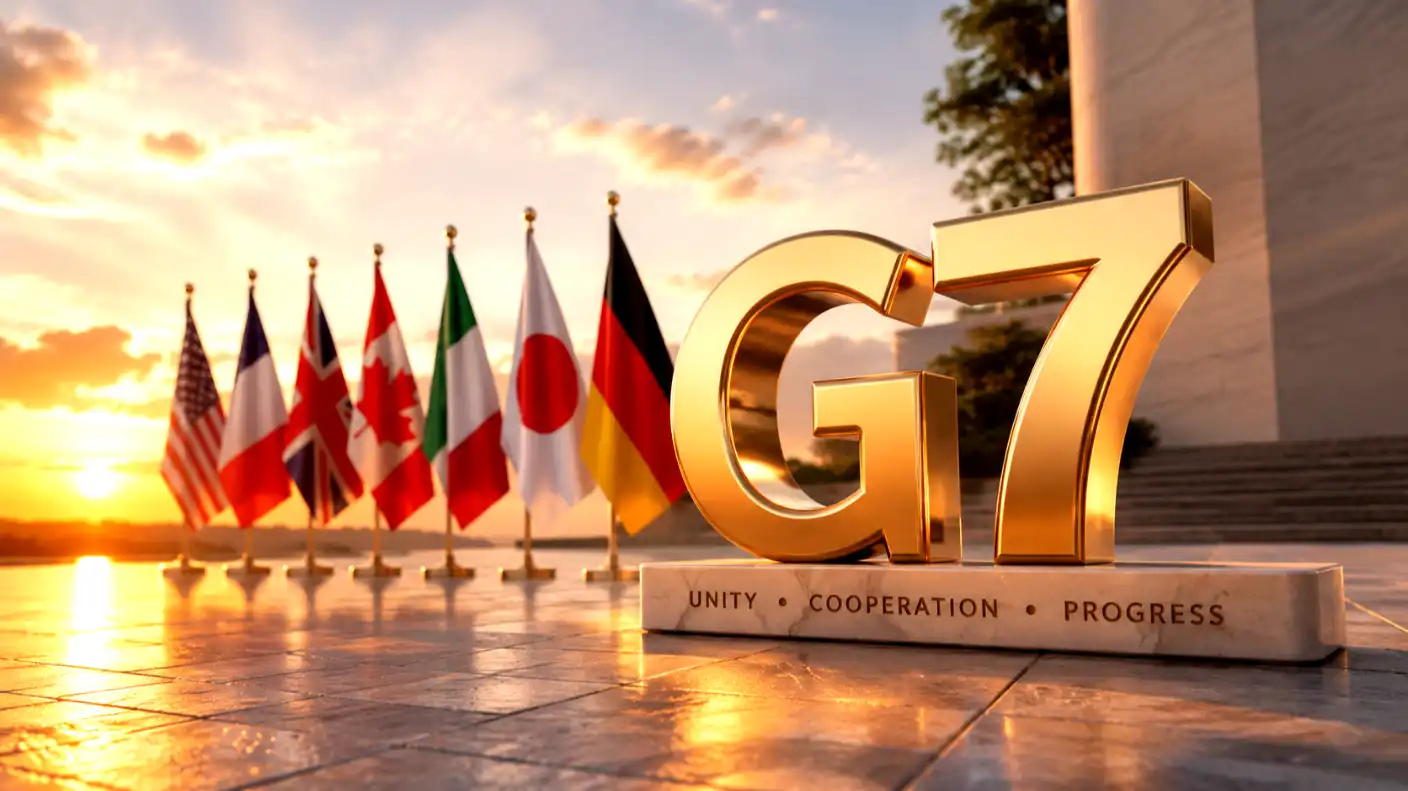
Brazilian President Luiz Inácio Lula da Silva held critical, high-level discussions with European Union leaders on Tuesday to address mounting trade disputes that threaten to disrupt South American exports to Europe. Meeting on the sidelines of the annual Group of Seven summit in the French resort town of Évian-les-Bains, the Brazilian leader sat down with European Commission President Ursula von der Leyen and European Council President António Costa. According to official government statements, the urgent talks focused entirely on resolving recent European regulatory measures that have led to severe restrictions on Brazilian agricultural and industrial products. The meeting highlights the delicate balancing act facing both regions as they try to operationalize a historic trade partnership amid rising environmental and protectionist hurdles.
At the absolute center of the diplomatic friction are newly proposed European environmental and health regulations that could block billions of dollars worth of Brazilian exports. In May, European authorities announced plans to halt imports of various Brazilian animal products, including beef and poultry, starting this September, citing concerns over tracing systems and sanitary compliance. Additionally, European steel producers have lobbied aggressively to curb imports of South American steel, arguing that foreign metal undercuts local manufacturers who face high domestic energy costs. During the Tuesday meeting, both sides acknowledged these deep-seated concerns but committed to finding a mutually beneficial resolution, establishing a new bilateral cooperation mechanism to systematically identify and resolve trade bottlenecks before the September restrictions take effect.
The sudden escalation of these trade disputes comes at a highly sensitive time, occurring just months after both blocs celebrated a historic diplomatic milestone. In January, after more than 25 years of grueling, off-and-on negotiations, the European Union and the Mercosur customs union—comprising Brazil, Argentina, Uruguay, and Paraguay—finally signed a massive, generation-defining free trade agreement in Asunción, Paraguay. Promoted heavily by President Lula, the landmark deal is designed to create the largest free trade zone on the planet, opening up a combined consumer market of hundreds of millions of people. However, the subsequent introduction of unilateral European regulations has threatened to undermine the spirit of the historic pact before the national parliaments can even ratify the final text.
Under the baseline terms of the signed EU-Mercosur treaty, the economic benefits for South American manufacturers are substantial. Trade surveys indicate that the agreement will expand Brazilian access to global goods import markets from 8% to 36%, removing import tariffs on 54.3% of traded products—representing more than 5,000 individual items—immediately upon entry into force. To protect vulnerable domestic industries, South American countries secured flexible, long-term transition periods of 10 to 15 years to gradually reduce tariffs on European-manufactured imports, including machinery and vehicles. While the deal is highly advantageous on paper, South American officials argue that Europe’s increasingly strict non-tariff barriers, particularly regarding environmental compliance and deforestation, function as a covert form of protectionism that devalues these hard-won tariff cuts.
The path to implementing the trade deal has been incredibly rocky, heavily contested by powerful domestic interest groups within Europe. France has consistently led a vocal coalition of European nations attempting to block or dilute the agreement, yielding to intense pressure from local agricultural lobbies. French farmers argue that importing cheap South American beef and soy—which are not subject to the same strict European pesticide and carbon regulations—will unfairly undercut local family farms. The political tension erupted into physical chaos earlier this year when protesting European farmers used tractors to block major highways in Brussels, throwing eggs and potatoes at government buildings to demand immediate protection against foreign agricultural competition.
Frustrated by the persistent regulatory hurdles and import barriers in Europe, President Lula is actively exploring alternative global partnerships to diversify Brazil’s export portfolio. On the sidelines of the same G7 summit on Tuesday, the Brazilian leader held a highly strategic bilateral meeting with Japanese Prime Minister Sanae Takaichi. Following the talks, Lula announced that Brazil and Japan may formally launch official negotiations for a comprehensive free trade agreement between Mercosur and Japan later this month. If confirmed, both nations expect to make the formal announcement on June 30 during the upcoming South American bloc’s summit in Asunción, Paraguay, marking a major geopolitical shift as both countries seek alternatives to tightening trade restrictions worldwide.
Japan’s sudden interest in accelerating trade talks with the South American bloc represents a highly calculated response to changing global economic dynamics. The Japanese government is under intense pressure to secure reliable, alternative sources of critical minerals, energy, and food as it navigates aggressive tariff policies in North America and Chinese curbs on rare earth exports. Mercosur represents one of the last major global markets with which Japan still has no active free trade agreement. By formalizing a strategic partnership framework covering trade, investment, and the clean energy transition, Tokyo hopes to secure a stable pipeline of raw inputs, particularly iron ore, which currently accounts for roughly 80% of Brazil’s total exports to Japan.
While traditional agricultural and commodity trade remains highly contested, Brazil and the European Union are finding much cleaner success in collaborating on the high-tech digital economy. Just days before the G7 summit, European and Brazilian officials signed a landmark Digital Partnership in Brasília, elevating their digital cooperation to a new strategic level. The agreement focuses on strengthening joint research and establishing shared standards in data governance, artificial intelligence safety, digital public infrastructure, and submarine fiber connectivity. By building these advanced digital frameworks, both regions hope to secure their technological sovereignty and reduce their reliance on major technology platforms in the United States and China.
The intense diplomatic and trade activity occurs against a backdrop of stable macroeconomic performance for the South American powerhouse. On Tuesday, global credit rating agency Fitch Ratings officially affirmed Brazil’s long-term issuer default ratings at “BB” with a stable outlook. The agency highlighted Brazil’s resilient economic growth, robust external finances, and large domestic consumer market as key pillars of stability. However, the rating firm warned that persistent fiscal deficits, high public debt, and the potential impact of global trade disputes remain key challenges. Securing stable, long-term export corridors through agreements like the EU-Mercosur pact is critical to maintaining this macroeconomic stability and driving future credit upgrades.
Ultimately, President Lula’s high-stakes meetings at the G7 summit underscore a critical turning point in global trade diplomacy. As the traditional rules of globalization fragment under the weight of protectionism, environmental mandates, and geopolitical tensions, emerging economies must work twice as hard to protect their market access. By establishing a dedicated bilateral mechanism to address the European animal product curbs and simultaneously opening new trade talks with Japan, Brazil is successfully deploying a highly active, multipolar foreign policy. Until European leaders can reconcile their ambitious climate goals with their commitments to international trade, South American exporters will continue to navigate a highly volatile landscape, forcing them to keep their options open and their trading partners diversified.















