

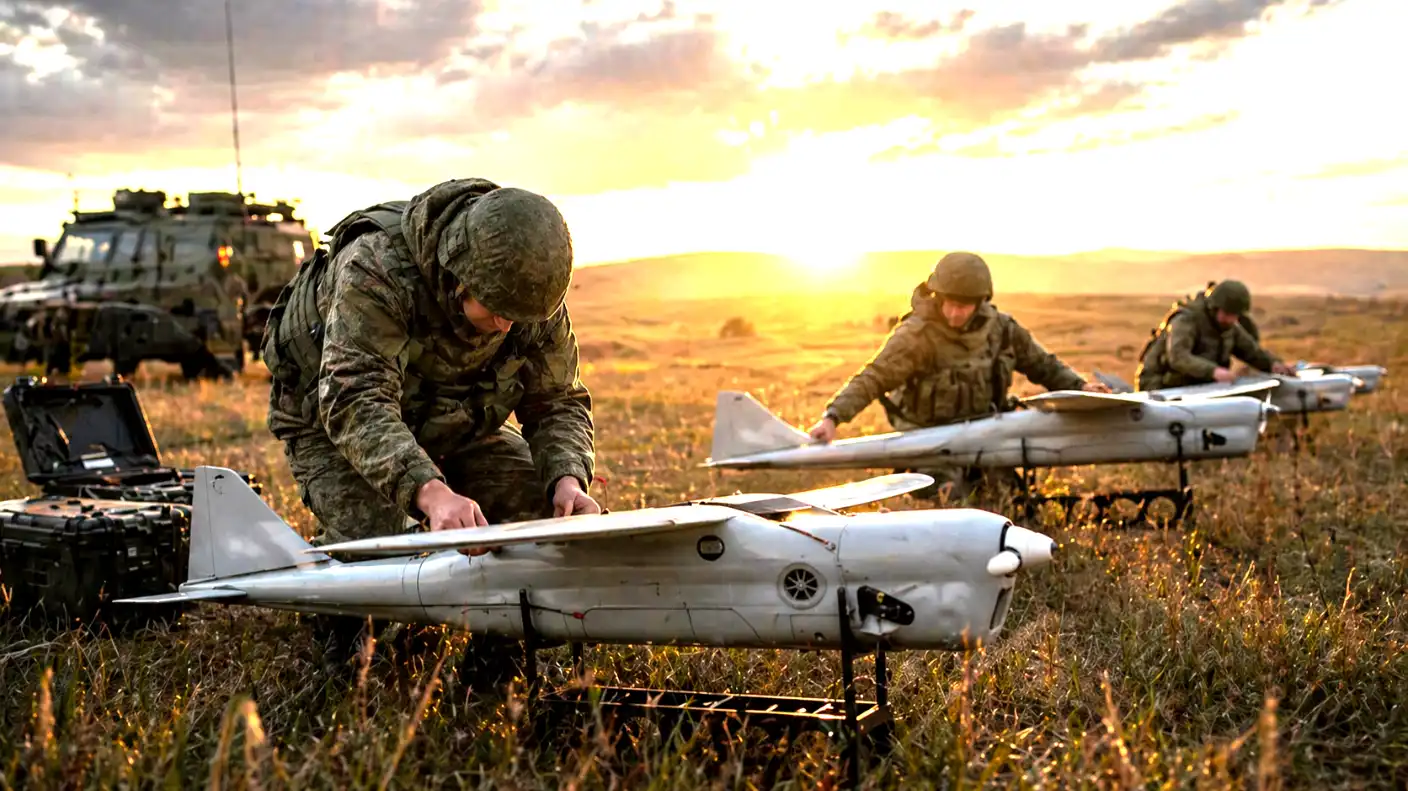
A shocking military escalation on the eastern edge of Europe has exposed critical vulnerabilities in Western air defenses. In the early hours of Friday, May 29, 2026, an explosive Russian-made Geran-2 drone crashed directly into a residential apartment building in the eastern Romanian city of Galați. The resulting blast ignited a severe roof fire and forced the immediate evacuation of the high-rise, leaving two local civilians injured. The strike represents the most serious incident to directly impact NATO territory since the beginning of Russia’s full-scale invasion of Ukraine, immediately raising the alarm across both Brussels and Washington. The attack has laid bare a dangerous reality: Europe remains deeply unprepared to detect and neutralize low-flying, inexpensive unmanned aerial vehicles before they strike civilian populations.
Speaking live from Romania on Monday, June 1, 2026, former NATO Deputy Secretary General and former Romanian Foreign Minister Mircea Geoană told Euronews that the entire country remains in a state of profound shock. He emphasized that the attack on Galați, a densely populated city located on the Danube River near the Ukrainian border, has shattered any lingering sense of security along the border regions. Geoană warned that repeated Russian strikes on Ukrainian port infrastructure have created a climate of constant fear in eastern Romania and the Danube Delta. In his interview, he cautioned that if such an intrusion could occur on NATO soil once, it will inevitably happen again, as European defense systems are simply not designed to handle frequent, low-altitude drone incursions.
The core of Europe’s vulnerability lies in a glaring technological and financial mismatch. Geoană pointed out that when a low-flying drone enters domestic airspace, frontline military units have almost no time or space to react. Furthermore, he raised a critical question regarding the cost of modern air interception: “With what do you shoot down a cheap drone?” Using advanced, multimillion-dollar fighter jets like the F-16 or F-35, or deploying incredibly expensive surface-to-air missiles, to destroy a drone that costs only a few thousand dollars, makes no strategic or financial sense. Geoană urged European nations and the NATO alliance to rapidly shift their procurement focus toward dedicated, cost-effective counter-drone systems, such as acoustic sensors, signal-jamming devices, and specialized low-altitude interceptor systems.
In response to the unprecedented strike, Romanian President Nicușor Dan launched a swift and uncompromising diplomatic offensive against Moscow. President Dan immediately convened an emergency session of the Supreme Council of National Defense to address what he described as “the most serious incident to affect the national territory” since the outbreak of the war. Following the security meeting, Dan announced the closure of the Russian consulate general in the vital Black Sea port city of Constanța and declared the Russian consul general persona non grata. Speaking to the media, President Dan warned that Romania will not tolerate any actions that threaten the lives of its citizens and did not rule out the future expulsion of the Russian ambassador if similar drone incursions continue.
Romania has also moved to elevate the crisis to the global stage. The country formally requested an emergency session of the United Nations Security Council, which is scheduled to meet in New York on Monday, June 1, 2026, at 3:00 PM. Romanian Ambassador to the UN Cornel Feruță announced that Bucharest initiated the meeting under Articles 34 and 35 of the UN Charter, which govern situations that threaten international peace and security. Romania’s Minister of Foreign Affairs, Oana Țoiu, will personally address the Security Council to present physical and chemical evidence proving the drone’s Russian origin. This rapid diplomatic escalation signals that Bucharest is determined to treat the strike not as a stray border incident, but as a deliberate and dangerous violation of international law on NATO soil.
The apartment block explosion in Galați is not an isolated event, but rather the climax of a mounting series of airspace violations across the region. Over the past several months, mysterious drones and military aircraft have repeatedly violated the borders of other NATO member states, including Poland, Sweden, Latvia, and Estonia. Unauthorized drone flights have even forced intermittent closures at major airports in Copenhagen and Oslo, raising concerns of coordinated hybrid warfare. As Russia intensifies its attacks on Ukrainian ports along the Danube, the risk of explosive debris crossing borders remains extremely high. Baltic defense officials have repeatedly warned that they face a new security reality requiring a unified regional response rather than isolated national defense strategies.
The Galați apartment strike has injected a powerful sense of urgency into European Union plans to build a coordinated “European Drone Wall.” Initially proposed by European Commission President Ursula von der Leyen after multiple border violations in late 2025, the initiative seeks to deploy an integrated network of sensors, electronic jamming systems, and anti-drone weaponry stretching from the Baltic Sea to the Black Sea. EU Commissioner for Defense Andrius Kubilius has championed the project, describing it as a critical pillar of Europe’s future “Readiness Roadmap.” While the Drone Wall was originally envisioned as a shield exclusively for the eastern flank, Western and Southern European nations are now pushing to expand the program to protect the entire continent from hybrid threats.
While European leaders agree on the urgent need for a unified defense shield, turning the Drone Wall into reality presents massive technical and financial challenges. Integrating various sensor systems, command networks, and rules of engagement across dozens of sovereign nations is an incredibly complex task. Furthermore, EU countries have yet to agree on how to divide the massive costs of developing and maintaining such an expansive defense grid. To address these gaps, the European Commission is exploring innovative, dual-use civilian technologies. Officials have pointed to proposals from telecom giants Ericsson and Nokia, which are researching how to use existing 5G mobile antenna networks as low-altitude radar systems capable of tracking rogue drones in real time.
Ultimately, the devastating drone crash in Galați represents a critical turning point for European security. The incident has proven that the threat of spillover from the war in Ukraine is no longer a theoretical risk, but an active danger to European lives on NATO soil. If the alliance continues to respond with mere statements of condemnation while cheap drones easily evade its high-tech radars, it risks signaling weakness to its adversaries. To maintain the credibility of its collective defense, Europe must move past political debates and invest heavily in modern, decentralized air defense networks. The winners of this technological arms race will not be the ones with the most expensive missiles, but those who can build a seamless, affordable shield to protect their citizens from the skies.















