
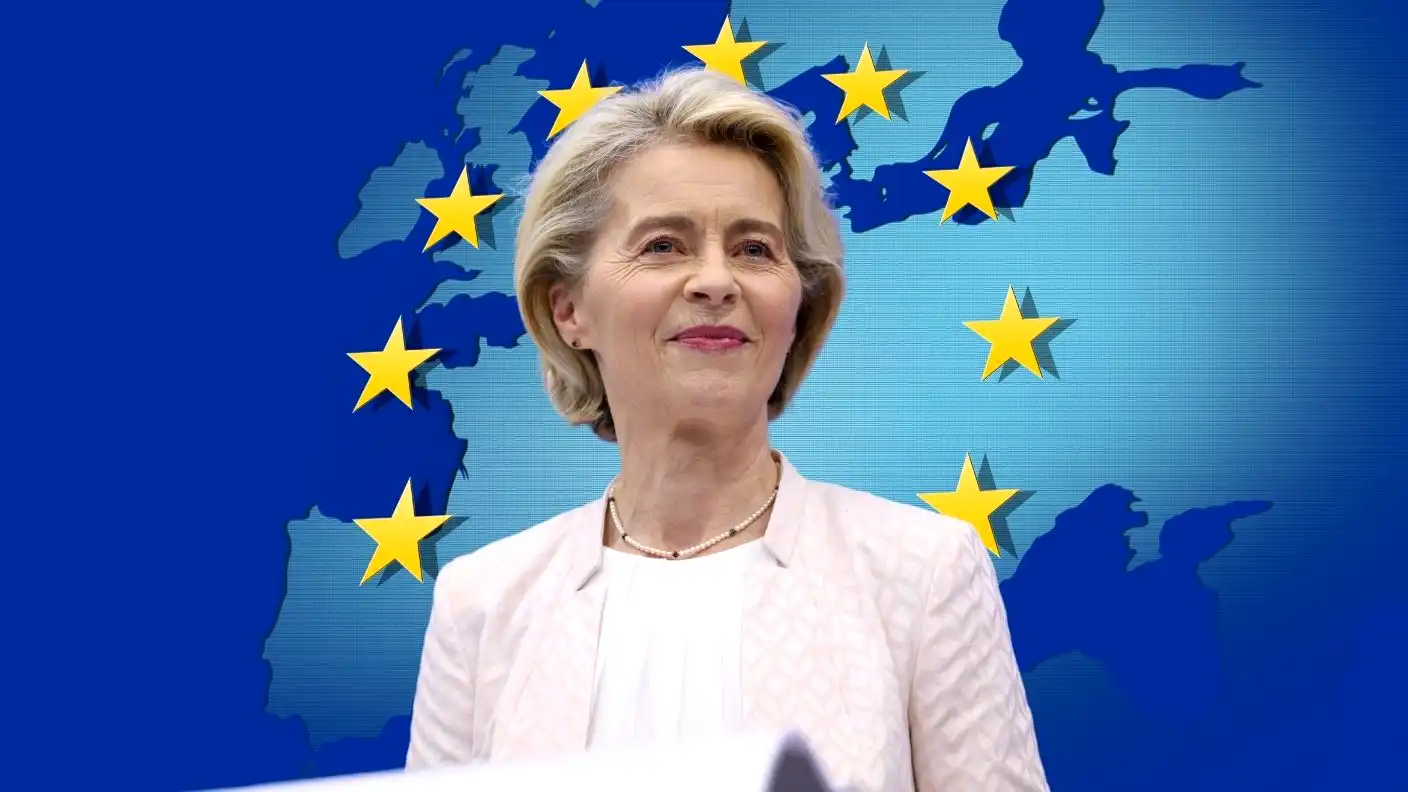
Ursula von der Leyen recently changed how the European Commission operates, and the new setup creates a massive headache for environmental and human rights groups. These activists say big corporations now enjoy a much smoother path to influence new laws. Meanwhile, regular civil society groups find themselves totally locked out of the room.
The trouble started when von der Leyen began her second term in December 2024. She shifted the main political focus away from the famous Green Deal. Now, the government cares much more about corporate profits and military defense. To prove this point, the Commission just hired exactly 1 new commissioner dedicated entirely to defense issues.
Under the new rules, von der Leyen split major job duties across multiple desks. She appointed exactly 6 executive vice presidents to manage the remaining staff. However, activists say this confusing structure makes it nearly impossible to figure out who actually writes the rules. Sven Harmeling, a climate leader at CAN Europe, noted that activists simply do not know which department handles specific environmental discussions anymore.
During the previous term, environmentalists knew exactly who to call. They took their concerns straight to Frans Timmermans and his dedicated climate team. Today, the new climate boss, Teresa Ribera, also manages competition policy. Having 2 massive jobs creates serious structural confusion. Lobbyists say this lack of clarity drains the roughly $2 million operating budgets of small non-profit groups trying to save the planet.
This confusing structure allows the government to rush important decisions. Recently, leaders pushed through a major simplification proposal while completely skipping normal public consultations. Lawmakers only invited a tiny, select group of corporate stakeholders to give their opinions. Over the last 10 months, environmental policies regularly took a back seat to security and industrial competitiveness.
Power now sits almost entirely at the very top of the food chain. Von der Leyen and her closest advisers control nearly every major decision. Marco Contiero, a farming expert at Greenpeace, noticed that the decision-making process follows a strict vertical hierarchy. He pointed out that even high-level government directors often have absolutely no idea what new rules the president plans to announce next.
Von der Leyen defends her new management style. Back in September 2024, she claimed she wanted to destroy the old, rigid silos that kept departments apart. She promised the new structure would force everyone to share equal responsibility and work together as a single team. However, German lawmaker René Repasi completely disagrees. He argues the confusing structure serves as a deliberate strategy to divide the staff and conquer the policy agenda.
Corporate consultants absolutely love the new setup. One Brussels consultant representing major businesses noted that if you want to fix a problem quickly, you go straight to the top political leaders instead of talking to lower-level workers. For example, Internal Market Commissioner Stéphane Séjourné spends almost all his time meeting with corporate executives. His team told reporters that an industry commissioner meeting with industry leaders makes perfect sense.
While businesses win, equality advocates feel 100 percent left behind. The new commissioner for preparedness and equality, Hadja Lahbib, frustrates human rights workers every single week. Alejandro Moledo of the European Disability Forum stated that the Commission had completely scaled back its commitment to fairness. He says human rights quickly became a second-class objective.
Activists say Lahbib completely fails to deliver on her promises. Advocacy group ILGA-Europe claims her new LGBTQ+ plan lacks any real ambition. The anti-racism network ENAR called her recent programs a total missed opportunity that simply recycles old, failed ideas. Mental Health Europe added that her gender equality strategy offers nothing but empty promises for the most vulnerable people in society.
Despite the heavy criticism, one anonymous European official strongly defended Lahbib. The official insisted the commissioner remains personally dedicated to advancing equal rights. As proof, the official noted that Lahbib traveled to Budapest last year to support the LGBTQ+ community publicly. She also hosted several recent meetings regarding disability rights. Still, the broader European Commission refused to answer direct questions about the growing complaints.