

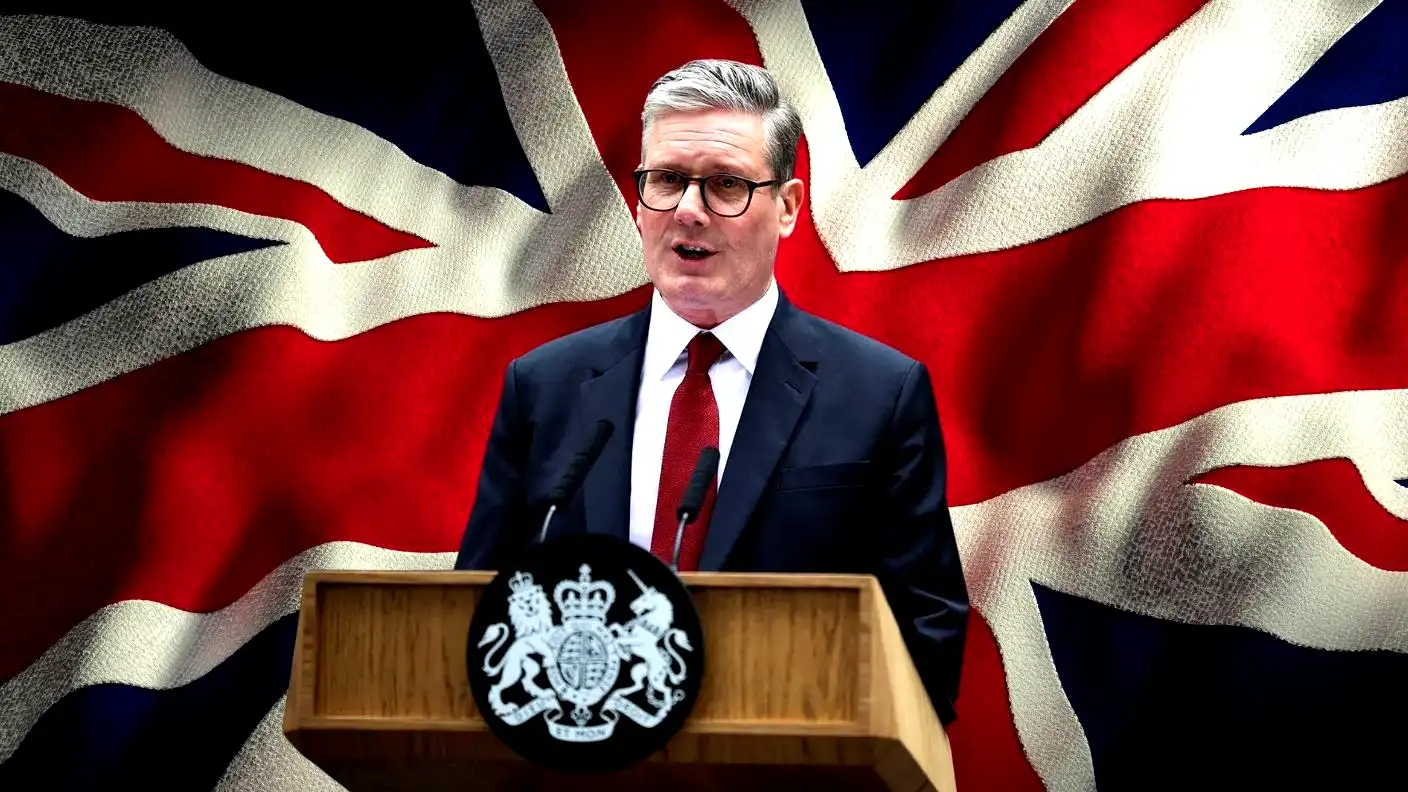
The security landscape in Western Europe has taken a highly alarming turn as the United Kingdom’s top political and military leaders issue grave warnings about the threat of an open war with Russia. On Friday, June 5, 2026, Prime Minister Keir Starmer warned that Western intelligence assessments suggest a real threat that a Russia-attacks-NATO-country scenario could occur within the next four years, potentially materializing as soon as 2030. Speaking to reporters, Starmer emphasized that the UK and its allies must quickly come to grips with this highly dangerous timeline, which leaves very little room for bureaucratic delays. The Prime Minister argued that this urgent security threat requires an immediate, major expansion of the country’s military capabilities and defensive readiness.
Starmer’s sobering assessment arrived on the same day that the UK’s top military officer issued his own stark warning about the rapidly deteriorating security environment. Speaking on BBC Radio 4’s Today program on Friday, Chief of the Defense Staff Air Chief Marshal Sir Richard Knighton declared that the United Kingdom is currently experiencing its most dangerous period since the end of the Cold War. Citing his extensive 35-year military career, Knighton stated that the risks and threats currently facing the country are greater than at any other point in his working life. He explained that Russia is actively probing, challenging, and testing Western defenses through multiple channels, creating a persistent risk of an accidental or deliberate military escalation.
To support his warnings, the military chief provided highly troubling statistics regarding the rapid increase in Russian military activity near British airspace. Knighton revealed that the number of Russian strategic aircraft incursions into or near UK airspace during the first five months of 2026 had already matched the total number recorded throughout the entirety of 2025. This rapid acceleration of aerial posturing proves that Moscow is intentionally raising the stakes and testing Western response times. Knighton warned that these aggressive flights represent a dangerous game of brinkmanship, where a single pilot error or a close intercept on the water could easily cross a line and spark a major international crisis.
British intelligence agencies are currently tracking a daily barrage of hostile activities, including sophisticated cyberattacks targeting critical national infrastructure, reckless acts of industrial sabotage, and even state-sponsored assassination attempts on European soil. The chief of defense explained that Moscow is systematically probing both traditional military defenses and broader societal vulnerabilities, seeking to smuggle sensitive technology and disrupt Western support for Ukraine, which is currently navigating its fifth year of a full-scale defensive war.
In response to these mounting intelligence assessments, Prime Minister Starmer pledged to publish the government’s long-delayed 10-year defense investment plan before the upcoming NATO summit in Turkey next month. The crucial policy blueprint, originally scheduled for publication last autumn, has faced repeated delays since the end of last year as officials have struggled to align military needs with tight state budgets. Starmer announced that the UK will officially unveil the comprehensive strategy before the high-profile summit in Ankara, which begins on July 7, 2026. The prime minister insisted that the new defense plan is fully funded and will provide a clear, long-term roadmap for how Britain will spend its resources to deter foreign adversaries.
A central pillar of the upcoming defense plan is a firm commitment by the Labour government to increase the national defense budget significantly. Starmer confirmed that the UK will raise its defense spending to 2.5% of its gross domestic product (GDP) next year, with further increases planned thereafter to meet the evolving threats. While some defense advocates and political opponents continue to press for an immediate rise to 3% of GDP to address the massive equipment shortages facing the armed forces, Starmer defended his gradual timeline. He asserted that a sustainable, fully funded increase in spending is far more effective than making unfunded promises that could undermine the country’s broader economic stability.
The massive increase in spending also signals a fundamental shift in how the UK military plans to prepare for future wars. Chief of the Defense Staff Knighton pointed out that over the past two decades, British military planners have focused almost exclusively on preparing for short, highly confined, and localized conflicts. However, the brutal war in Ukraine has proved that the era of quick, high-tech engagements is over, and that modern militaries must ready themselves for potentially much greater, longer-lasting conflicts. This requires the UK to rapidly expand its ammunition stockpiles, rebuild its heavy industrial manufacturing capacity, and invest heavily in emerging technologies like low-cost drones and autonomous combat systems.
The warnings from Starmer and Knighton align closely with increasingly urgent assessments issued by other top NATO commanders over the past year. In December of last year, NATO Secretary General Mark Rutte issued a similar warning, cautioning that Russia could be ready to use military force against a NATO member state within five years if Western allies fail to support Ukraine. German and French intelligence services have also published similar timelines, warning that the Kremlin is systematically reorganizing its society and economy to support a long-term confrontation with the West. These shared assessments show that the threat of a wider European war is no longer a fringe theory but the consensus view of the alliance.
In the end, the stark warnings from the UK’s top political and military leaders prove that Europe has entered a highly dangerous new era of geopolitical instability. By openly warning of a potential Russian attack on NATO by 2030, Keir Starmer is attempting to prepare the British public and European allies for the hard choices and difficult financial priorities that lie ahead. As the alliance prepares to gather in Ankara on July 7, the pressure on member states to translate their spending commitments into tangible military capabilities is greater than ever. Without a rapid, coordinated effort to rebuild their forces and deter foreign aggression, Western nations risk allowing a fragile peace to shatter, leaving them to face the consequences of unaddressed vulnerability.















