

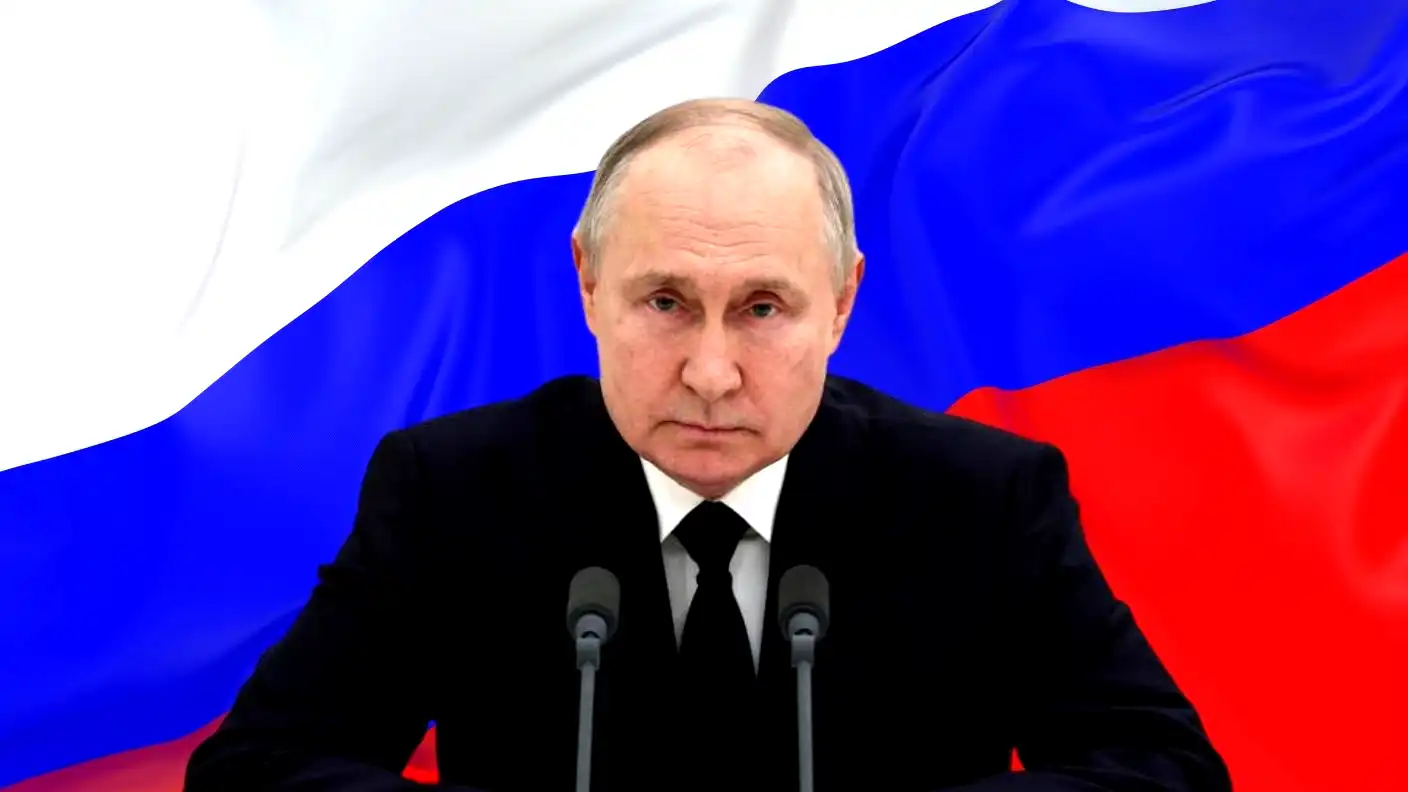
Russian President Vladimir Putin publicly pressured the country’s monetary policymakers to ease borrowing costs further to support domestic business activity. Putin said in televised remarks that economic conditions in Russia strongly support another reduction in the central bank’s key interest rate. The high-profile statement comes just over a week before the central bank’s scheduled rate-setting meeting on June 19, 2026. Putin’s public intervention signals that the debate over high borrowing costs has moved beyond technical banking circles, transforming into a highly charged political issue as local businesses struggle with expensive debt.
The central bank currently maintains its benchmark interest rate at 14.5%, a level that many commercial bankers and industrial leaders argue remains far too high. This rate-cutting cycle began earlier this year as the regulator slowly backed away from the record-high 21% rate originally imposed to defend the national currency. Most recently, on April 24, 2026, the central bank cut the rate by 50 basis points to 14.5% from 15.0%, following an earlier cut to 15.5% on February 13. Despite these successive cuts, business owners complain that high borrowing costs are draining vital investment, forcing them to spend their profits on servicing expensive debt instead of expanding their manufacturing capacity.
In his televised address, President Putin insisted that the government’s aggressive monetary and fiscal measures have successfully brought the domestic economic situation under control. He pointed to falling consumer prices as primary evidence that the central bank possesses the necessary room to lower rates. Putin noted that annual inflation has successfully cooled to just over 5%, down from 5.9% in March. “The situation is under control; that’s absolutely obvious,” Putin stated during the broadcast, adding that the measures taken have produced the desired results. Consequently, the Russian leader asserted that the government has every right to expect both a swift reduction in the key rate and the achievement of other necessary growth parameters.
The domestic economic picture has shifted dramatically over the past few months due to extreme geopolitical volatility in the Middle East. The direct military conflict between the United States and Iran, which has closed the strategic Strait of Hormuz, has severely disrupted global energy shipping and sent Brent crude prices past $95 a barrel. While the blockade has devastated Western economies, it has provided a massive windfall for Russia, allowing the country to generate billions of dollars in unexpected oil revenues. Furthermore, the global energy panic prompted Western nations to temporarily ease certain sanctions, thereby unlocking over $1 billion in previously restricted Russian financial transactions.
Despite this massive energy windfall, Central Bank Governor Elvira Nabiullina remains highly cautious about cutting interest rates too quickly. During a recent press conference, Nabiullina warned that a prolonged conflict in the Middle East could ultimately harm the Russian economy. She argued that the consequences of rising global costs and shipping disruptions could eventually outweigh any short-term benefits gained from increased oil exports and a stronger ruble. The central bank continues to warn that pro-inflationary risks still prevail in the domestic economy, particularly if government wartime spending continues to expand the federal budget deficit.
The central bank’s conservative approach is also reflected in its modest economic growth forecasts for the year. Even with the recent influx of oil cash, the regulator has maintained its 2026 gross domestic product growth forecast at a modest 0.5%-1.5%. This subdued outlook reflects the reality that high borrowing costs continue to weigh heavily on non-energy sectors of the economy, including retail, agriculture, and construction. Business activity has shown signs of cooling, and many analysts believe that keeping interest rates elevated for too long risks pushing the real economy into a visible stagnation before the end of the year.
The ongoing debate over monetary policy has also triggered noticeable volatility in Russian financial markets. Following the central bank’s decision on April 24, the ruble-denominated MOEX stock index fell 0.6% in afternoon trading, as investors expressed disappointment that policymakers did not deliver a bolder, 100-basis-point cut. While the temporary loosening of sanctions has helped stabilize the ruble near its pre-conflict trading levels, any sudden drop in global oil prices would instantly expose the currency to fresh downward pressure. This vulnerability convinces many investors that the central bank must act carefully to avoid triggering a fresh wave of capital flight.
As the June 19 rate-setting meeting approaches, all eyes remain on Governor Nabiullina to see if she will bow to the growing political pressure. Most private-sector economists expect the Bank of Russia to lower the key rate by another 50 basis points to 14.0%, marking the ninth consecutive rate cut since the easing cycle began. However, some industrial lobbies are demanding a much larger reduction, arguing that the central bank’s conservative approach is needlessly choking off domestic production. The upcoming meeting will test the independent regulator’s ability to balance Putin’s political demands with its own statutory mandate to maintain price stability.
Ultimately, Russia’s economic future remains deeply linked to both domestic military spending and the volatile global energy market. The recent windfall from high oil prices has temporarily shielded the country from the worst effects of Western sanctions, giving the government the necessary resources to finance its ongoing operations. However, as President Putin’s televised comments demonstrate, the domestic economy cannot rely solely on oil revenues to sustain its growth. Until the central bank can safely lower interest rates and restore cheap credit to local businesses, the Russian economy will continue to navigate a delicate path between wartime inflation and industrial stagnation.















