

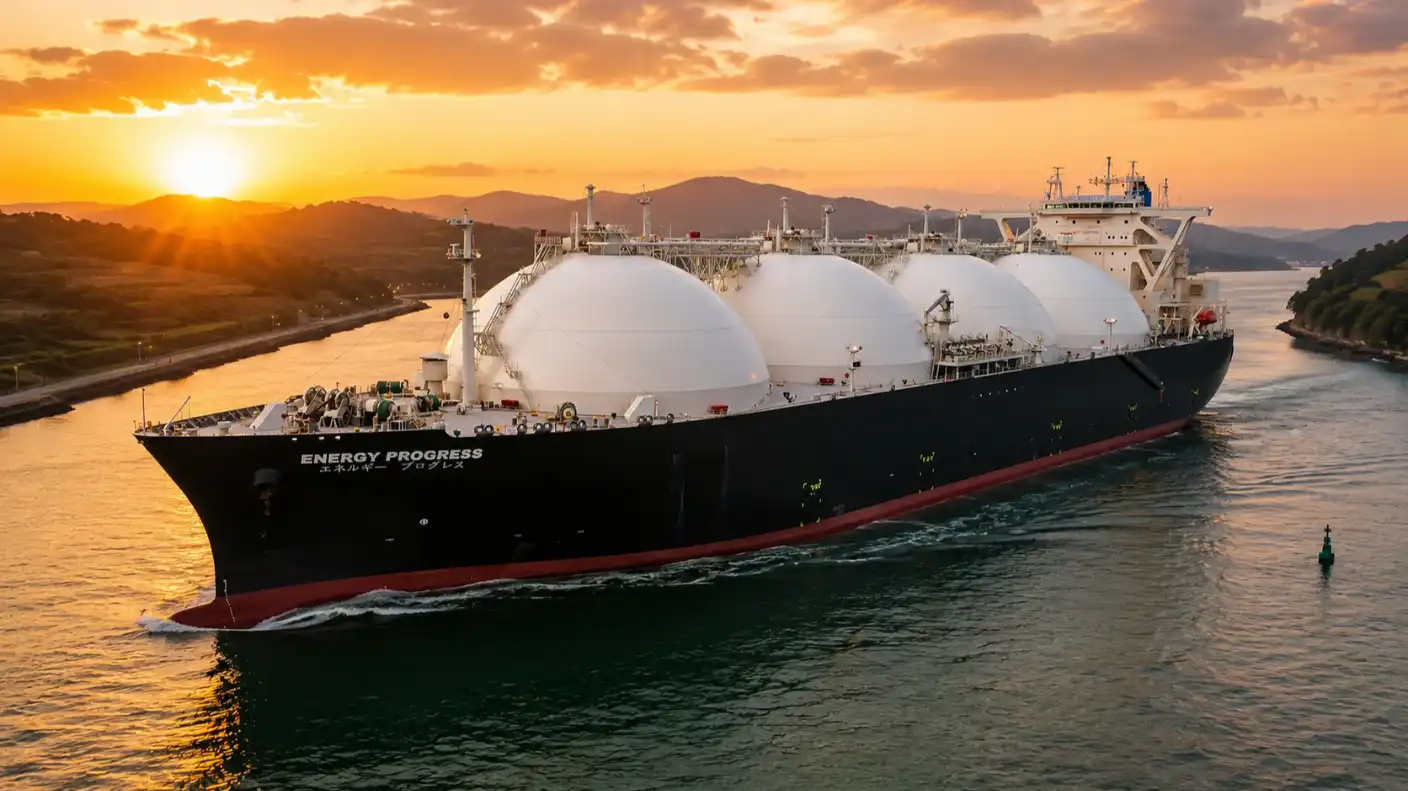
Qatar has quietly started sending its first liquefied natural gas (LNG) tankers through the highly dangerous, blockaded Strait of Hormuz. According to ship-tracking data compiled by Bloomberg, several massive vessels recently made stealthy runs through the narrow channel to deliver fuel to energy-starved buyers in Asia. This marks the first time the world’s second-largest LNG exporter has managed to ship fuel out of the region since a brutal war erupted in the Middle East three months ago, throwing global energy markets into chaos.
The recent maritime operations require extreme caution and high-tech secrecy. Ships like the Al Kharaitiyat, which loaded its cargo at Qatar’s massive Ras Laffan export complex, successfully exited the strait and entered the Gulf of Oman, listing Pakistan as its destination. To survive the highly hostile waters, these giant tankers are routinely “going dark” by turning off their Automatic Identification System (AIS) transponders. By disabling their tracking signals, captains hide their identities, speeds, and locations from hostile drone operators and warships patrolling the region.
The quiet resumption of trade follows a devastating period of economic paralysis for the Gulf nation. When the war between the United States, Israel, and Iran began on February 28, Iranian drone strikes directly targeted Qatar’s critical Ras Laffan facilities. The explosive attacks destroyed or sidelined exactly 17% of Qatar’s total LNG export capacity, which amounts to roughly 12.8 million metric tons of LNG per year. Industry experts estimate that repairing this severe infrastructure damage will take between 3 and 5 years, forcing Qatar to declare an unprecedented force majeure to its international buyers.
This sudden halt in exports triggered a massive energy crisis across Asia, particularly in India. Before the conflict, India built its entire energy import infrastructure around Persian Gulf exporters, sourcing more than 50% of its total LNG imports from Qatar and the United Arab Emirates. When the Strait of Hormuz shut down, these crucial deliveries stopped overnight. This supply shock forced Indian factories to cut production. It compelled the government to buy expensive replacement fuel on the spot market, raising domestic energy costs by over 1.5% within weeks.
To get the vital fuel moving again, shippers are using highly unconventional and risky routes. Tracking data suggests that the successful tankers, including the Al Hamra and the Mihzem, are hugging the northern, Iranian-controlled coastline to pass through the strait. This Tehran-approved path keeps the vessels far away from American naval blockades, but it exposes them to constant danger from regional proxy groups. In fact, a bulk carrier was struck by an unidentified projectile just 23 nautical miles off the coast of Doha earlier this month, proving that the waters remain a high-risk zone.
While these few shipments provide a tiny sliver of relief, the Strait of Hormuz remains mostly closed. Under normal peacetime conditions, about three massive LNG carriers crossed the strait every single day, handling roughly 20% of the world’s total supply. Today, that steady flow of global trade has shrunk to an absolute trickle. The persistent shipping block continues to choke the global economy, costing international cargo companies over $1.5 billion every week due to fuel detours and skyrocketing insurance premiums.
Despite the successful voyages, Qatar’s government maintains that it has not signed any secret agreements to bypass the blockade. A spokesperson for Qatar’s foreign ministry stated on Tuesday that the country has no special arrangements in place for its energy exports. The official admitted that the closure of the Strait of Hormuz has added extreme complexity to regional supply chains, but insisted that Qatari fuel continues to move only through standard, highly difficult operational channels.
The world now watches the Middle East with extreme caution as the United States and Iran negotiate a potential 60-day ceasefire. If the diplomats can successfully finalize a peace deal and permanently reopen the shipping lanes, it will unblock over $1 billion worth of stranded fuel and lower energy prices almost instantly. Until then, Qatari tankers must continue to risk their crews and ships, turning off their radars and sneaking through the dark to keep the lights on in Asia.















