
The conflict in Eastern Europe has entered a critical and highly attritional phase. More than four years after the full-scale invasion, the frontline has largely hardened into a grueling test of endurance, industrial capacity, and technological adaptation. While Moscow has committed massive amounts of manpower and military hardware to its spring-summer campaign, the physical reality on the ground has shifted.
Rather than achieving the swift breakthroughs that the Kremlin anticipated, Russian forces have run into a wall of resilient Ukrainian defenses. This article explores the latest battlefield data, the escalating air campaigns, the prospects for diplomatic progress, and the strategic perspectives of experts analyzing this global security crisis.
The Battlefield Reality: Stagnant Lines and Small Gains
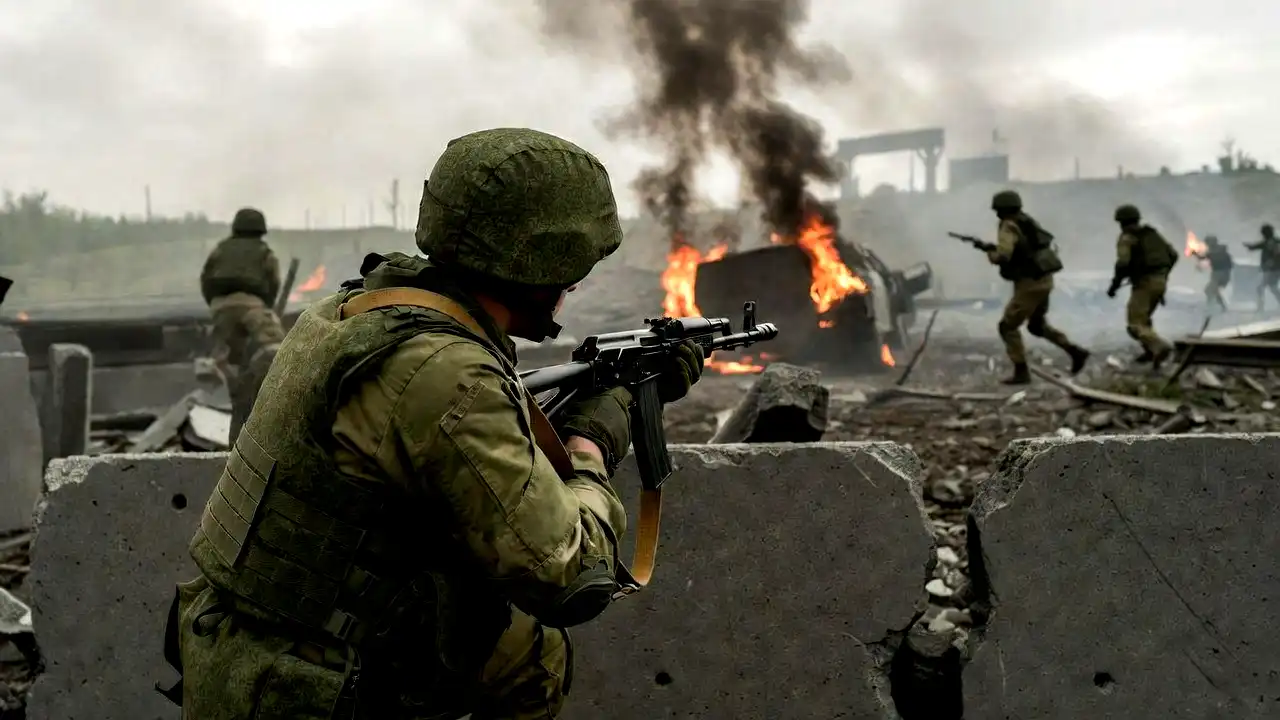
The physical movement of the frontline has slowed to a crawl. Despite a significant increase in the intensity of Russian assaults, the actual territory changing hands is remarkably small. This stagnation reveals a major gap between the Kremlin’s political goals and its military’s actual capabilities.
The Struggle for Territorial Progress
Data from independent monitoring organizations, including the Finnish Black Bird Group and the open-source group DeepState, reveals that Russia’s territorial progress has hit its lowest point in years. During May, Russian forces managed to capture just 14 square kilometers of Ukrainian territory. This represents a minuscule physical gain, roughly five square miles, despite a massive 37.5% increase in the volume of Russian assaults along the line of contact.
Even more significant is the reversal of the overall territorial balance. During April and May, Ukrainian forces liberated more territory through localized counterattacks than Russian forces seized. This marks the first time since late 2023 that the territorial balance has favored Kyiv over a multi-week period.
While Russian President Vladimir Putin claimed during the St. Petersburg International Economic Forum that his forces had captured over 2,400 square kilometers of land, independent military assessments quickly disproved those claims. According to verified satellite and battlefield data, Russian forces maintain a presence in 99.77% of Luhansk Oblast, 80.82% of Donetsk Oblast, and 75.7% of Zaporizhia Oblast, falling far short of complete control.
A Protracted War of Attrition
This lack of progress is forcing a reevaluation of Russia’s broader strategic goals. At the start of the year, Western and Ukrainian analysts expected Moscow to attempt a decisive push to capture the remaining parts of the Donbas region. However, military specialists now believe that this objective is rapidly slipping out of reach.
Russia is struggling to sustain its preferred method of waging a protracted, attritional war. While Moscow can still deploy large numbers of infantry, the overall quality of its battlefield performance has decreased. The Kremlin’s theory of victory relies on the assumption that Russia can wear down Ukrainian forces over several years through sheer numbers.
However, this strategy is placing a massive strain on the Russian economy, leading to lower domestic recruitment rates and growing societal discontent as casualties mount.
The Aerial Escalation: Drones Over Russia and Heavy Barrages Over Kyiv
Because the ground war has largely stalled, both sides are escalating their air operations. Ukraine is expanding its deep-strike capabilities to damage Russia’s economic infrastructure, while Russia is launching heavy missile and drone barrages against Ukrainian cities.
Ukraine’s Deep-Strike Campaign
Ukrainian forces have significantly intensified their intermediate- and long-range drone attacks inside Russia, hitting record levels. The primary targets of this campaign are the oil and gas facilities that directly fund the Kremlin’s war machine.
A clear example of this strategy occurred on June 3, when Ukrainian long-range drones struck a major oil terminal in St. Petersburg. The attack took place on the opening day of the St. Petersburg International Economic Forum, an event that President Putin routinely uses to showcase Russia’s economic strength and stability.
The successful strike sent thick plumes of smoke over the city, directly challenging the Kremlin’s narrative of security. Following months of these targeted drone strikes on refineries and storage hubs, Russian officials acknowledged for the first time that the country’s total oil production has fallen since the start of the year.
Russia’s Heavy Air Barrages
While Ukraine targets economic infrastructure, Russia continues to strike Ukrainian urban centers and civilian infrastructure. On June 2, Russian forces launched one of the largest coordinated air attacks of the war.
The Russian military fired 73 missiles and 656 attack drones at Kyiv and several other regions. The massive strike killed at least 22 people and injured more than 100 across the country.
The attack damaged residential buildings and critical infrastructure in Kyiv, Dnipro, Kamianske, Kharkiv, Sumy, and Zaporizhia.
While Ukraine’s air defense forces performed exceptionally well against certain threats—intercepting 40 of the 41 cruise missiles and approximately 602 drones—they struggled against faster ballistic and hypersonic systems.
Ukrainian air defenses intercepted only 11 of the 33 Iskander-M ballistic missiles and failed to stop any of the eight hypersonic Zircon missiles. This gap in defense capability highlights Ukraine’s urgent need for advanced Western anti-missile systems.
Behind Closed Doors: Peace Prospects and the Hope for Winter
As the military standoff continues, Ukrainian officials are starting to discuss the realistic possibilities of ending the active phase of the conflict.
Kyiv’s Realistic Opportunity
During a meeting with lawmakers from his party, President Volodymyr Zelensky expressed cautious optimism about the war’s trajectory. Zelensky stated that Kyiv sees a realistic opportunity to bring the active, hot phase of the war to an end.
The head of Zelensky’s office, Kyrylo Budanov, publicly echoed this view, suggesting that ending the war’s hot phase before winter is a realistic goal.
This optimism stems from the changing conditions on the battlefield. With Russian offensives stalling and Ukrainian long-range strikes successfully targeting military assets deep inside Russia, Kyiv believes that the cost-benefit calculus for the Kremlin is slowly changing.
If Ukraine can continue to hold the line while damaging Russia’s economic and logistics networks, Moscow may eventually face pressure to enter meaningful negotiations.
The Frozen Diplomatic Channels
Despite the optimistic statements from Kyiv, the actual diplomatic path to peace remains highly complicated. U.S.-mediated peace talks between the two sides have been effectively frozen since February.
The main reason for this loss of momentum is the United States’ shifting geopolitical focus. Washington has been heavily consumed by its own direct military and diplomatic conflicts in the Middle East, particularly its ongoing confrontation with Iran.
This overseas distraction has reduced the diplomatic energy that U.S. officials can dedicate to mediating the European conflict, leaving Kyiv to manage both the battlefield and the diplomatic front with less direct American support.
Diplomacy and Humanitarian Actions: The June Prisoner Exchange
While major peace negotiations remain frozen, the two sides continue to engage in limited diplomatic exchanges, particularly on humanitarian issues.
The United Arab Emirates-Mediated Swap
On June 5, Russia and Ukraine completed another significant prisoner-of-war exchange. The United Arab Emirates facilitated the deal, which saw 185 servicemen return to each side.
The released Russian soldiers were transported to Belarus for initial medical and psychological evaluation before their final transfer back to Russia. This successful exchange shows that despite the intense hostility on the battlefield, functional communication channels remain open through international mediators.
The Human Cost and Mobilization Pressures
The return of these prisoners highlights the immense human cost of the war. Western intelligence estimates suggest that total Russian combat deaths are approaching 500,000, with the Russian military losing between 15,000 and 20,000 soldiers every month to sustain its frontline positions.
The General Staff of the Armed Forces of Ukraine estimates total Russian personnel losses, including both killed and wounded, at over 1.37 million since the start of the full-scale invasion.
These catastrophic losses are placing a severe strain on Russia’s domestic stability. The Kremlin is finding it increasingly difficult to recruit new soldiers to replace its losses without resorting to another highly unpopular wave of forced mobilization.
In Ukraine, the military faces similar challenges, as years of intense fighting have left frontline units exhausted and in urgent need of fresh personnel and advanced equipment.
Strategic Views: Stretched Resource Dynamics and Long-Term Durability
The ongoing stalemate has sparked intense debate among military analysts and economists regarding which nation is better positioned to sustain a long-term conflict.
The Russian Industrial Capacity Trap
Many economic analysts believe that Western sanctions are slowly but surely squeezing Russia’s industrial capacity. Mathieu Boulègue, an analyst at the Center for European Policy Analysis, noted that the Russian war machine is grappling with shrinking industrial capacity and dwindling stocks of advanced weaponry.
While Moscow has dramatically increased its domestic defense spending, this spending acts as a double-edged sword. It keeps the domestic economy afloat in the short term, but it starves non-military sectors of capital and talent, fueling inflation and reducing long-term economic productivity.
If Ukraine can continue to disrupt Russia’s oil revenues through targeted drone strikes, Moscow may soon struggle to fund both its military operations and its domestic social programs.
The West’s Supply Dilemma
On the other hand, some military experts point out that Ukraine faces critical bottlenecks, particularly in ammunition and air defense systems. The delay in Western military aid packages has created a dangerous shortage of interceptor missiles, leaving Ukrainian cities vulnerable to Russian air attacks.
To address this vulnerability, Ukraine’s domestic defense industry is stepping up its efforts. The Ukrainian missile and drone manufacturer Fire Point recently announced that it has successfully test-flown a homegrown ballistic missile designed for air defense.
This development shows that Ukraine is actively working to reduce its reliance on foreign suppliers by building its own advanced military hardware. However, scaling up domestic production to meet the immense demands of the frontline will take time, meaning that Ukraine will remain dependent on Western military assistance for the foreseeable future.
Ultimately, the war has reached a point where neither side can easily defeat the other on the battlefield. As Ukraine halts Russian ground advances and expands its deep-strike campaign, the conflict is transforming from a traditional territorial war into a complex test of industrial and economic endurance. The outcome will depend on whether Russia can sustain its high-casualty strategy in the face of economic sanctions, and whether the West can maintain its political and material support for Ukraine as the conflict heads toward another winter.