

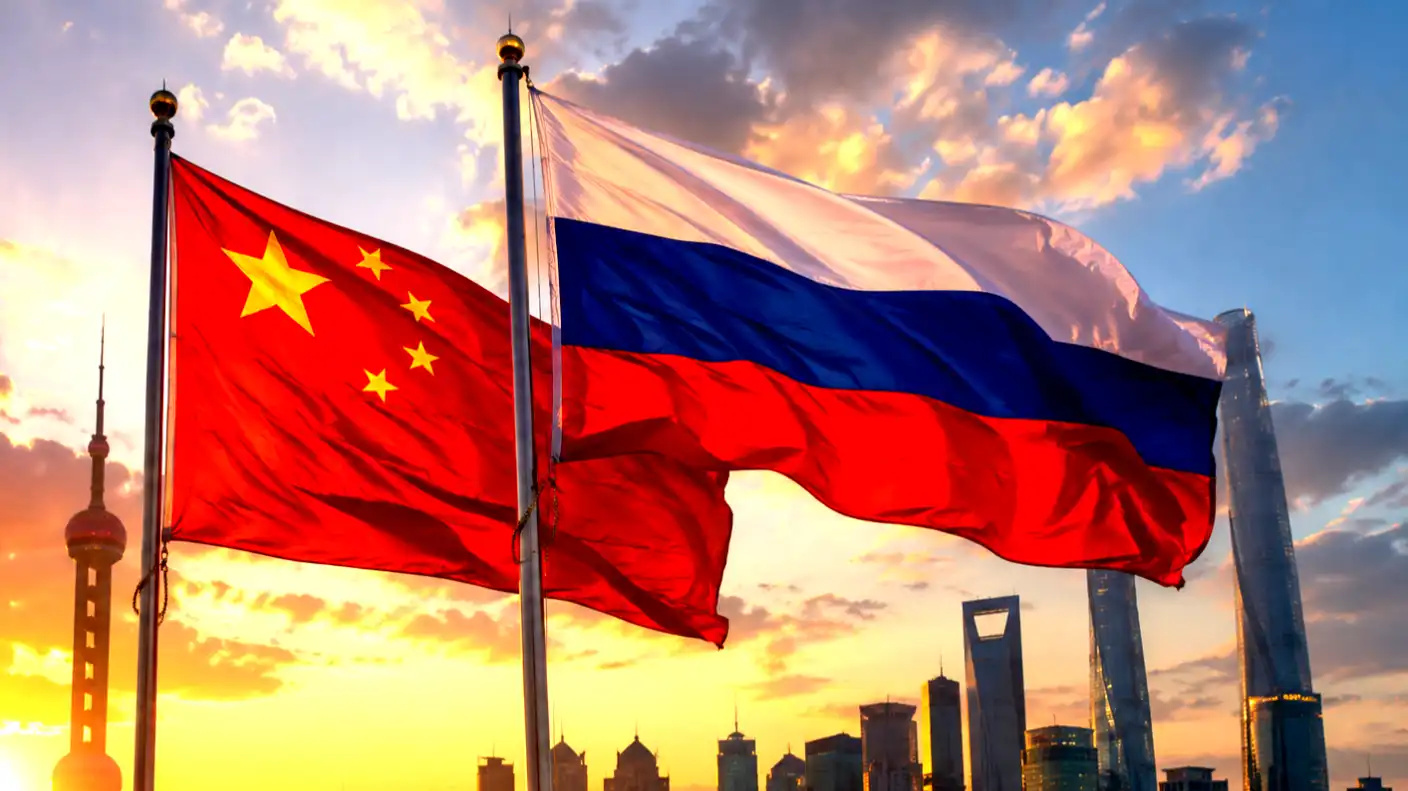
Chinese leader Xi Jinping and Russian President Vladimir Putin will meet for a major summit in Beijing this Wednesday. The two leaders plan to discuss global security and trade before sharing a private cup of tea. This high-profile meeting happens just days after US President Donald Trump visited the Chinese capital. The world will closely watch and compare how Xi handles both powerful men. China wants to show that it controls the pace of global diplomacy.
Putin landed in Beijing on Tuesday evening to kick off the two-day event. Chinese Foreign Minister Wang Yi waited on the airport tarmac to greet the Russian leader personally. A formal military honor guard stood nearby while young Chinese children waved the national flags of both countries. The warm welcome set a positive tone for the upcoming political talks. Russian state media quickly broadcast the arrival to show the strong bond between the two nations.
Xi frequently hosts visiting leaders over tea, but he uses the exact setting to send a clear message. When Putin visited in May 2024, the two men took off their ties and enjoyed a casual outdoor tea at Zhongnanhai. This former imperial garden now serves as the main headquarters for the ruling Communist Party. In sharp contrast, Trump experienced a heavily scripted tour last week. The US president walked through a secret garden and visited the Temple of Heaven in a highly choreographed event. The different styles highlight how Xi views his old friend Putin compared to his American rival.
Graeme Smith, a senior expert at the Australian National University, explained that the Chinese government loves this global attention. He noted that Beijing will use these visits to project massive power to its own citizens back home. Smith also pointed out that Xi benefits from managing the big personalities of both Trump and Putin. State media networks in China loudly claim these back-to-back visits prove Beijing now anchors a changing global order. They paint China as the stable center in an increasingly chaotic world.
Economics will absolutely dominate the Wednesday discussions. Trade between the two neighbors recently hit a rough patch. Total bilateral trade reached exactly 1.63 trillion yuan, or roughly $240 billion, during the 2025 calendar year. That massive number actually represented a 6.5% drop from the record highs seen in 2024. This marked the first time trade between the two nations declined in exactly 5 years.
However, recent numbers show a very strong recovery. Two-way trade jumped exactly 16.1% during the first four months of this current year compared to the same period in 2025. Putin publicly acknowledged he needs to keep this upward trend going. The Russian economy heavily relies on Chinese money and goods to survive Western sanctions. The ongoing war in Ukraine continues to damage Russian industries, making Chinese markets absolutely vital for Moscow.
To secure more deals, Putin brought a massive team of experts with him to Beijing. His travel delegation includes several deputy prime ministers, finance officials, and the heads of major state-owned corporations. The Kremlin announced very serious expectations for this trip. The Russian team plans to use the formal banquet and the private tea session to finalize long-term international strategies with their Chinese counterparts. They want to prove that Western pressure cannot break their alliance.
The two governments plan to sign roughly 40 different official documents during the summit. Russian officials said the leaders will also release a massive 47-page joint statement outlining their strengthening partnership. Furthermore, Putin and Xi expect to adopt a special joint declaration. This specific document will call for a new multipolar world order and a completely new type of international relations. They want to build a system that challenges American dominance.
Energy deals remain a top priority for the Russian team. Industry experts believe the two sides will negotiate the final details of the Power of Siberia 2 gas pipeline. This massive infrastructure project would connect gas fields in Russia directly to northern China. Recent energy shortages caused by the military conflict in Iran give Russia a strong argument. Putin wants to convince Xi to push the pipeline forward quickly to secure long-term energy supplies.
Still, Beijing might stall the final pipeline agreement. Chinese officials strongly prefer to buy energy from multiple countries to avoid relying too heavily on a single partner. Despite this slight hesitation over gas, the famous partnership between the two nations continues to grow stronger. As Western nations continue to punish Moscow, Russia, and China will clearly continue to push forward together in almost every other sector.















