

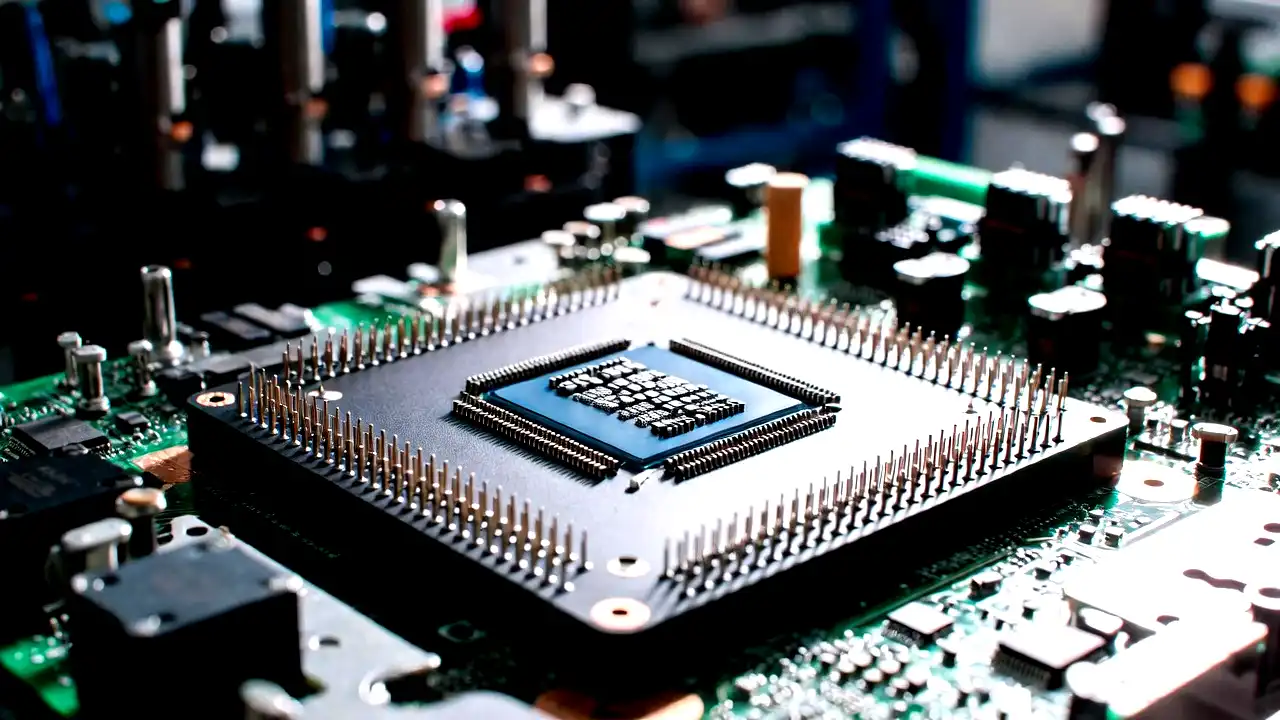
On Tuesday, June 2, 2026, the South Korean Cabinet approved a landmark bill to support the development of defense semiconductors using homegrown technology. The Ministry of National Defense and the Defense Acquisition Program Administration (DAPA) are spearheading this initiative to establish a comprehensive, state-backed support system. This new system aims to systematically foster the country’s defense-grade microchip sector, ensuring that foreign actors do not disrupt the essential brains of modern military equipment.
The legislative push comes at a critical moment when semiconductors have emerged as indispensable strategic assets in the era of artificial intelligence. Modern advanced weapons systems—including autonomous drones, radar arrays, smart missiles, and battlefield communications networks—rely entirely on these tiny silicon components to calculate, target, and communicate. As military hardware becomes increasingly digital, nations that fail to secure their own chip supply chains risk having their defense capabilities completely paralyzed during a crisis.
The approved bill outlines several key mechanisms to build and protect this vital supply chain. It requires DAPA to draft a comprehensive plan to advance the domestic defense semiconductor sector. Additionally, the legislation secures government funding for relevant academic and corporate research projects to push the boundaries of homegrown technology. Crucially, the bill introduces advanced purchase options, under which the South Korean government guarantees it will buy successful domestically developed chips, providing private tech companies with the long-term financial security they need to invest in high-risk research.
Currently, South Korea relies heavily on foreign technology and overseas manufacturers for its specialized defense-grade semiconductors. This dependency has raised serious alarms within Seoul’s security circles, as escalating geopolitical rivalries and unpredictable international situations threaten to disrupt global shipping lanes. If a conflict or diplomatic crisis cuts off access to foreign foundries, South Korea could struggle to maintain or repair its advanced weapons. By shifting toward 100% domestic technology, the government aims to eliminate this external vulnerability and build a highly resilient, self-reliant defense network.
The government has placed the bill on a fast-track timeline, reflecting the urgency of the global semiconductor race. Officials plan to proclaim the legislation this month officially. If the implementation moves forward as scheduled, the new rules will take effect as early as the final quarter of this year. This rapid rollout ensures that DAPA and local technology firms can begin collaborating on funded research projects before the year ends, putting South Korea on a clear path toward technological independence.
The domestic chip bill aligns with a broader global trend where major world powers are aggressively insourcing their semiconductor supply chains. The United States is currently spending tens of billions of dollars through its CHIPS Act to bring manufacturing back to American soil, while China is investing heavily to insulate its military from Western sanctions. While South Korea remains an undisputed global leader in commercial memory chips, it lags in specialized system semiconductors that power defense systems. This new legislation acts as a vital tool to bridge that gap, ensuring the country can design and build its own specialized chips.
Under the new framework, DAPA will coordinate directly with South Korea’s world-class commercial chipmakers, as well as agile small-and medium-sized enterprises, to bridge the gap between commercial technology and military specifications. Military-grade semiconductors must survive extreme temperatures, high radiation, and severe physical shocks, making them far more difficult to design than standard smartphone chips. By providing targeted state funding and secure research spaces, DAPA hopes to cultivate a highly specialized domestic defense-tech ecosystem capable of meeting these demanding military standards.
Beyond safeguarding national borders, building a self-reliant chip industry also offers massive economic benefits. South Korea has rapidly established itself as one of the world’s most successful arms exporters, with defense exports surging to over $17 billion annually, representing a massive 140% increase over the last decade. The country sells its advanced K9 howitzers, K2 main battle tanks, and FA-50 fighter jets to buyers in Europe, the Middle East, and Southeast Asia. By integrating domestically designed and manufactured semiconductors into these export platforms, South Korea can fully control its intellectual property. This independence prevents foreign governments from blocking South Korean arms sales to third-party nations, making Seoul’s defense exports even more competitive on the global market.
Ultimately, the cabinet’s approval of the defense semiconductor bill signals a fundamental transformation in South Korea’s national defense philosophy. Instead of relying on global supply networks to sustain its military, the country is actively building a self-sufficient technological fortress. As modern warfare transitions toward autonomous systems, artificial intelligence, and cyber capabilities, this new law ensures that the digital brains powering South Korea’s armed forces will be completely designed, tested, and manufactured on home soil.















