

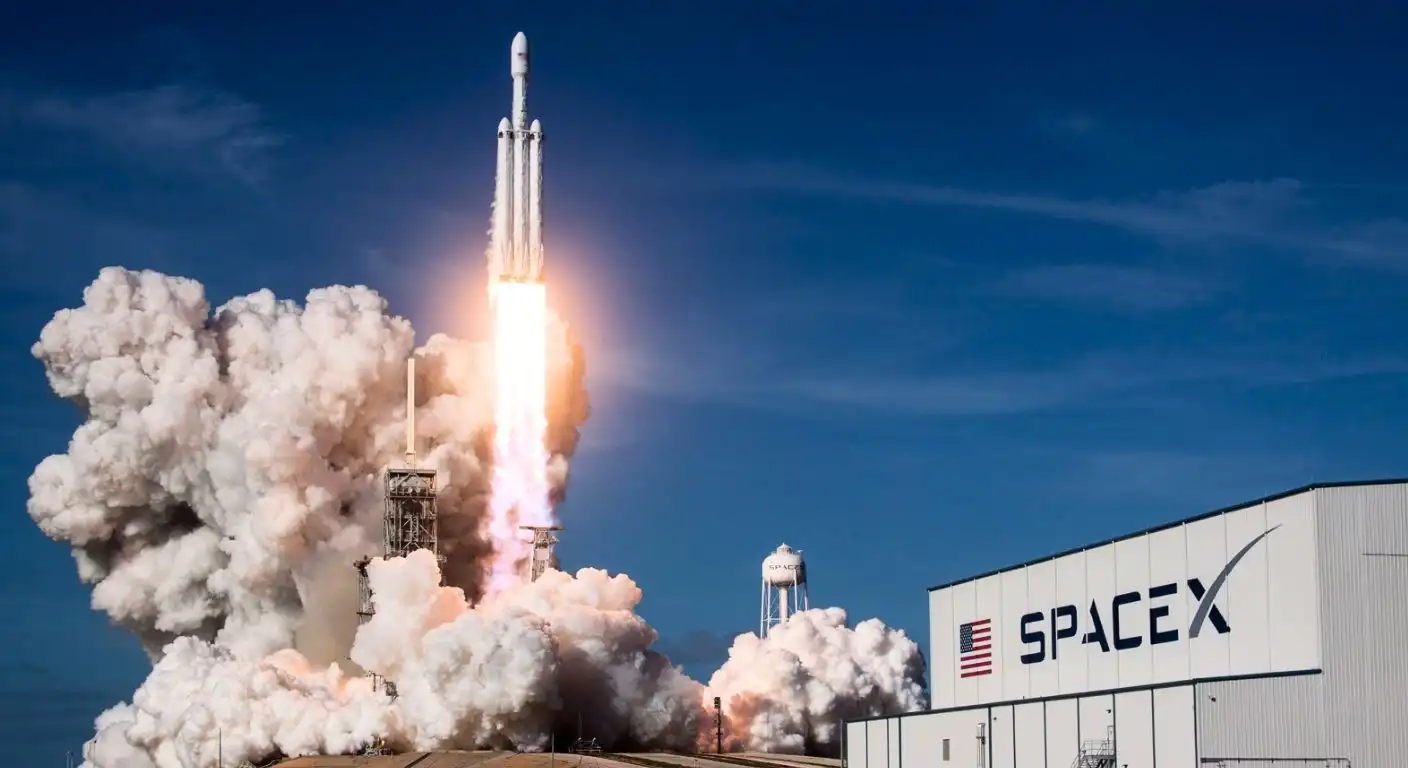
The upcoming public debut of Elon Musk’s aerospace giant will create an unprecedented wave of wealth, with a highly anticipated SpaceX IPO windfall poised to enrich several high-profile allies and appointees of President Donald Trump. On Wednesday, June 3, 2026, financial disclosures and market reports revealed that key figures in Trump’s inner circle hold substantial equity positions in the rocket company. As SpaceX prepares for its historic Nasdaq listing under the ticker symbol SPCX on June 12, the massive scale of the offering draws intense scrutiny from government watchdogs. The transaction highlights the deep and complicated financial ties connecting the world’s most valuable private technology firm to the highest levels of American political power.
At the center of these financial connections is Donald Trump Jr., the president’s oldest son, who stands to make millions of dollars from the public listing. He holds a significant indirect stake in SpaceX through his role as a partner at 1789 Capital, a Palm Beach-based venture capital firm. The firm, which focuses on investments aligned with conservative values, made Trump Jr. a partner shortly after his father won a second term as president. Since then, 1789 Capital has aggressively accumulated shares in prominent federal contractors, positioning its partners to reap massive financial rewards as the administration directs lucrative space and defense contracts to these very same companies.
This close relationship has triggered intense concern among ethics experts, who point to a massive web of potential conflicts of interest. Within the past year, companies backed by 1789 Capital have secured federal government contracts valued at more than $735 million. While the White House and the president himself have repeatedly denied any conflicts of interest between his official duties and his family’s private businesses, the massive payout from the SpaceX listing makes those claims difficult for critics to accept. Analysts warn that the public listing essentially allows political insiders to monetize their influence over federal aerospace policy, converting government-sanctioned contracts into private fortunes.
The scale of the offering is completely unprecedented, dwarfing every other public market debut in corporate history. According to the company’s S-1 filing submitted on May 20, 2026, SpaceX plans to issue approximately 555.6 million new shares at a fixed price of $135 per share. This all-primary offering structure aims to raise a record-setting $75 billion, entirely surpassing the previous global record of $25.6 billion set by oil major Saudi Aramco in 2019. The transaction will imply a total valuation of at least $1.75 trillion, turning SpaceX into the most valuable technological and industrial conglomerate listed on a public exchange.
The massive influx of capital will also enrich thousands of everyday workers, sparking an unprecedented wealth transfer inside the aerospace industry. The company’s prospectus notes that SpaceX places a heavy emphasis on equity compensation, distributing a complicated mix of stock options and restricted stock units to its 22,000 full-time employees. Ahead of the Nasdaq listing, a group of more than 1,000 current and former employees has banded together to negotiate with top wealth management firms and private banks. These workers are seeking specialized tax-saving financial products that will allow them to borrow against the value of their shares, avoiding the massive immediate tax hit that would come from selling their stock.
The primary beneficiary of the public listing is undoubtedly Elon Musk, whose personal fortune is poised to enter a completely new orbit. The 54-year-old entrepreneur currently owns 12% of SpaceX’s common stock and controls about 94% of its super-voting Class B shares, giving him a total of 79% of all voting rights. Forbes magazine currently estimates Musk’s net worth at roughly $823 billion. Financial analysts calculate that once the stock begins trading on June 12, the public market valuation will almost guarantee that Musk’s net worth pierces the historic $1 trillion mark, making him the world’s very first trillionaire and cementing his status as a sovereign financial ecosystem unto himself.
Despite the astronomical $1.75 trillion valuation, SpaceX’s underlying financials reveal a highly capital-intensive business model that continues to burn through massive sums of cash. The company generated $18.7 billion in revenue in 2025, up from $14 billion the previous year, driven primarily by its Starlink satellite internet service. However, the company swung to a massive net loss of $4.94 billion last year as spending accelerated on AI infrastructure and rocket development. This cash-burn trend has continued into 2026, with SpaceX reporting a net loss of $4.28 billion on revenue of $4.69 billion in the first quarter, underscoring the need for a $75 billion cash infusion from public markets.
To ensure the stock price skyrockets immediately after the debut, Musk and his underwriting banks are deploying a clever supply-management technique known as “scarcity marketing.” SpaceX plans to float less than 5% of its total shares to the public, keeping the available supply of stock incredibly tight. Furthermore, the company plans to reserve up to 30% of that limited offering specifically for retail investors, tapping into Musk’s massive, cult-like following. Wall Street experts note that by restricting supply to institutional buyers while targeting enthusiastic everyday investors, SpaceX is engineering a massive short squeeze that will likely drive the stock price up in its first days of trading.
The massive valuation has also drawn intense skepticism from financial journalists, who argue that the IPO is highly engineered to rescue Musk’s wealthy financial backers. When Musk acquired Twitter for $44 billion in late 2022, a group of prominent banks, venture capital firms, and foreign investors backed the deal. After the platform lost more than half its value, Musk executed a series of zero-cash stock swaps, merging the social media company into his new AI startup, xAI, which he then had SpaceX absorb. Consequently, the investors who suffered massive losses on Twitter now own valuable private shares in SpaceX, and they are counting on the IPO to turn those paper shares into real cash.
Ultimately, the upcoming SpaceX IPO represents far more than a standard corporate transaction; it is a profound realignment of wealth, power, and political influence in the United States. By taking his rocket and satellite empire public at a $1.75 trillion valuation, Elon Musk is not only securing his personal position as the world’s richest man. Still, it is also minting a new generation of politically connected multi-millionaires. As Trump officials, family members, and thousands of tech workers prepare for this historic financial windfall, the boundaries between private enterprise, federal contracting, and executive policymaking will continue to blur, leaving the public to watch as the final frontier becomes the ultimate wealth machine.















