

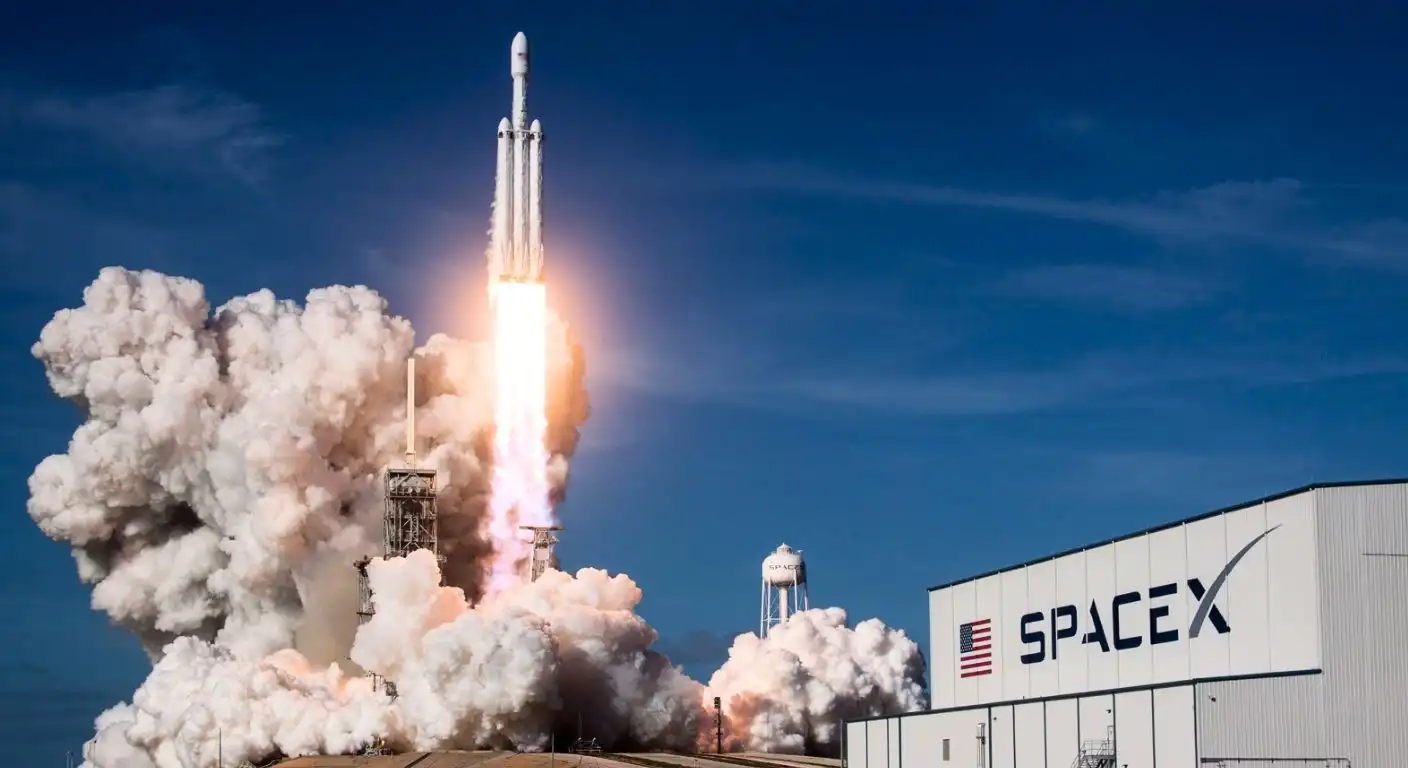
The global artificial intelligence race has reached a stunning new financial peak, transforming a prominent aerospace giant into one of the world’s most powerful data center landlords. In a regulatory filing made public on Friday, June 5, 2026, the U.S. Securities and Exchange Commission revealed that Google has signed a massive cloud service agreement to rent artificial intelligence infrastructure from SpaceX. Under the historic deal, Google will pay SpaceX a staggering $920 million per month to access approximately 110,000 Nvidia graphics processing units (GPUs). This 32-month contract, which runs from October 2026 through June 2029, carries a total potential value of over $30.4 billion and has raised serious eyebrows across the technology sector.
The multi-billion-dollar deal has triggered intense debate because it presents a fascinating conflict of interest. Google operates one of the largest global cloud platforms and has spent years building its own proprietary artificial intelligence hardware. Yet the company has chosen to rent computing power from SpaceX, which Elon Musk leads. Crucially, Musk also controls xAI, a direct and fierce competitor to Google’s flagship Gemini Enterprise platform. Google Cloud representatives defended the move as a highly tactical “bridge capacity” decision, explaining that customer demand for Gemini Enterprise has far exceeded their internal projections, forcing them to source temporary computing power wherever available.
Industry observers have also pointed to the highly flexible, almost noncommittal nature of the contract terms. The agreement specifies that the hardware capacity will gradually ramp up through September 2026 at a reduced fee before the full $920 million monthly rate takes effect in October. However, if SpaceX fails to deliver the promised 110,000 GPUs by September 30, Google can terminate the agreement outright. Furthermore, after December 31, 2026, either party may terminate the entire contract with only 90 days’ advance notice. This escape hatch allows both tech giants to walk away quickly if market conditions shift or if Google finishes building its own hardware capacity.
This agreement marks SpaceX’s second major AI infrastructure deal in recent weeks, cementing its position as a surprise titan in the data center market. In May 2026, the aerospace firm signed a similar, even larger contract with AI startup Anthropic. That deal grants Anthropic access to SpaceX’s Colossus 1 data center in Memphis, Tennessee, under a contract valued at $1.25 billion per month. Together, the Google and Anthropic agreements will bring SpaceX a combined $2.17 billion per month, translating into an annualized revenue run rate of about $26 billion. Analysts project that this infrastructure revenue could soon rival or even exceed SpaceX’s core proceeds from Starlink and its rocket launch services.
While these high-value leasing agreements promise astronomical future revenues, they also highlight the staggering costs of building modern AI infrastructure. According to SpaceX’s first-quarter financial filings for 2026, the company’s capital expenditures surged to $10.1 billion, with a massive $7.7 billion dedicated solely to acquiring AI chips and building data centers. Despite generating $818 million in initial segment revenue, SpaceX’s AI division posted a heavy operating loss of $2.5 billion for the quarter. These massive losses underscore the immense financial risks companies must assume to participate in the hardware race, a race that requires deep pockets to survive the initial buildout phase.
Google’s decision to rent external capacity also comes amid a broader, unprecedented spending splurge by its parent company, Alphabet. In April 2026, the search giant revised its annual capital expenditure forecast upward to a range of $180 billion to $190 billion to support its global artificial intelligence programs. To fund this massive expansion and manage tax obligations, Alphabet recently announced a surprise $85 billion capital raise through underwritten stock offerings. Analysts noted that Google’s willingness to spend almost $1 billion per month on rented chips, which represent nearly 1.55% of its total cash reserves, proves that tech giants will pay almost any price to avoid falling behind in the AI race.
The announcement of the Google deal could not have arrived at a more perfect time for SpaceX as it prepares for the largest stock market debut in history. The aerospace and technology company has confidentially filed to go public on the Nasdaq on Friday, June 12, 2026, under the ticker symbol SPCX. SpaceX is utilizing a rare fixed-price IPO structure, offering approximately 556 million Class A shares at a set price of $135 per share. The historic offering aims to raise to $75 billion, giving SpaceX a staggering market valuation of $1.77 trillion. The offering has reportedly seen intense demand, with institutional orders oversubscribing the book within hours of its launch.
Despite the overwhelming global demand for the listing, underwriters have received strict instructions regarding who can buy the stock. Investment banks coordinating the offering cannot accept subscription orders from clients located in mainland China and Hong Kong, including ultra-high-net-worth private banking clients. Financial sources indicate that these restrictions stem from deep regulatory and compliance concerns over U.S. export limits on critical technologies. Because SpaceX’s massive data centers house advanced, export-restricted Nvidia GPUs and serve sensitive national security networks, the company must strictly police its shareholder base to avoid violating federal technology transfer laws.
If the June 12 listing succeeds at its target valuation, it will solidify Elon Musk’s position as the wealthiest person in modern history. Musk is not selling any of his personal shares in the offering and will retain a commanding 82.4% of the company’s voting power. Independent wealth trackers currently value Musk’s net worth at approximately $825 billion, with his stake in SpaceX accounting for $542 billion of that total. Financial analysts predict that the successful public debut of SpaceX will almost certainly push Musk’s personal net worth well past the $1 trillion mark. This historic milestone would crown him as the world’s first official trillionaire, showcasing how the fusion of aerospace engineering and AI infrastructure can generate unprecedented wealth.















