

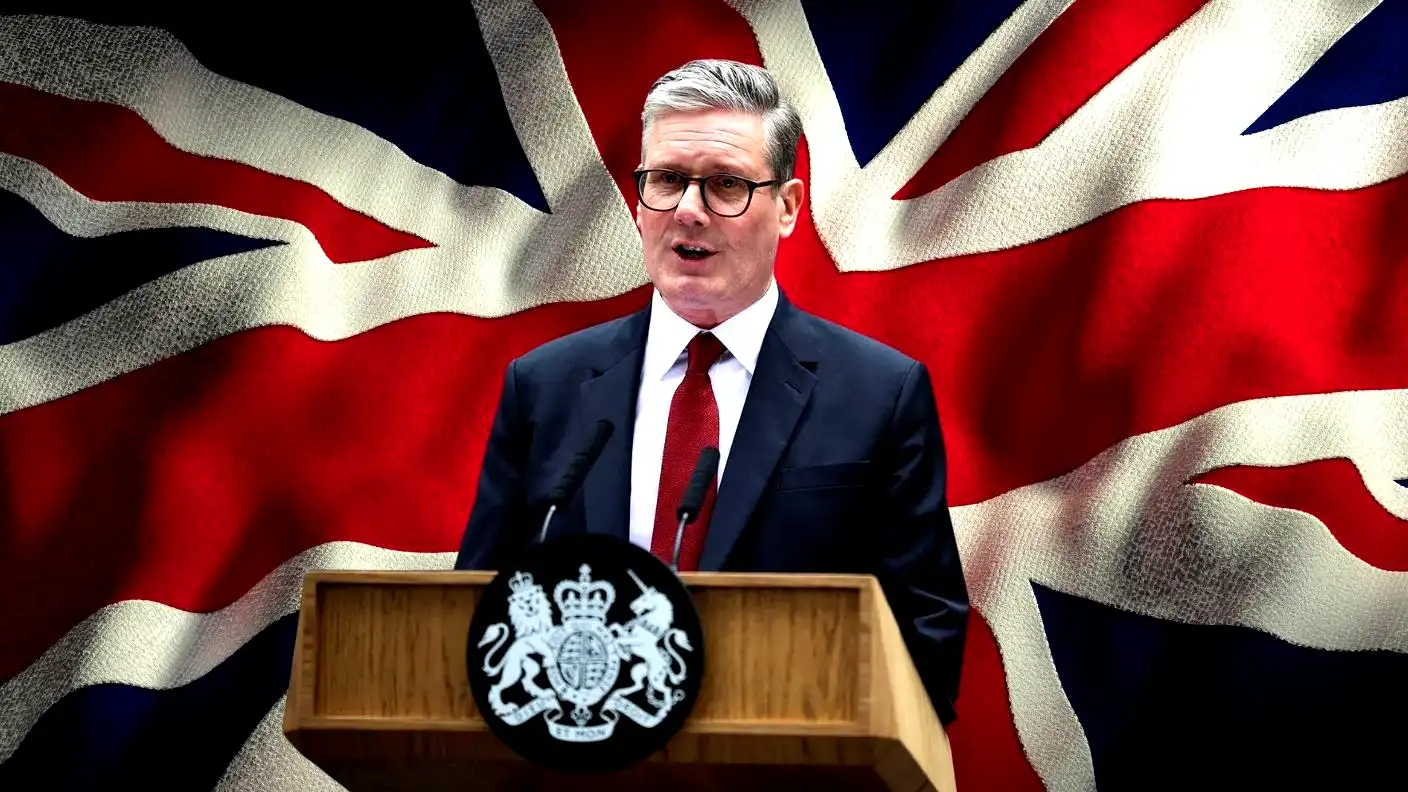
U.S. President Donald Trump’s prediction has quickly turned into a historical reality as United Kingdom Prime Minister Keir Starmer officially announced his resignation. Speaking on Monday morning from a newly erected lectern outside 10 Downing Street, a visibly emotional Starmer confirmed that he will stand down as prime minister and leader of the governing Labour Party. Starmer’s surrender ends months of intense backbench mutiny, which peaked after his chief internal rival, former Manchester Mayor Andy Burnham, won a decisive parliamentary seat last week. The prime minister’s departure paves the way for Britain to install its seventh leader in just over a decade, extending a remarkable era of political instability.
During his emotional address, Starmer accepted his political fate with dignity, conceding to the intense pressure from his own parliamentary party. He noted that the central question facing Labour lawmakers is no longer who was best placed to rebuild the party, but who can successfully lead them into the next general election. Starmer admitted that he had heard the clear, painful answer of his colleagues and accepted their decision with good grace, reiterating that his choices have always been about putting the country first. He confirmed that he has officially spoken to King Charles III to inform him of his resignation, and will remain in office as caretaker prime minister until his successor is chosen.
The outgoing prime minister outlined a clear, rapid roadmap for his departure to ensure a smooth transition of power. Starmer has asked the Labour Party’s National Executive Committee to open nominations for the leadership on July 9, with the process set to conclude before the parliament goes into summer recess on July 16. If Andy Burnham is unopposed during this brief window—as many inside party sources now expect—he will officially assume office as Prime Minister on or around July 17. However, if other cabinet members choose to launch a challenge, the party will conduct a wider leadership election, with a new prime minister taking over Downing Street by the end of August.
While the path to a coronation for Burnham seems increasingly clear, the possibility of a competitive race still lingers. Former Health Secretary Wes Streeting, who resigned from his cabinet post last month to protest Starmer’s leadership, is widely expected to put himself forward as a candidate. To trigger a formal contest, any challenger must secure at least 81 nominations from sitting Labour members of parliament, representing roughly 20% of the party’s legislative caucus. If Streeting or another candidate secures the necessary backing, it would force a full membership ballot, preventing a swift coronation for the former Manchester mayor and exposing the deep ideological divisions within the party.
The immediate trigger for the prime minister’s sudden downfall was the spectacular success of his rival in a special parliamentary election last week. On Thursday, Andy Burnham secured a landslide victory in the working-class constituency of Makerfield, soundly defeating a candidate from the populist Reform UK party and clearing his way to return to Westminster. Burnham is scheduled to be officially sworn in as a member of Parliament on Monday afternoon, positioning him perfectly to take the reins of government. The victory gave instant hope to anxious Labour lawmakers, who believe Burnham’s communication skills can salvage the party’s plummeting popularity ratings.
The threat to Starmer’s leadership has been building steadily for several months, driven by deep public discontent and crushing electoral defeats. The internal mutiny escalated sharply last month, when the party suffered devastating losses in nationwide local elections. In the Wigan region surrounding Makerfield, the anti-immigration Reform UK party decimated Labour’s traditional stronghold, winning 24 of the 25 council seats contested. This unprecedented wipeout convinced backbenchers that the current government had completely lost touch with working-class voters, sparking a quiet rebellion that ultimately forced the prime minister to spend his weekend mulling his future at his country residence, Chequers.
Adding a layer of international drama to the crisis, Donald Trump delivered a highly publicized, final push to the embattled prime minister shortly before the announcement. On Sunday, the U.S. President declared on social media that Starmer would resign, essentially pushing the British leader toward the exit before Starmer had made his own decision public. The relationship between the two leaders had grown increasingly hostile in recent months, particularly after Trump criticized London’s lack of support during the brief military conflict in the Middle East. Trump’s public intervention was viewed in Westminster as a deliberate attempt to humiliate an ally who had resisted Washington’s foreign policy goals.
To preserve the country’s international standing during the transition, prominent geopolitical advisory groups have advocated for a structured exit timetable. Analysts suggest that keeping Starmer in office as a caretaker until July will allow him to represent the United Kingdom at the highly anticipated UK-European Union reset summit scheduled for next month. This arrangement would give Burnham valuable time to assemble his new cabinet and prepare his policy platform, ensuring that the sudden transition of power does not disrupt vital international trade and security negotiations.
The incoming prime minister will inherit an exceptionally challenging economic and financial landscape. Britain currently has the highest borrowing costs among the Group of Seven wealthy nations, driven by a massive national debt, stagnant economic growth, and the high costs of funding public utilities. Financial specialists warn that the new leader will have very little room to maneuver, as global bond market investors remain strongly opposed to any additional national borrowing. If Burnham attempts to fund his ambitious public infrastructure plans through new debt, he risks triggering a severe market backlash that could crash the British pound and worsen the domestic cost-of-living crisis.
Ultimately, Keir Starmer’s decision to step down marks a highly volatile turning point in modern British history. Less than two years after leading his party to a landslide general election victory on a promise to end political chaos, Starmer has succumbed to the same internal mutiny that destroyed his conservative predecessors. As the Labour Party prepares to open its July nomination window, the country is bracing for yet another transition of power. Whether Andy Burnham secures a swift coronation or faces a protracted leadership challenge, the incoming prime minister must act with immense speed and caution to stabilize the economy, restore public trust, and secure Britain’s sovereignty in a highly fractured world.















