

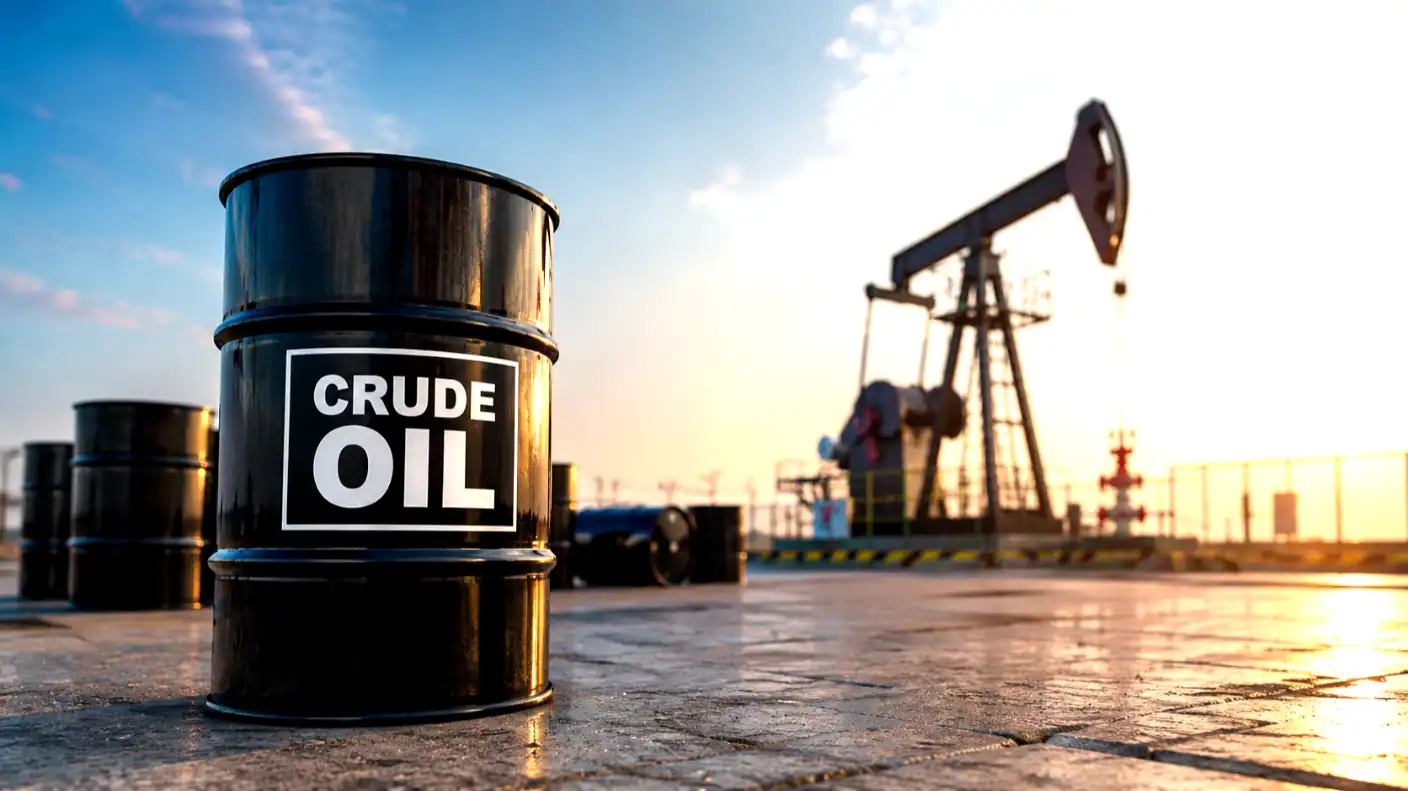
The emergency energy shield of the United States is running dangerously low, exposing a major vulnerability in the nation’s ability to withstand global supply shocks. According to newly released data from the Department of Energy, the volume of crude oil stored within the country’s underground safety caverns has fallen to its lowest level since the early 1980s. This rapid depletion marks a historic turning point for domestic energy policy, reflecting the immense pressure that global geopolitical conflicts are placing on the White House.
To suppress surging gasoline prices driven by the ongoing war in the Middle East, the administration has drawn down the emergency stockpile at a record-breaking pace. A newly released report by Bloomberg recently highlighted that the Strategic Petroleum Reserve has fallen to its lowest level since 1983, as the government moves toward completing its plan to release 172 million barrels into the commercial market.
This historic drain reveals a deep political irony. After spending years fiercely criticizing the previous administration for depleting the reserve for political purposes, the current administration has resorted to the exact same strategy, proving that when domestic fuel costs threaten to trigger a massive voter backlash, protecting the economic home front always takes precedence over long-term energy security.
The History of the SPR: A Shield Created in Crisis
The Strategic Petroleum Reserve was not designed to be used as a routine economic management tool, but as a last-resort national defense mechanism against foreign aggression.
The Legacy of the 1973 Oil Shock
The United States established the emergency stockpile in response to one of the most devastating economic crises in its history. Authorized in 1975 by President Gerald Ford, the reserve was created following the 1973 Oil Crisis, when Arab members of OPEC implemented a total oil embargo against Western nations.
The embargo caused severe fuel shortages, skyrocketing prices at the pump, and a deep sense of national vulnerability, proving that the U.S. economy was dangerously dependent on foreign energy supplies.
To prevent future energy blackmail, the government constructed a series of massive, deep salt caverns along the Gulf Coasts of Texas and Louisiana.
These underground facilities, located at four heavily guarded sites including Bryan Mound and Big Hill, were engineered to hold up to 700 million barrels of crude oil, providing the nation with a substantial cushion to withstand any sudden disruptions in global trade.
Historical Uses of the Reserve
Throughout its 50-year history, the federal government has treated the reserve with immense care, authorizing major emergency releases only during times of severe, physical supply disruptions:
- Operation Desert Storm (1991): The U.S. released 17 million barrels of oil to stabilize global markets during the Gulf War.
- Hurricane Katrina (2005): The government authorized the release of 20 million barrels after severe storms destroyed offshore production platforms in the Gulf of Mexico.
- The Libyan Civil War (2011): The U.S. coordinated with international allies to release 30 million barrels to offset the complete loss of Libyan sweet crude exports.
- The Ukraine Crisis (2022): The government launched a historic release to combat energy inflation following Russia’s invasion of Ukraine.
While the emergency stockpile peaked in December 2009 at an all-time high of 726.6 million barrels, it has faced a steady, multi-decade decline as the U.S. has navigated changing global energy dynamics.
The Biden Drawdown and Trump’s Fierce Criticism
The current depletion of the reserve cannot be understood without examining the highly contentious political battles that took place over U.S. energy policy during the previous administration.
The Historic One Hundred Eighty Million Barrel Release
Following Russia’s invasion of Ukraine and the subsequent spike in global crude prices, the previous administration embarked on the largest drawdown in the reserve’s history.
To prevent domestic gasoline prices from surpassing $5.00 per gallon, the government authorized a series of emergency releases that ultimately withdrew approximately 290 million barrels of crude oil from the system.
This included a single, massive release of 180 million barrels in 2022, which brought the total reserve down to its lowest level since the 1980s.
The Refill Promise
This aggressive drawdown drew fierce and sustained criticism from Republican lawmakers, who accused the administration of recklessly draining the nation’s strategic defenses to artificially lower prices ahead of the 2022 midterm elections.
During his campaign, President Trump repeatedly criticized the move, claiming that the emergency reserve, which he claimed to have filled up, had been virtually drained for purely political purposes.
When the current administration took office, officials pledged to prioritize the refilling and repairing of the Strategic Petroleum Reserve, calling its depletion a dangerous threat to national security.
However, before the administration could make any progress on its multi-billion-dollar refilling plan, a major new conflict in the Middle East forced a complete reversal of its strategy.
The 2026 Iran War: An Unavoidable Supply Emergency
The current energy crisis began on February 28, when the outbreak of the war with Iran completely upended global shipping and energy markets.
The Blockade of the Strait of Hormuz
The primary economic consequence of the war has been the effective closure of the Strait of Hormuz, the narrow maritime corridor through which roughly 20% of the world’s daily oil supply passes.
By targeting commercial vessels with drone and missile strikes, Iranian forces effectively brought all shipping through the strait to a complete halt, disrupting more than 11 million barrels per day of oil from global trade.
This massive supply disruption caused global crude futures to jump by approximately 20%, driving gasoline prices in the United States to a politically sensitive average of $4.07 per gallon, with some states seeing prices exceed $4.15 a gallon.
Faced with rising public anger over inflation and a crucial midterm congressional election looming in November, the administration found itself under intense pressure to act.
The One Hundred Seventy-Two Million Barrel Mandate
Forced to respond to the energy shock, the administration turned to the only tool capable of providing immediate relief.
The U.S. coordinated with the International Energy Agency to launch a massive, global emergency drawdown of 400 million barrels of oil.
As part of this international effort, the U.S. committed to releasing 172 million barrels of crude oil from its own Strategic Petroleum Reserve over a 120-day period, representing approximately 40% of the available reserves at the start of the conflict.
According to data released by the Department of Energy, the Strategic Petroleum Reserve fell to 340.3 million barrels as of the week ending June 12.
This drop officially takes out the previous low of 346.8 million barrels recorded in 2023, bringing the nation’s emergency stockpile to its lowest level since August 1983.
While the administration’s recent announcement of a comprehensive ceasefire with Iran has sent crude prices lower, the physical depletion of the reserve will remain a major strategic challenge for years to come.
The Operational Danger Zone: Running on Fumes
As the emergency stockpile falls to a 43-year low, energy experts and industry groups are warning that the nation’s energy shield is entering a dangerous operational zone.
The Usable Buffer is Shrinking
The primary concern among energy analysts is that the total volume of the reserve heavily overstates the amount of oil that can actually be used during a crisis.
Mike Sommers, the chief executive officer of the American Petroleum Institute, warned that approximately 20% of the current reserves must be maintained inside the underground salt caverns to maintain their structural integrity and pressure.
If the volume of oil falls below this operational baseline, the massive salt caverns risk collapsing under the immense weight of the surrounding earth, permanently damaging the storage facilities and rendering them useless for future emergencies.
Consequently, experts estimate that the nation’s actual usable buffer of emergency oil has shrunk to just 70 million barrels, leaving the country with very little flexibility to respond to any future energy supply shocks.
The Mechanics of the Exchange Program
To mitigate these risks and reduce the long-term cost of the drawdown, the Department of Energy is executing the current releases through a specialized exchange program rather than direct sales.
Under this model, the government is essentially loaning barrels of crude oil to commercial companies, who are legally obligated to return the oil to the reserve with interest over the coming year.
A spokesperson for the Energy Department reported that the return rate for these loaned barrels has been about 26% so far, generating potentially more than $3 billion in savings for American taxpayers.
The administration plans to use these returned barrels and new cash purchases to refill the reserve with approximately 200 million barrels, or 20% more than what was released, within the next year.
However, with global markets remaining highly volatile, refilling the reserve will be a slow, highly expensive process.
Views: Political Pragmatism versus Strategic Vulnerability
The historic depletion of the Strategic Petroleum Reserve has reignited the fierce, ongoing debate over the proper use of the nation’s emergency stockpiles.
The Case for Political Pragmatism: Taming the Pump
Supporters of the administration’s aggressive drawdown argue that a president’s primary responsibility is to protect domestic consumers from sudden, war-driven inflation.
They contend that allowing gasoline prices to climb toward $5.00 per gallon during a global conflict would have caused massive economic damage, driving up transportation costs, fueling inflation, and potentially pushing the nation into a severe recession.
Proponents of this viewpoint out that the Strategic Petroleum Reserve was created precisely to mitigate the economic fallout of global energy shocks.
By releasing 172 million barrels of oil, the government successfully offset the loss of Middle Eastern crude, keeping the domestic economy stable and protecting families from extreme financial pain.
They argue that once the peace agreement with Iran is fully implemented and the Strait of Hormuz reopens, the government can easily refill the reserve at a lower cost, proving that the drawdown was a highly successful act of crisis management.
The Case for Strategic Vulnerability: Leaving the Nation Exposed
In contrast, national security experts, energy analysts, and opposition lawmakers warn that depleting the emergency stockpile to a 43-year low is a highly dangerous policy that leaves the nation dangerously exposed to future crises.
They argue that the world remains a highly volatile and unpredictable place, and that the U.S. could easily face new, unexpected energy disruptions over the coming years.
Critics point out that by drawing the usable buffer down to just 70 million barrels, the administration has stripped itself of its most powerful economic defense mechanism.
If the peace agreement with Iran breaks down, or if a major conflict erupts in another key energy-producing region, the United States will have virtually no tools left to respond, leaving the domestic economy highly vulnerable to a devastating, sudden price spike.
They argue that the Strategic Petroleum Reserve should be treated as a sacred national security asset, and that using it to manage routine domestic prices is a dangerous misuse of public resources.
Conclusion: The Hard Reality of Energy Power
The depletion of the Strategic Petroleum Reserve to a historic 43-year low serves as a stark reminder of the limits of domestic energy policy.
While the administration’s aggressive releases successfully protected American consumers from the worst of the global oil shock during the war with Iran, the policy has left the nation’s emergency defenses at their lowest level since the Reagan era.
As the government begins the slow, highly expensive process of refilling the underground caverns, the lessons of the crisis are clear.
In a highly connected global economy, energy security cannot be built on short-term political decisions or temporary emergency drawdowns.
Ultimately, protecting the nation’s long-term prosperity will require a balanced energy policy that combines domestic production, international cooperation, and a well-maintained strategic reserve, ensuring that the United States remains fully capable of defending both its economy and its sovereignty in an increasingly complex and volatile world.















