

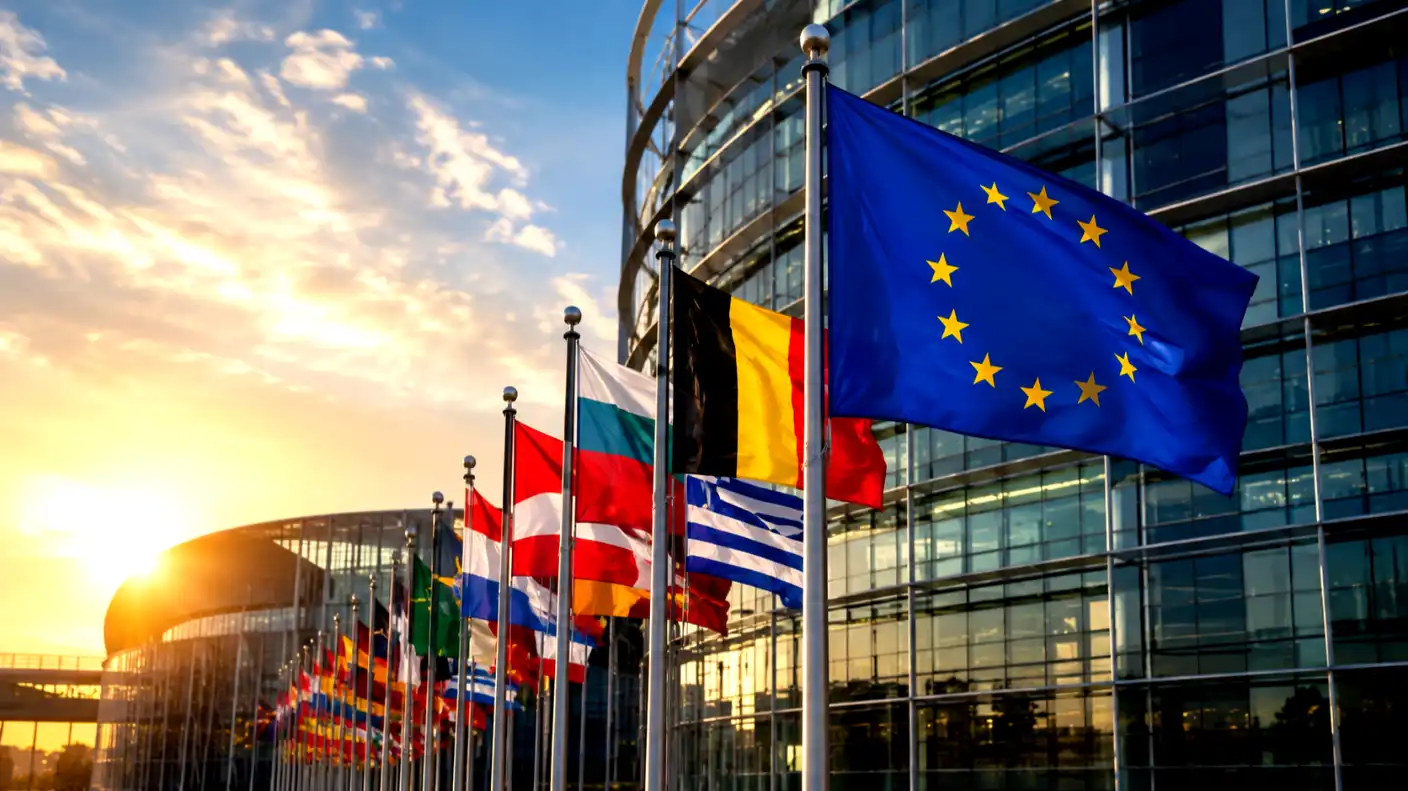
Sweden and ten other European countries are launching a high-profile diplomatic campaign to block Russian citizens from vacationing in Europe while the war in Ukraine continues to rage. On Thursday, June 4, 2026, Swedish Migration Minister Johan Forssell strongly urged the European Commission to tighten rules on Russian tourist visas, calling the current situation completely unacceptable. Speaking to reporters in Luxembourg, Forssell described the ongoing influx of hundreds of thousands of Russian leisure travelers into European resorts as outright insane. This coordinated push highlights a growing, highly volatile divide within the European Union regarding how strictly to enforce sanctions and security measures against citizens of the aggressor state.
The formal demand is part of a joint letter that 11 countries sent on Wednesday, June 3, 2026, to European Union foreign policy chief Kaja Kallas and Migration Commissioner Magnus Brunner. The coalition includes the governments of Poland, Sweden, the Czech Republic, Denmark, Estonia, Finland, Latvia, Lithuania, and the Netherlands, as well as the non-EU Schengen members Norway and Iceland. In their letter, the ministers argued that a unified and restrictive approach is essential to maintain the effectiveness of the bloc’s foreign policy and ensure national security. They warned that the current uneven application of visa rules across different member states severely undermines the European Union’s sanctions regime.
The primary driver behind this sudden diplomatic push is a deeply concerning rise in the number of tourist visas EU states continue to issue to Russian nationals. According to official Schengen Barometer data cited in the letter, European consulates issued 477,878 Schengen visas to Russian citizens for tourism in 2025. This represents an 8.4% increase compared to the 440,558 tourist visas granted in 2024. In total, Russian citizens received over 620,000 entry permits in 2025, marking the highest volume of visa approvals since Moscow launched its full-scale invasion of Ukraine in 2022. This rising trend has deeply troubled frontline states, which have spent years calling for a complete ban on tourism.
Forssell did not mince his words when describing the moral contradiction of allowing Russian tourists to holiday in Europe. He pointed out that while Ukrainian civilians and soldiers are dying daily under relentless Russian missile and drone strikes, hundreds of thousands of Russian tourists are freely traveling to southern European beaches to enjoy the sunshine. Forssell lambasted the reality of Russian citizens embarking on weekend shopping trips and drinking rosé wine in Western European cities, arguing that this leisure travel completely contradicts the spirit of international solidarity with Ukraine. He urged the European Commission to draft emergency legislation to end this double standard immediately.
The core of the security concern lies in the unique structure of the Schengen Area, which comprises 25 EU member states and four non-EU countries. Under current rules, once a Russian citizen secures a Schengen visa from any member country, they can travel freely across the entire passport-free zone without undergoing further border checks. This means that even if frontline states like Poland or the Baltic nations enforce a near-zero-visa policy at their borders, Russian tourists can easily enter the Schengen zone by applying through more lenient consulates in Western or Southern Europe. This operational loophole effectively bypasses the strict security measures implemented by countries closest to the conflict zone.
This systemic weakness has encouraged a controversial practice known as “visa shopping,” where Russian applicants actively target the most lenient European consulates to secure entry—according to internal EU documents, France, Italy, and Spain accounted for nearly three-quarters of all Schengen visa applications submitted by Russian nationals last year. These Southern European nations have historically valued Russian visitors as big-spending tourists who provide a vital boost to their local holiday industries. However, the coalition of 11 countries argued that this economic interest represents a serious flaw in Europe’s common policy, allowing Russian citizens to bypass stricter consulates in Eastern Europe.
The renewed push for tighter rules highlights the failure of previous European Union efforts to restrict Russian travel. In late 2022, the EU suspended its visa facilitation agreement with Russia, driving up application fees and processing times. Furthermore, in November 2025, the EU agreed to largely eliminate multiple-entry visas for Russians, requiring travelers to submit a new application for every single trip. Despite these bureaucratic hurdles, the latest data show that the number of visas granted continues to climb, indicating that previous administrative barriers are not strong enough to deter wealthy Russian travelers from vacationing in Europe.
While the European Commission has promised to review the joint letter, any proposal to completely ban Russian tourist visas will likely face intense opposition within the bloc. Countries like France, Spain, and Greece are highly protective of their tourism sectors, which are already struggling to cope with rising operating costs and post-pandemic debt. Historically, these nations have argued that travel bans should only target sanctioned individuals and political elites, rather than ordinary Russian citizens who may want to escape their country’s authoritarian regime. Alternatively, Russian officials have already slammed the proposed visa restrictions, accusing European nations of being openly racist and gripped by anti-Russian hysteria.
In the end, the intensifying debate over Russian tourist visas highlights the profound challenges facing the European Union as it attempts to maintain a unified front against Moscow. The apartment block bombings and civilian deaths in Ukraine make it increasingly difficult for European leaders to justify a lenient travel policy for citizens of the aggressor state. If the European Commission fails to close the visa shopping loophole and harmonize restrictions across all 29 Schengen countries, it risks exposing deep divisions within the alliance. As the summer vacation season approaches, the EU must decide whether to prioritize the economic interests of its tourism industry or enforce the strict, unified security barriers necessary to protect its values.















