

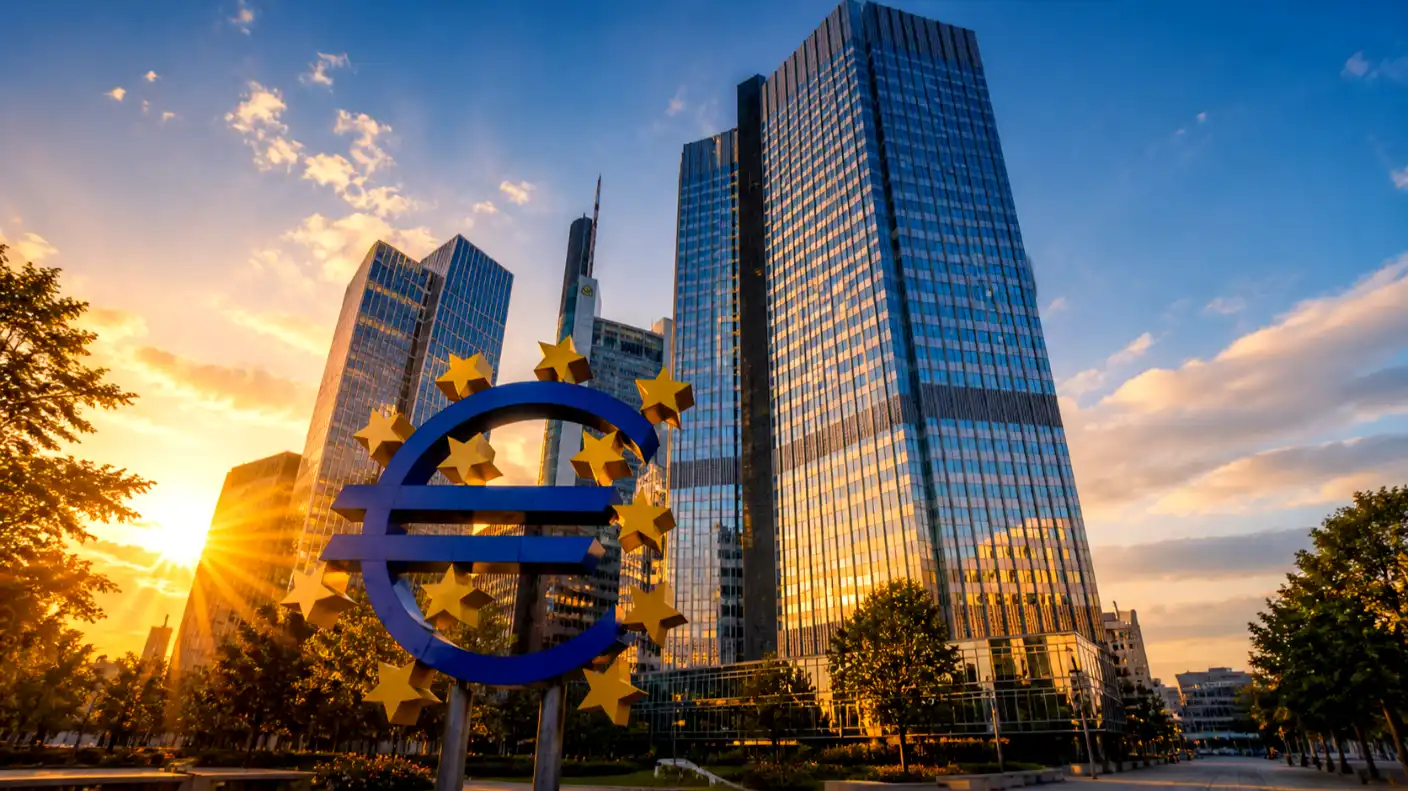
The European economy faces a prolonged period of high consumer prices, even if the tentative peace process in the Middle East successfully brings an end to the region’s devastating resource war. Speaking before European Union lawmakers in Brussels on Tuesday, European Central Bank Chief Economist Philip Lane warned that Eurozone inflation is highly likely to stay above the bank’s official 2.0% target for quite some time. Addressing the European Parliament’s Committee on Economic and Monetary Affairs, Lane cautioned that despite recent drops in global energy costs, a massive backlog of raw material price increases is already moving through the industrial supply chain.
The sobering warning comes as the central bank attempts to evaluate the long-term impact of the war, which erupted in late February and severely disrupted global shipping routes through the Strait of Hormuz. Although a recent diplomatic breakthrough has allowed Brent crude oil prices to drop back to around $80 per barrel, Lane emphasized that the inflationary damage has already been done. The chief economist revealed that the persistent pass-through of these higher input costs will likely keep Eurozone inflation well above the official target, potentially stretching deep into the first half of 2027.
This persistent price pressure was highly visible last month, when Eurozone headline inflation jumped to a hot 3.2%, up from 3.0% in April. While the central bank had previously hoped that the energy shock would prove highly temporary, the length of the maritime blockades has forced policymakers to abandon their most optimistic scenarios. Lane explained that even if global oil prices continue to cool, domestic food prices and transport service fees are highly likely to keep rising for the rest of the year, as businesses slowly pass their accumulated energy bills down to ordinary consumers.
To contain these growing inflation risks, the European Central Bank’s Governing Council delivered a proactive 25 basis point interest rate hike on June 11, lifting the benchmark deposit facility rate to 2.25%. The decision, which marked the institution’s first rate increase in nearly three years, aimed to anchor long-term inflation expectations and prevent a dangerous wage-price spiral. While some political leaders criticized the rate hike as a threat to economic growth, central bank officials defended the move as a necessary shield to protect the purchasing power of the single currency.
Despite Lane’s cautious long-term outlook, the recent cooling of global energy markets has provided some immediate breathing room for the central bank’s upcoming meetings. Charts published alongside the chief economist’s speech demonstrate that the recent slide in oil prices has pushed the commodity more firmly between the bank’s baseline and milder macroeconomic scenarios. This shift toward a less severe economic path has effectively eliminated the immediate urgency for the central bank to follow up its June rate hike with another increase at its upcoming July meeting.
Financial markets have reacted to these updated charts by drastically reducing their expectations for near-term policy tightening. Trading boards currently show just a 20%, or one-in-five, chance of an interest rate hike in July, with investors betting heavily that the central bank will choose to maintain a pause throughout the summer. Instead, the next quarter-point rate increase is only fully priced in for December, giving policymakers valuable time to assess how the physical restoration of global shipping lanes through the Strait of Hormuz will impact domestic consumer costs.
While the combination of high interest rates and expensive energy will undoubtedly weigh on overall economic activity, Lane struck a constructive tone regarding the Eurozone’s underlying resilience. He pointed out that the single currency bloc continues to display steady momentum, heavily supported by an exceptionally solid labor market that has kept unemployment near historic lows. This strong employment foundation is helping to protect real household incomes, ensuring that consumer demand does not experience a sharp, recessionary collapse despite the persistent inflation headwinds.
The Eurozone’s economic activity is also receiving a massive, high-performing boost from a structural surge in corporate and industrial investment. Lane highlighted that European businesses are aggressively deploying capital to upgrade their digital infrastructure, focusing heavily on integrating advanced artificial intelligence and automated software tools into their core workflows. This private-sector capital expenditure is providing a vital cushion for the economy, offsetting the broader manufacturing slowdown by driving long-term productivity gains and creating high-quality, high-tech employment opportunities.
This corporate resilience is reflected in the central bank’s baseline growth projections, which expect the Eurozone to avoid a painful stagflationary trap. The updated forecasts project modest GDP growth of 0.8% for the current year, before accelerating to 1.2% next year and reaching 1.5% by the end of the decade. While these figures represent a minor downward revision from the bank’s spring outlook due to the immediate drag of the Middle East conflict, the positive growth trajectory demonstrates that the European economy is successfully absorbing the energy shock without entering a deep recession.
Ultimately, Philip Lane’s address to European lawmakers highlights the delicate, data-dependent balancing act facing modern central bankers. By warning that inflation will remain sticky into 2027 while simultaneously signaling that there is no immediate need to raise interest rates in July, the chief economist has established a highly pragmatic policy narrative. The central bank has made it clear that while it remains fully committed to its 2.0% price stability mandate, it will avoid pushing the economy into an unnecessary downturn with overly aggressive, near-term rate hikes. As negotiators work to secure regional peace, Europe’s policymakers are successfully managing a highly challenging economic transition.















