

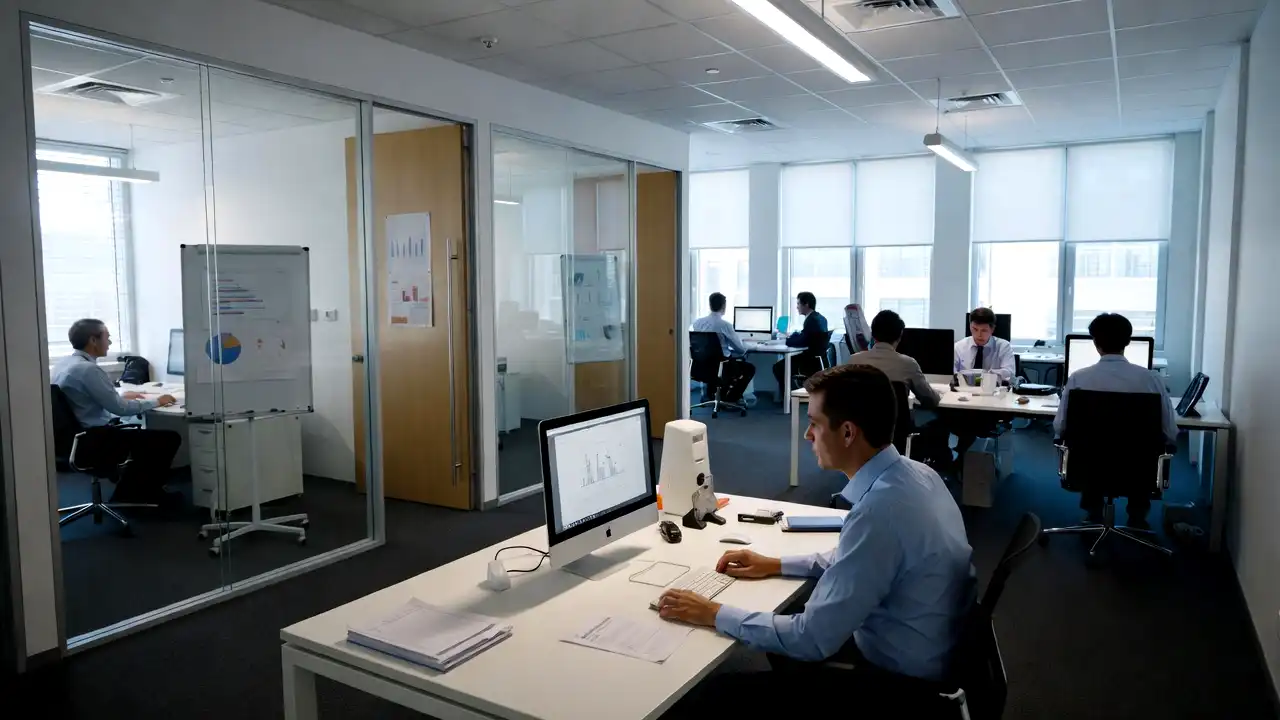
The commercial real estate market in major American cities is experiencing a highly concentrated, dizzying surge in activity that strongly mirrors the legendary dot-com bubble of the late 1990s. Recent reports revealed that the red-hot demand for premium corporate space has placed major metropolitan centers on pace for their best leasing performance in decades. Just as high-flying internet startups fueled a massive real estate rush at the turn of the millennium, artificial intelligence developers are now leading a frantic race to lock down premium office spaces. However, this headline-grabbing momentum masks a deeply troubling paradox: while AI startups sign massive leases for trophy towers, legacy tech companies are simultaneously cutting corporate headcounts at record rates.
The sheer volume of recent real estate transactions highlights how quickly artificial intelligence has taken over commercial leasing. In Manhattan, artificial intelligence firms leased a staggering 1 million square feet of office space during the first three months of the year, easily eclipsing their total leasing volume for the entirety of 2025. This surge has pushed AI’s share of the borough’s overall technology-sector leasing to a record-high 56%. In San Francisco, the regional turnaround has been even more dramatic, with AI companies securing 3.5 million square feet of space in the first quarter—nearly 60% of their 2025 total and roughly 1.5% of the city’s total office inventory.
This hyper-concentrated demand is driving a noticeable rebound in overall technology leasing across the United States. According to a quarterly report published by the commercial real estate firm CBRE, tech companies leased 11.5 million square feet of office space in the first quarter of the year. This impressive volume represents a decade-high 23% share of all commercial leasing activity in the country, a major jump from 2025 when the sector accounted for nearly 17% of total leasing by signing 36.7 million square feet of contracts. This massive leasing wave has thrown a vital lifeline to office landlords who have struggled to attract tenants in the wake of the pandemic.
A small group of highly capitalized artificial intelligence companies is driving the vast majority of this real estate activity. Since the beginning of the year, OpenAI has secured more than 1 million square feet of office space across five separate deals in California and Washington. Its closest rival, Anthropic, has adopted an equally aggressive expansion strategy, taking down roughly 1 million square feet of premium space across California. These massive, multi-million-dollar commitments show that these technology pioneers are racing to establish physical footprints that match their soaring valuations, even as critics warn that their underlying business plans remain highly unproven.
However, the apparent recovery in the commercial real estate market sits alongside a brutal wave of job losses across the broader technology sector. Even as AI startups expand their offices, tech companies are executing massive layoffs at a pace that has already exceeded last year’s record. Data from online industry aggregators reveals that the tech sector has laid off 116,854 workers through the first week of June, easily surpassing the 104,266 job losses logged across all of 2025. This sharp contrast suggests that while the industry is investing billions of dollars in developing next-generation AI tools, it is simultaneously shedding the human staff who previously occupied those very office spaces.
To cope with this structural shift toward leaner, automated workforces, legacy technology giants are downsizing their physical footprints. For example, leaked internal recordings revealed that e-commerce giant Amazon plans to cut its global office footprint by 49,000 desks this year, a reduction equivalent to more than 14 million square feet of office space. While the United States added 172,000 jobs in May, government figures show that over 93% of those new roles occurred in hospitality, healthcare, or local government. This trend suggests that the white-collar corporate workforce is shrinking, leaving landlords and developers to face billions of dollars in lost property valuations as traditional tenants vacate their offices.
This massive gap between the red-hot demand for trophy assets and the broader market decay makes it difficult to assess the true state of the commercial property sector. Erin Patterson, the global co-head of research and strategy at Manulife, warned that the scramble to implement AI at the business level is heavily disrupting the traditional office recovery cycle. Patterson cautioned that she hesitates to call the current market trends a true recovery, characterizing them instead as a slow, highly uneven normalization. She emphasized that the persistent supply-side problem remains unresolved, as the massive volume of older, low-quality office space is highly unlikely ever to find a tenant in the post-pandemic market.
As the artificial intelligence boom continues to reshape the corporate landscape, the parallels to the dot-com era of 2000 serve as a powerful warning for the real estate industry. While the massive leases signed by OpenAI and its peers have temporarily filled trophy towers in San Francisco and Manhattan, the underlying structural changes of the AI revolution pose a massive, long-term threat to the broader office market. By automating back-office tasks and keeping hiring rates flat, the very technology that is currently filling a handful of premium buildings will likely end up emptying millions of square feet elsewhere. Until landlords can adapt to this leaner, automated corporate reality, the commercial real estate market will remain deeply divided, caught between the excitement of a new technology and the harsh reality of a shrinking corporate workforce.















