
The landscape of global conflict is undergoing a profound and unprecedented transformation, shifting away from traditional clashes of sheer military volume toward a highly calculated battle of economic sustainability. In the modern era, the ultimate strategic challenge facing global superpowers, particularly the United States and its allied networks, is no longer the sheer number of weapons in their arsenals. Instead, the modern battlefield is defined by a disproportionate cost-and-production exchange ratio. The proliferation of cheap, mass-produced unmanned aerial systems and ballistic missiles has introduced a new form of economic attrition in which the cost of defending a target exponentially outweighs the cost of attacking it. This fundamental imbalance is forcing military strategists, policymakers, and defense industry leaders to urgently reevaluate how national security is maintained in an age of elastic, decentralized adversarial manufacturing.
To fully grasp the magnitude of this shift, one must examine the stark contrast between the United States’ traditional defense industrial base and the agile, commercial-off-the-shelf production methodologies adopted by asymmetric adversaries. The modern theater of regional warfare has become a proving ground for these competing philosophies. Superpowers have spent decades optimizing their military-industrial complexes to produce exquisite, high-end, and extraordinarily expensive technology designed for peer-to-peer conflicts. However, when faced with an adversary capable of churning out thousands of low-cost, one-way attack drones, the vulnerabilities of relying solely on multi-million-dollar interceptors become dangerously apparent. The math of modern air defense is rapidly becoming unsustainable, threatening to deplete critical stockpiles, strain international alliances, and alter the global balance of power.
The Disproportionate Cost-and-Production Exchange in Modern Warfare
The most glaring vulnerability in contemporary defense strategy lies in the staggering disparity between the manufacturing capabilities of asymmetric adversaries and the traditional acquisition pipelines of global superpowers. This discrepancy is not merely a matter of factory size; it is a fundamental difference in how military hardware is conceptualized, built, and deployed.
Drones Versus Interceptors: A Numbers Game
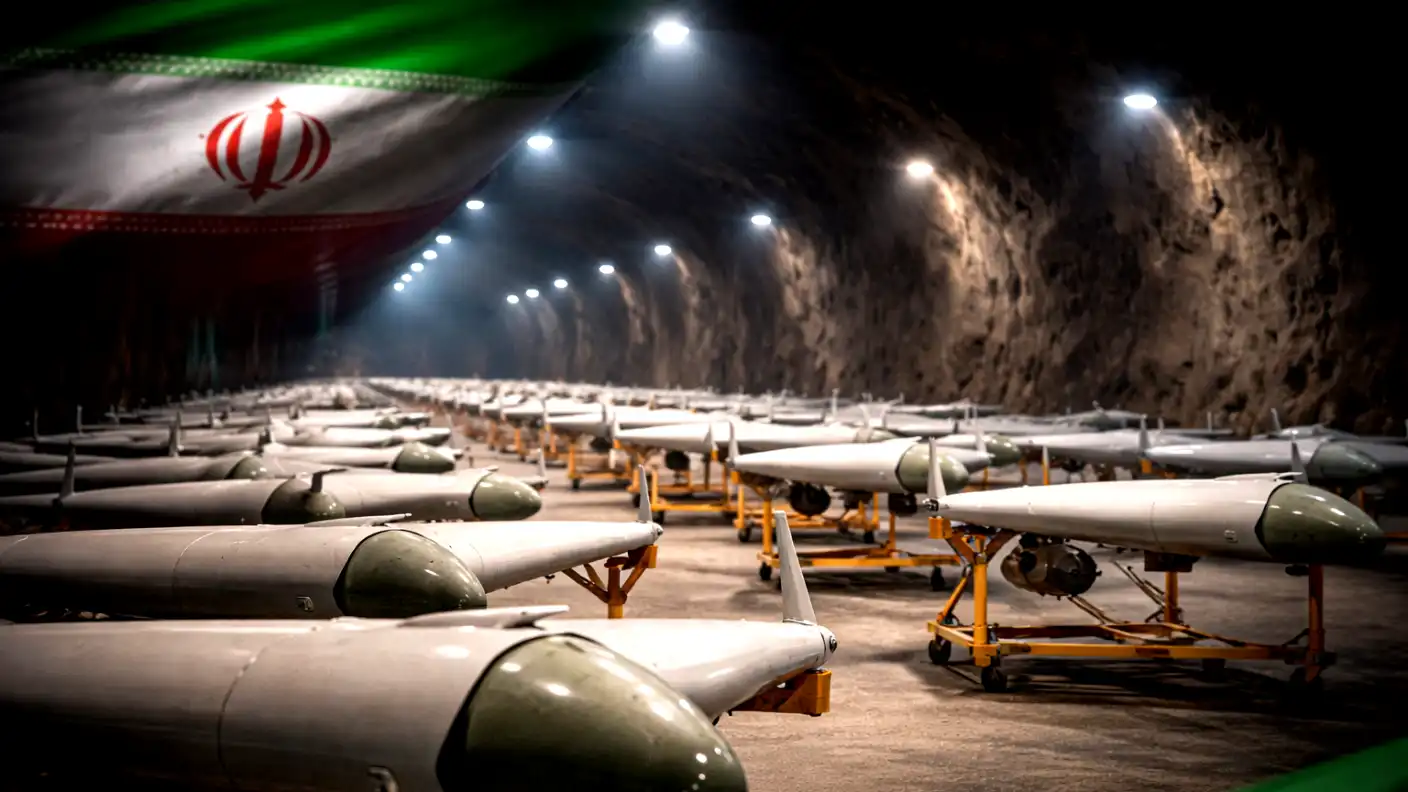
The reality of modern regional warfare is increasingly dictated by raw production numbers, creating a scenario where overwhelming volume can defeat sophisticated defense systems. Adversarial nations, such as Iran, have mastered the art of high-volume, low-complexity manufacturing. Reports indicate that the Iranian defense sector can currently produce over one hundred ballistic missiles and thousands of one-way attack drones every single month. This relentless production cadence allows them to easily sustain prolonged campaigns of aerial harassment, saturating enemy airspace with expendable assets designed to overwhelm radar systems and exhaust defensive batteries.
In stark contrast, the United States defense industrial base operates on a timeline optimized for precision and quality rather than rapid mass production. The U.S. currently produces only about six hundred to seven hundred Patriot interceptors per year. When broken down, this equates to approximately fifty to sixty interceptors per month. In a sustained conflict in which an adversary can launch hundreds of drones in a single coordinated swarm, a monthly production rate of 50 high-end interceptors is a glaring mathematical deficit. The sheer volume of incoming threats means a superpower can theoretically run out of defensive ammunition long before the adversary runs out of cheap offensive drones.
The Staggering Cost Gap: Dollars and Cents of Defense
Beyond the raw production numbers, the financial disparity between offensive and defensive weaponry poses a severe economic threat to global superpowers. In a war of attrition, the side that can inflict the most damage for the least amount of money holds a distinct strategic advantage.
The cost gap in modern air defense is unprecedented in the history of warfare. An Iranian-designed Shahed one-way attack drone is estimated to cost between $20,000 and $50,000 to manufacture. These drones are essentially flying lawnmower engines strapped to explosives, yet they are highly effective at reaching their targets. Conversely, a single U.S. Patriot interceptor, which is routinely fired to destroy these incoming drones, costs approximately $4 million. This means that defending a target can cost up to 200 times as much as the weapon used to attack it.
This financial imbalance has profound strategic implications. It allows an adversary with a fraction of the United States’ defense budget to inflict severe economic damage simply by forcing the U.S. to engage. Even if a drone is successfully intercepted and no physical damage is done to the intended target, the adversary has still won a financial victory by forcing the defender to expend a four-million-dollar asset. Over the course of a prolonged regional conflict, this economic bleeding can severely constrain a superpower’s defense budget, forcing difficult decisions regarding future military investments and global readiness.
The Mechanics of Asymmetric Production Resilience
The ability of asymmetric adversaries to sustain high-volume production of offensive weaponry is not accidental; it is the result of a deliberate, highly resilient manufacturing philosophy. While Western defense contractors rely on centralized, highly specialized facilities, adversaries have adopted a decentralized approach that is incredibly difficult to disrupt.
Commercial Components and Bypassing Sanctions
The secret to the low cost and high volume of modern adversarial drones lies in their reliance on commercial-off-the-shelf components. Rather than investing decades and billions of dollars in developing proprietary, military-grade guidance systems and engines, adversaries use parts widely available on the global commercial market.
This reliance on commercial technology provides several distinct advantages for asymmetric warfare. These advantages include the following critical factors:
- The ability to easily bypass international economic sanctions and export controls by purchasing seemingly benign consumer electronics.
- A vast reduction in research and development timelines, allowing for rapid iteration and deployment of new drone models.
- The use of global civilian supply chains makes it nearly impossible for Western intelligence agencies to track the procurement of basic microchips, small combustion engines, and commercial GPS modules.
The Elasticity of Modern Drone Manufacturing
Because these one-way attack drones do not require sophisticated, environmentally controlled manufacturing clean-rooms or highly specialized heavy machinery, their assembly process is incredibly flexible. This concept, often referred to as “production elasticity,” is a nightmare for traditional military targeting and strategic bombing campaigns.
Iranian drone assembly, for example, is designed to take place in small, dispersed, and easily concealed workshops. Unlike a traditional high-tech missile facility—which is massive, clearly identifiable by satellite imagery, and vulnerable to targeted airstrikes—a decentralized drone manufacturing network is nearly impossible to eradicate. If one assembly garage is discovered and destroyed, production can simply be shifted to another nondescript warehouse within hours. This elasticity ensures that the adversary’s supply chain remains robust and uninterrupted, even under intense international pressure and direct military engagement.
Vulnerabilities in the Traditional Industrial Defense Base
The rapid evolution of drone warfare has exposed critical flaws in how the United States and its allies procure and manufacture military hardware. The traditional defense industrial base, which secured victory during the Cold War, is struggling to adapt to the economic and logistical realities of modern asymmetric conflicts.
Optimization for High-End Technology over Mass Volume
For the past several decades, Western defense acquisition has been heavily optimized for producing exquisite, high-end technology. The philosophy was built on the premise that technological superiority would always triumph over numerical superiority. As a result, the defense industrial base consolidated, focusing heavily on highly complex systems like stealth fighter jets, nuclear submarines, and sophisticated missile defense arrays like the Patriot and THAAD (Terminal High Altitude Area Defense) systems.
While these systems are undeniably the most capable in the world, they are incredibly difficult, slow, and expensive to manufacture. They rely on incredibly complex supply chains, specialized materials, and a highly skilled, limited workforce. The defense industrial base is not currently structured for the rapid, high-volume mass production needed for a prolonged regional conflict dominated by cheap, expendable drones. The transition from a “boutique” manufacturing mindset to a “mass production” mindset requires a fundamental restructuring of defense contracting, funding, and industrial prioritization—a process that cannot happen overnight.
Dangerous Depletion Rates of Key Missile Stockpiles
The consequences of this manufacturing bottleneck are already being felt on the modern battlefield. As regional conflicts flare up and escalate, the United States and its allies are forced to rely on their existing inventories to protect critical assets and allied nations. Because the production of replacement interceptors is so slow, these stockpiles are depleting at an alarming rate.
In recent months of sustained conflict and heightened regional tensions, the U.S. has reportedly expended nearly half of its key missile stockpiles, including the highly prized THAAD and Patriot interceptors. Firing these advanced interceptors at low-tier drone threats is a tactical necessity to protect human life and critical infrastructure, but it is a strategic disaster. The rapid depletion of these stockpiles leaves the U.S. and its allies vulnerable to broader, more sophisticated attacks. If a peer-level adversary were to launch a coordinated assault involving advanced hypersonic or cruise missiles, the depleted stockpiles of high-end interceptors might prove insufficient to provide adequate defense, creating a dangerous window of global vulnerability.
The Crisis of Replenishment and Supply Chain Pressures
The depletion of advanced missile stockpiles would be a manageable problem if the defense industrial base could quickly ramp up production to replace the expended assets. However, the intricacies of modern defense manufacturing make rapid replenishment a logistical impossibility, leading to severe supply chain pressures that threaten global security alliances.
The Years-Long Timeline to Rebuild Inventories
Rebuilding an arsenal of advanced interceptors is an incredibly slow and arduous process. These weapons require highly specialized components, including solid rocket motors, advanced seekers, and military-grade microelectronics, all of which have their own constrained and bottlenecked supply chains.
Analysts from the Center for Strategic and International Studies (CSIS) have conducted deep evaluations of the current U.S. defense industrial base, and their findings highlight a severe timeline crisis. The comprehensive analysis points to the following sobering realities regarding replenishment:
- It will take an estimated one to four years to replenish the current inventories of key interceptors expended in recent regional conflicts.
- It will take several more years of sustained, maximum-capacity production to expand these inventories back to comfortable, pre-war levels.
- The expansion of production facilities to increase the monthly output of these interceptors requires massive capital investment and years of construction, making short-term production surges virtually impossible.
Strained Alliances and Delayed Foreign Military Sales
The crisis of production and replenishment is not solely a domestic issue for the United States; it has severe geopolitical ramifications that ripple outward to global allies. The U.S. is the primary provider of advanced defense technology to a vast network of international partners. When U.S. manufacturing facilities are forced to prioritize the immediate, critical war needs of active conflicts, the orders placed by allied nations inevitably face severe delays.
A prominent example of this supply pressure is Japan’s strategic request to purchase four hundred Tomahawk missiles to bolster its deterrence capabilities in the Indo-Pacific region. As U.S. stockpiles dwindle and production lines are consumed by the immediate demands of active regional warfare elsewhere, massive orders like Japan’s face the real potential for multi-year delays. This inability to rapidly fulfill Foreign Military Sales (FMS) strains diplomatic alliances and leaves allied nations feeling vulnerable. It also forces global partners to question the long-term reliability of the U.S. defense supply chain, potentially driving them to seek alternative security arrangements or develop their own sovereign, competing defense industries.
The Global Ripple Effects of the Air Defense Dilemma
The disproportionate cost-and-production exchange ratio is not a localized tactical issue; it is a global strategic dilemma that is actively reshaping how nations approach future conflicts. The lessons learned in current regional wars are closely observed by military strategists worldwide, prompting a fundamental shift in defense doctrines.
A Blueprint for Adversaries Worldwide
The success of using cheap, mass-produced drones to economically and physically exhaust a superpower’s air defenses has provided a clear blueprint for adversarial nations worldwide. State and non-state actors observing these conflicts have realized that they do not need to match the technological sophistication or the massive defense budgets of Western nations to pose a severe threat.
By investing in elastic, commercially based drone manufacturing, smaller nations and insurgent groups can effectively put superpower assets at risk. This democratization of aerial lethality has drastically lowered the threshold for engaging in asymmetric warfare. Future conflicts across the globe—whether in the Middle East, Eastern Europe, or the Indo-Pacific—will inevitably feature massive swarms of cheap, expendable unmanned systems designed specifically to exploit the cost-exchange vulnerabilities of traditional, high-end air defense networks.
The Urgent Need for Innovative Interception Technologies
To survive this new era of asymmetric drone warfare, global superpowers must urgently pivot away from relying exclusively on multi-million-dollar kinetic interceptors. The long-term solution to the cost-and-production dilemma requires the rapid development, fielding, and mass integration of innovative, low-cost interception technologies.
Military research and development must prioritize systems that flip the economic script back in the defender’s favor. The most promising areas of innovation currently being explored include the following technologies:
- Directed Energy Weapons (DEWs): High-energy laser systems capable of melting the commercial components of incoming drones at the cost of only a few dollars per “shot” of electricity.
- High-Power Microwave (HPM) Systems: Weapons designed to emit broad bursts of electromagnetic energy, capable of frying the delicate navigation circuits of entire drone swarms simultaneously.
- Electronic Warfare (EW) and Spoofing: Advanced non-kinetic systems that sever the communication links between drones and their operators, or trick the drone’s GPS receivers into flying the weapon harmlessly into the ground.
- Low-Cost Kinetic Interceptors: The development of smaller, cheaper, and more rapidly producible air-to-air or surface-to-air missiles specifically designed to counter slow-moving drones without expending high-end assets.
Conclusion
The current strategic challenge facing the United States and its global allies is a stark reminder that in modern regional warfare, the victor is not necessarily the side with the most advanced technology, but the side with the most sustainable economic and industrial endurance. The staggering disparity between the cost of an Iranian-designed attack drone and a U.S. Patriot interceptor highlights a fundamental vulnerability in Western defense doctrine. As adversaries master the art of elastic, commercial-based mass production, they are successfully forcing superpowers into a financially ruinous game of aerial attrition.
The dangerous depletion rates of critical missile stockpiles and the agonizingly slow multi-year timelines required for replenishment have exposed the limits of a defense industrial base optimized solely for high-end, exquisite conflicts. This reality is placing immense strain on global supply chains and international alliances, as partner nations face delays in receiving the defensive hardware they desperately need. To maintain global stability and deterrence in this new era, military planners must rapidly adapt. The future of global security relies not just on producing more weapons but on fundamentally changing the cost-exchange ratio of defense through the rapid deployment of directed-energy weapons, electronic warfare, and a revitalized, agile industrial base capable of meeting the relentless volume of modern asymmetric threats.