

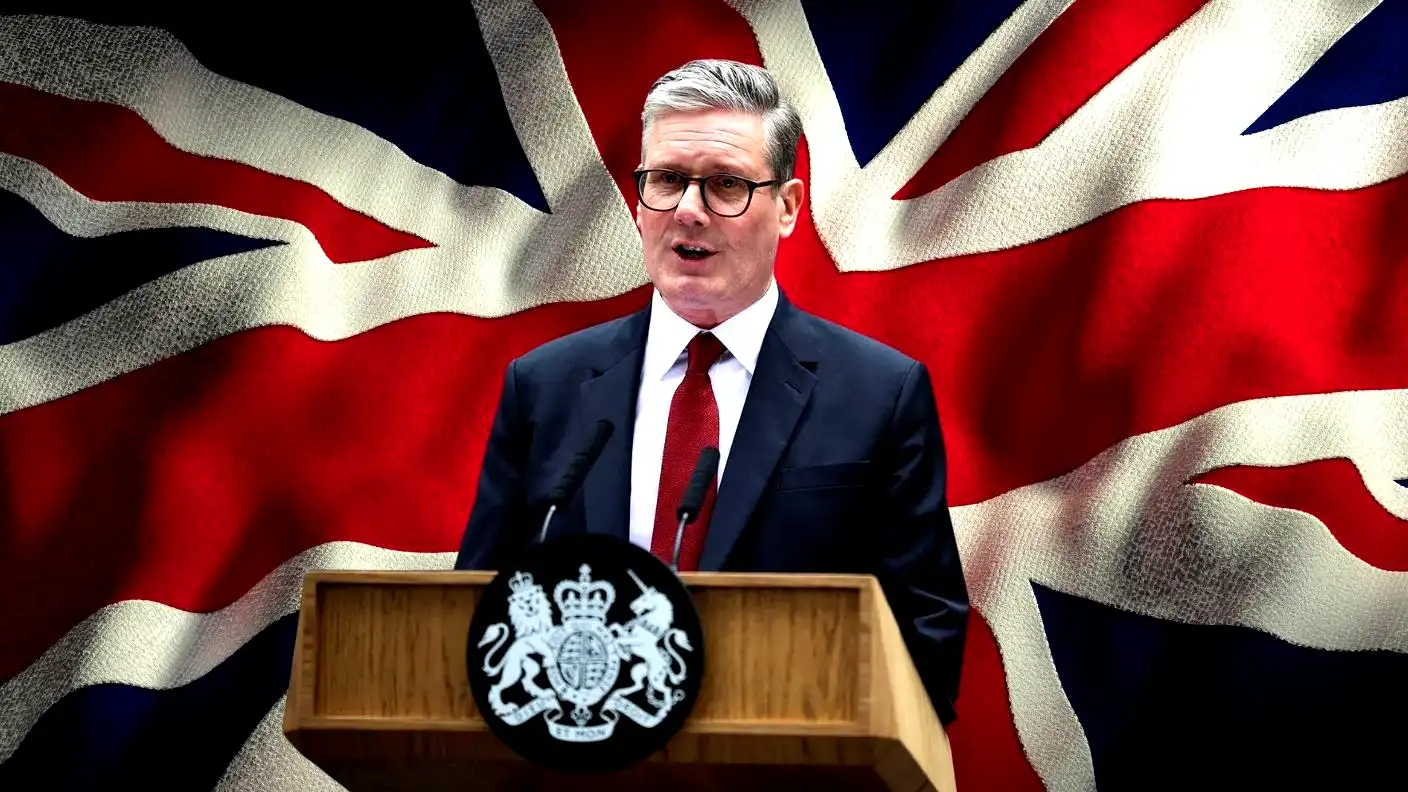
Former British Prime Minister Tony Blair has launched a blistering, 5,700-word essay attacking current Prime Minister Keir Starmer and his ambitious rivals. In his first major public intervention since the Labour Party won a landslide victory in 2024, Blair warned that his former party is “playing with fire” by bickering over Starmer’s leadership. The massive essay, published late Tuesday by his think tank, has unleashed fresh angst across Westminster, exposing deep-seated fears about what the party actually wants to be.
This highly unusual intervention comes at a time when Starmer’s grip on power has never looked more fragile. Less than three weeks ago, Labour suffered catastrophic losses during local elections, shedding a massive 60% of the English council seats it was defending. To make matters worse, the party lost control of the Welsh assembly, the Senedd, for the very first time in more than a century. These historic defeats triggered an immediate, full-blown civil war, with close to 100 Labour Members of Parliament—representing nearly a quarter of the party’s legislative strength—publicly calling for Starmer to resign.
The leadership crisis escalated rapidly after Wes Streeting resigned as health secretary to prepare for a potential leadership challenge. Analysts expect Streeting to compete against Greater Manchester Mayor Andy Burnham for the top job, provided Burnham wins next month’s Makerfield by-election. However, Blair completely dismissed this looming leadership battle, calling the entire debate extraordinarily retro and reminiscent of the 20th century. He argued that trying to force Starmer out of office before the party actually chooses a clear political direction is not a serious way to behave.
The former prime minister, who won three general elections and occupied 10 Downing Street for exactly ten years, took direct aim at the government’s economic policies. He accused Starmer’s administration of governing from an essentially traditional Labour “soft left” position, parked firmly in the party’s comfort zone. Blair argued that this cautious, non-charismatic approach has held back business and growth since Labour took office. He criticized the government’s decision to increase employers’ national insurance, implement the workers’ rights bill, and raise the minimum wage during an economic slowdown.
To win a second term, Blair urged the party to abandon its current course and move toward “radical centrism.” In his extensive essay, he laid out a clear 10-point plan for the future of British governance. He demanded that the government put economic growth at the absolute heart of its policies. To achieve this, Blair argued that the state must prioritize cheap, reliable energy over clean energy, fundamentally overhaul its restrictive planning regulations, cut welfare spending, and urgently reform the state pension triple lock system.
Blair also criticized the government’s handling of international affairs, particularly regarding the ongoing war in the Middle East. Since the U.S.-Israeli war on Iran began on February 28, the shutdown of the Strait of Hormuz has upended global energy markets. This shipping bottleneck has driven UK inflation up by an extra 1.5% over the past month, costing the global shipping industry more than $1.5 billion every week. Blair argued that the Starmer government should never have prevented the United States from using British Royal Air Force bases to launch military strikes against Iranian targets.
In addition to the Middle East conflict, Blair called out the government’s failure to handle the small boats migrant crisis. He urged the Prime Minister to do whatever it takes to stop illegal crossings. He warned that if Labour fails to establish strict, secure borders, voters will quickly turn to Nigel Farage’s right-wing Reform UK party. Reform has dominated the polls since early 2025, and bookmakers currently favor them to win the next general election, which must take place by 2029.
The former leader also focused heavily on the massive, disruptive impact of artificial intelligence on future human employment. He warned that if politicians do not take immediate action to manage the AI revolution, computers will eventually displace human labor on a massive, unprecedented scale. He urged the government to use its regulatory power to guide the tech sector, ensuring that technology serves the public interest rather than simply making a small handful of Silicon Valley executives incredibly rich.
Ultimately, Blair’s 5,700-word essay has left the Labour Party in a state of deep anxiety and self-reflection. While Starmer’s allies warn his critics against indulging in fantasy politics, the prime minister’s popularity continues to plummet, with his public approval rating hovering at a dismal 34%. Whether Starmer survives this current rebellion or not, Blair’s message remains crystal clear: a change in leadership means absolutely nothing if the party does not first agree on a worked-out, coherent plan to lead the country through a rapidly changing world.















