

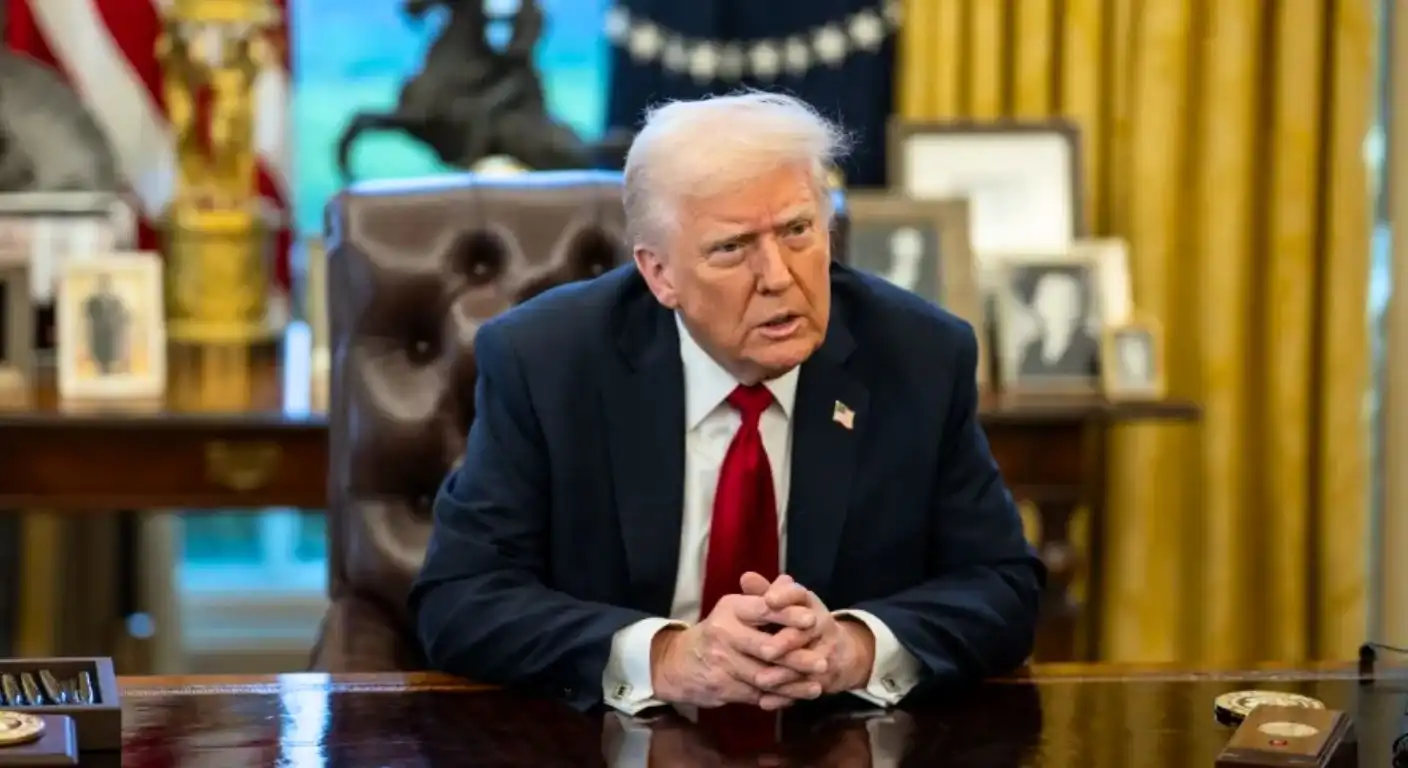
A dramatic military escalation in the Middle East came to a sudden halt following an unexpected diplomatic breakthrough. On Thursday evening, June 11, 2026, U.S. President Donald Trump announced that he had officially called off a massive, highly controversial wave of planned military strikes against Iran. This sudden policy reversal came just hours after Trump had promised to hit the Islamic Republic very hard in retaliation for recent missile attacks on American bases. Writing on his social media platform, Truth Social, the president revealed that he chose to cancel the bombings because negotiators had successfully brought a multi-nation ceasefire draft to the highest levels of the Iranian leadership.
According to diplomatic briefs circulating in Washington and international news channels, the proposed agreement outline seeks to temporarily freeze hostilities and establish a path toward long-term regional stability. The multilateral draft agreement reportedly includes three primary pillars: extending the current temporary ceasefire, fully reopening the strategic Strait of Hormuz to international shipping, and launching a fresh 60-day negotiation timeline to address the highly contentious Iranian nuclear issue. Trump wrote that the participating nations had approved the deal in great detail, suggesting that the formal signing ceremony could take place in the coming days.
The diplomatic breakthrough represents a massive, coordinated effort involving a broad coalition of Middle Eastern and international powers. The U.S. president asserted that negotiators had secured approval for the “final points and concepts” of the deal from almost every key player in the region. He listed a wide array of nations that have formally endorsed the framework, including the United States, Israel, Saudi Arabia, the United Arab Emirates, Qatar, Turkey, Pakistan, Bahrain, Kuwait, Jordan, and Egypt. This broad coalition shows that regional leaders are increasingly desperate to end a conflict that has caused severe economic damage and threatened to drag the entire globe into a major war.
The sudden cancellation of the airstrikes marked a stunning de-escalation, coming right as the region braced for its most destructive exchange of fire yet. Earlier on Thursday afternoon, Trump had adopted an incredibly aggressive posture, publicly vowing to hit Iran hard and threatening to seize control of the country’s critical oil infrastructure. He specifically targeted Kharg Island, a highly sensitive facility located 15 miles off the Iranian mainland that handles approximately 90% of the country’s total crude oil exports. Trump compared the potential operation to the U.S. military’s past actions in Venezuela, declaring that the U.S. would assume total control of Iran’s oil and gas markets in the near future.
Trump’s aggressive threats to seize Iran’s primary oil hub immediately triggered a fierce reaction from Tehran’s top leadership. Mohammad Bagher Ghalibaf, the speaker of the Iranian parliament and the country’s chief negotiator, issued a blunt warning to Washington on Thursday afternoon. Ghalibaf cautioned that wrong strategies and impulsive decisions would reset the entire geopolitical board for the worse, explode energy infrastructure, and trap the United States in an endless military quagmire for years. He warned that if Washington proceeded with its planned attacks, Iran would target American interests across the region and disrupt global energy supplies.
Despite calling off the immediate airstrikes, President Trump made it clear that the United States has no intention of easing its economic stranglehold on Tehran until both sides sign a binding treaty. He confirmed that the aggressive U.S. naval blockade of the Strait of Hormuz will remain in full force and effect until the transaction is officially finalized. This ongoing naval blockade has severely disrupted international trade, resulting in regional economies losing over $1 billion in port revenues. At the same time, the maritime disruptions have shaved nearly 1.5% off the region’s overall trade GDP. Trump added that his administration will announce the official time and place of the signing ceremony shortly.
While the White House continues to project immense confidence about the imminent peace deal, state-run news agencies inside Iran have reacted to the announcements with deep skepticism. A prominent news agency affiliated with the Islamic Revolutionary Guard Corps quickly dismissed Trump’s claims of an approved deal, noting that the American president has announced an imminent peace agreement at least 38 times over the last two months without producing any actual results. Another state-run news agency cited an anonymous government source who insisted that Iran has not yet agreed to any formal memorandum of understanding, suggesting that the supreme leader, Ayatollah Mojtaba Khamenei, has not yet given his final consent.
The urgent push for peace comes amidst continuing maritime violence and rising diplomatic casualties. On Thursday, Indian government officials confirmed that three missing Indian seafarers had died following a U.S. military strike on a commercial oil tanker in the Gulf of Oman earlier in the week. The Indian government summoned the U.S. Deputy Chief of Mission in New Delhi to lodge a strong, formal protest against the strike. Adding to the maritime crisis, another vessel, the Guinea-Bissau-flagged asphalt tanker MV Jalveer, suffered an attack under similar circumstances near Oman on Thursday, marking the third such incident in four days and highlighting the extreme danger facing civilian crews in the region.
As both nations observe a fragile pause in physical combat, the Middle East remains locked in a high-stakes waiting game. President Trump’s sudden decision to call off the planned airstrikes represents a calculated political gamble, choosing to prioritize a potential diplomatic breakthrough over immediate military retaliation. For international shipping companies, global energy markets, and the millions of civilians caught in the crossfire, the stakes could not be higher. Until the negotiators can translate these hopeful words into a signed, verifiable treaty that permanently reopens the Strait of Hormuz, the threat of an all-out war will continue to loom over the region.















