

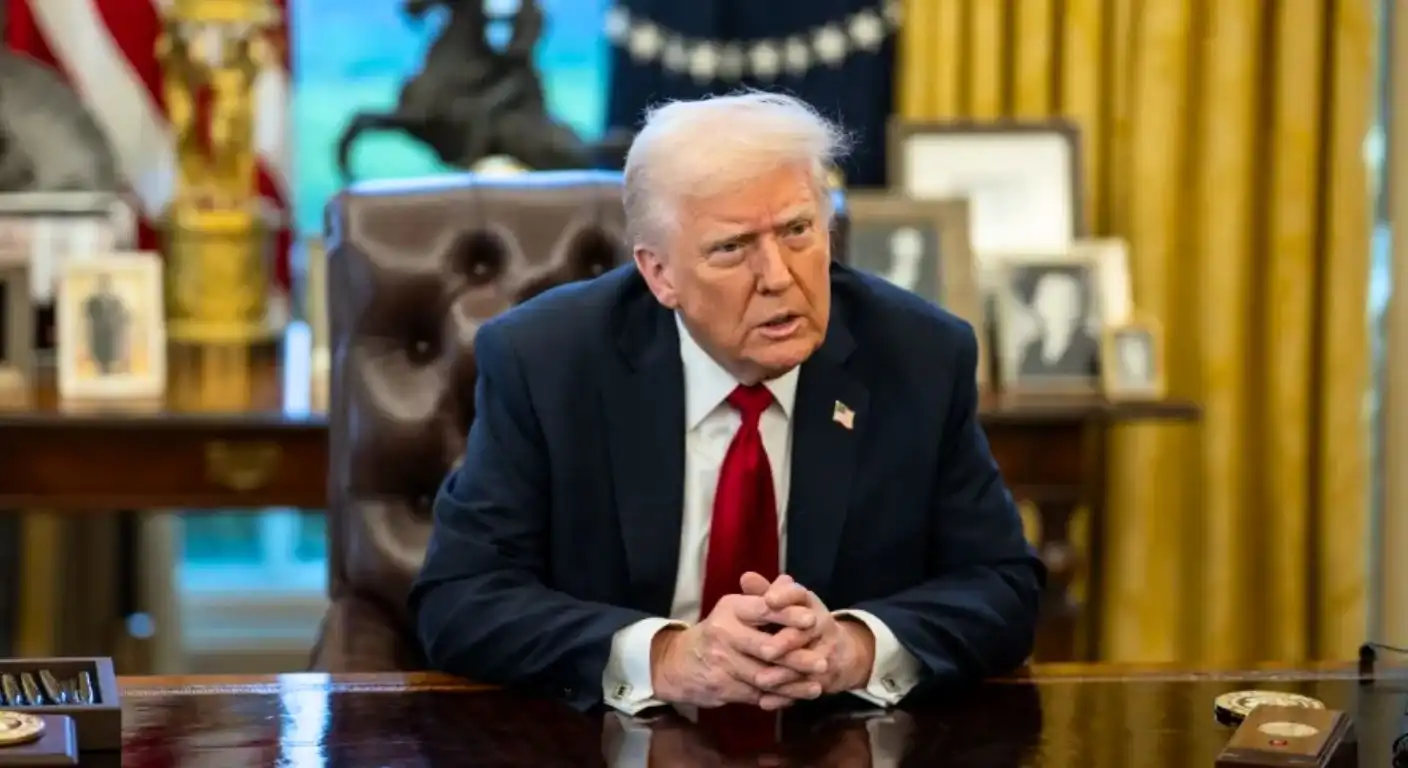
President Donald Trump signed a highly anticipated executive order on artificial intelligence (AI) security and innovation on Tuesday, June 2, 2026. The new directive instructs government agencies to collaborate closely with private technology developers to evaluate the capabilities and risks of advanced models before their full public release. Crucially, the final text stops short of imposing mandatory federal pre-release testing or government licensing requirements. This strategic compromise represents a major victory for Silicon Valley’s anti-regulation camp, allowing American technology firms to maintain their rapid pace of development in the highly competitive global market.
The newly signed order, titled “Promoting Advanced Artificial Intelligence Innovation and Security,” establishes a classified benchmarking framework to identify and monitor what the government terms “covered frontier models.” The National Security Agency (NSA), in consultation with the National Cyber Director, the Director of CISA, and the Department of War, will oversee this assessment process. The order asks top tech companies to voluntarily provide federal agencies with early access to their most advanced models. This collaboration aims to find and patch critical cybersecurity vulnerabilities across federal networks, local infrastructure, and commercial databases, without creating heavy-handed new oversight layers.
Trump’s new executive order arrives after sixteen months of regulatory uncertainty following his first-day repeal of the Biden administration’s AI framework. Biden’s previous policy had established rigid, mandatory reporting thresholds for the country’s most powerful AI systems, which the Trump administration criticized as a heavy-handed barrier to private sector growth. While the absence of a federal framework left a policy vacuum—sparking a chaotic patchwork of state laws—the newly signed June 2 order seeks to establish a voluntary, cooperative partnership between Washington and the private sector to secure digital infrastructure without stifling innovation.
The signing ceremony on Tuesday concludes a dramatic, weeks-long internal battle within the White House over how aggressively to govern frontier technologies. President Trump had abruptly called off a highly publicized Oval Office signing ceremony on Thursday, May 21, just hours before it was scheduled to take place. Trump admitted to reporters that he postponed the event because he disliked “certain aspects” of the draft text, fearing it would act as a structural “blocker” for American firms. “We are leading China, we are leading everybody, and I do not want to do anything that is going to get in the way of that lead,” Trump explained.
The eleventh-hour postponement of the initial draft highlighted the immense lobbying power of Silicon Valley’s anti-regulatory elite. Inside sources report that prominent technology figures, including xAI founder Elon Musk, Meta CEO Mark Zuckerberg, and venture capitalist David Sacks, actively urged the president to shelve the original, more restrictive draft. Sacks, who previously served as Trump’s special AI advisor, argued that even a voluntary government testing framework could easily harden into a de facto mandatory licensing regime. This industry pressure ultimately succeeded, forcing White House Chief of Staff Susie Wiles and National Cyber Director Sean Cairncross to strip out any clauses that resembled mandatory federal vetting.
Adding to the chaos of the May 21 cancellation was a logistical embarrassment involving the tech industry’s elite. Trump had reportedly given major tech CEOs less than 24 hours’ notice to fly to Washington for the signing ceremony. When the administration realized that several key executives had declined or could not rearrange their schedules on such short notice, Trump pulled the plug on the ceremony. Some industry leaders who had rearranged their travel plans were reportedly mid-air en route to the Oval Office when White House staff officially announced the cancellation, highlighting the deep tensions and disorganized communication between the administration and Silicon Valley.
Interestingly, the technology sector itself is deeply divided over how much oversight the government should possess. While Musk, Sacks, and Zuckerberg lobbied heavily against the testing framework, ChatGPT creator OpenAI actively supported the draft order. OpenAI executives believe that a standardized, voluntary federal testing process provides a necessary stamp of security, builds public trust, and helps protect critical national infrastructure. This split within the industry shows that the debate over AI safety is not a simple fight between tech firms and regulators, but a complex strategic battle between different corporate camps with competing business models.
The urgency behind the White House’s push to secure leading AI systems stems from mounting warnings from national security agencies and financial regulators. In April 2026, U.S. Treasury Secretary Scott Bessent and outgoing Federal Reserve Chair Jerome Powell convened an emergency meeting with Wall Street CEOs to discuss the capabilities of Anthropic’s powerful new model, Claude Mythos. Bessent warned the executives that the model possesses an extraordinary, unprecedented ability to find and exploit critical cybersecurity flaws in global banking software. To bypass the government’s stalled regulatory efforts, Anthropic recently launched “Project Glasswing,” which provides vetted organizations with early access to its models for security testing.
The light-touch, voluntary approach of the U.S. order stands in sharp contrast to the rigid, statutory regulatory regime taking shape across the Atlantic. The European Union’s comprehensive AI Act is entering full enforcement in August 2026, giving European regulators sweeping legal powers to fine companies and restrict unvetted models. While technology companies have loudly complained about European overregulation, many analysts warn that Washington’s policy vacuum could force individual states to pass an unpredictable patchwork of conflicting local laws. By signing the June 2 executive order, the Trump administration hopes to establish a national, business-friendly standard that keeps the United States at the forefront of the global AI race while providing basic protections for critical infrastructure.















