

A highly intense geopolitical struggle is currently unfolding in the Middle East, transforming the global energy trade and reshaping the rules of international security. The military conflict between the United States, Israel, and Iran, which began in late February under the codename Epic Fury, has turned into a prolonged battle of economic attrition. While military airstrikes have targeted defense systems and nuclear facilities, the real conflict is taking place in the financial sector, where a massive economic campaign aims to choke off Iran’s financial resources completely.
However, the fallout from this strategy is reaching far beyond Iran’s borders. The resulting blockade of the Strait of Hormuz has triggered the largest energy and shipping disruption in modern history, driving up fuel prices for ordinary consumers, creating an acute food crisis in neighboring Gulf nations, and challenging the political standing of the administration in Washington. This article explores the mechanics of this ongoing economic warfare, examines the physical and financial consequences of the conflict, and analyzes how these global disruptions are shifting public opinion on the home front.
The Core Strategy: Targeting Iran’s Central Bank and Financial Reserves
The cornerstone of the current strategy is a policy of total financial isolation, designed to starve the Iranian state of the capital it needs to fund its military operations and proxy networks.
The Blueprint of Monetary Strangulation
The primary objective of the financial campaign is the complete neutralization of the Central Bank of Iran. By leveraging secondary sanctions and international banking restrictions, the U.S. Treasury has successfully blocked Tehran’s access to its foreign exchange reserves held in overseas accounts.
According to data compiled by the International Monetary Fund, these aggressive measures have successfully constrained the central bank’s operational capacity, leaving the Iranian government with access to only $8.8 billion in readily available foreign currency from its estimated total reserves.
This financial chokehold has severely limited Iran’s ability to defend its domestic currency, pay public sector wages, and import critical raw materials, placing the domestic Iranian economy under unprecedented strain.
Negotiating on Fumes
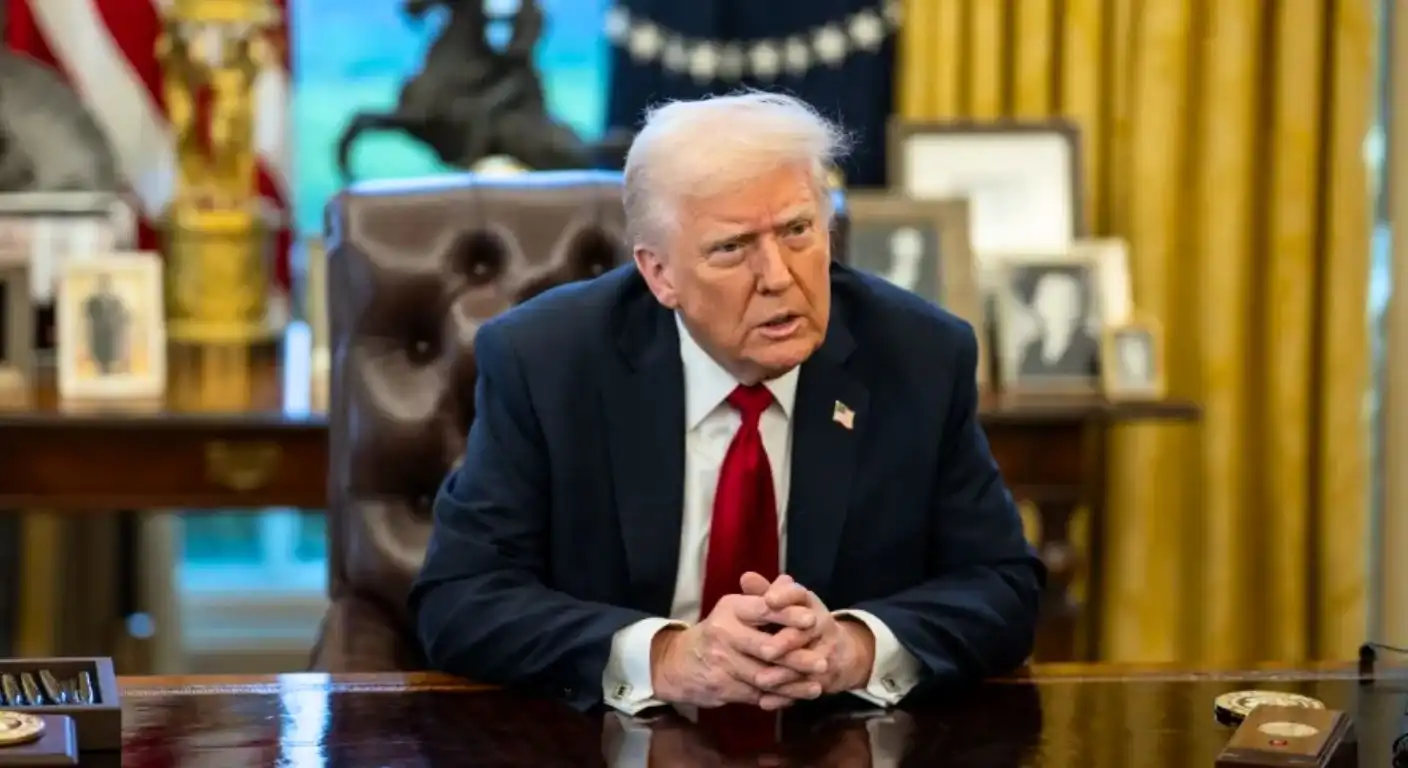
During a recent Cabinet meeting in Washington, President Donald Trump addressed reporters and confidently declared that Iran is currently negotiating on fumes. The administration is openly using this financial leverage to force Tehran to accept a highly restrictive new agreement that would permanently dismantle its nuclear enrichment programs and ballistic missile development.
White House officials believe that the severe economic pain inside Iran will eventually leave the regime with no choice but to capitulate.
However, critics of the strategy point out that despite the severe inflation and currency depreciation inside the country, the Iranian leadership has stubbornly refused to bow to unilateral pressure, choosing instead to retaliate by targeting global energy arteries.
The Battlefield Shift: The Strait of Hormuz and the Global Energy Crisis
Blocked from accessing its financial reserves, Iran has retaliated by weaponizing its geographic position, targeting the narrow maritime corridor that serves as the lifeblood of the global oil industry.
The Blockade of the Critical Chokepoint
On March 4, Iranian naval forces and fast-attack boats effectively closed the Strait of Hormuz, the narrow waterway connecting the Persian Gulf to the Gulf of Oman. Under normal circumstances, approximately 20% of the world’s daily oil supply and 25% of global liquefied natural gas exports pass through this chokepoint.
By utilizing drone strikes, sea mines, and missile attacks to target commercial shipping, Iran has brought maritime traffic through the strait to a virtual standstill.
The International Energy Agency has characterized this blockade as the largest supply disruption in the history of the global oil market, warning that the closure is echoing the devastating energy crises of the 1970s.
The Collapse of Gulf Production and Qatar’s Force Majeure
The physical impact of the blockade on neighboring oil-producing nations has been catastrophic. Because their exports are physically stranded inside the Persian Gulf, the combined oil production of Kuwait, Iraq, Saudi Arabia, and the United Arab Emirates plummeted by 6.7 million barrels per day in March, and has dropped by at least 10 million barrels per day overall.
The disruption has completely dismantled the traditional economic model of the Gulf Cooperation Council.
QatarEnergy, one of the world’s largest suppliers of super-chilled natural gas, had to declare force majeure on all liquefied natural gas exports, depriving major industrial economies in Europe and East Asia of the critical fuel they need to keep their electricity grids running.
The Humanitarian Shock: Gulf Food Security under Threat
The closure of the Strait of Hormuz has had severe consequences beyond energy markets, triggering an immediate and dangerous food security crisis for millions of people living in the Arabian Peninsula.
The Caloric Emergency in the Gulf
While the Arab states of the Persian Gulf rely on the Strait of Hormuz to export their energy, they also depend on the waterway to import their daily food supplies. Gulf Cooperation Council nations import more than 80% of their total food and caloric intake through the Strait.
By mid-March, the maritime blockade had disrupted approximately 70% of the region’s food imports, triggering a concurrent grocery supply emergency across major cities.
Supermarket shelves quickly emptied of fresh produce, grains, and dairy products, creating a wave of panic buying among residents.
Airlifting the Staples
To prevent widespread shortages and potential civil unrest, regional supermarket chains and retailers like Lulu Retail have had to resort to extremely expensive, round-the-clock emergency airlifts of basic foodstuffs.
Planes are carrying staples like rice, wheat, and canned goods to regional airports, bypassing the blocked sea lanes at a massive financial cost.
These emergency logistics operations have significantly driven up local grocery prices, highlighting the extreme vulnerability of the region’s food supply chains to any major military conflict in the Gulf.
The Domestic Fallout: Rising Gas Prices and the Voter Backlash
As the energy crisis drags on, the economic consequences of the conflict are hitting closer to home, placing a major financial burden on American households and eroding public support for the administration.
Gas Spikes and the “Not Very High” Claim
The blockade of the Strait of Hormuz has driven global Brent crude oil prices past $120 a barrel, leading to a steady rise in retail fuel costs across the United States. The national average gasoline price has climbed to approximately $4.16 per gallon, sparking significant public anger over the cost of living.
Despite the obvious strain on household budgets, President Trump addressed reporters on Tuesday morning and claimed that U.S. fuel prices are not very high, insisting that the administration is successfully releasing a lot of oil from the Strait of Hormuz.
The president’s comments, made after attending an NBA Finals game in New York, drew immediate and widespread criticism from both political opponents and ordinary citizens who felt that the administration was out of touch with their daily financial struggles.
The Political Liability of War
The rising cost of living is rapidly transforming the political landscape ahead of the upcoming midterm elections. A newly released Economist/YouGov poll revealed that a record 63% of Americans now disapprove of President Trump’s handling of the economy.
Furthermore, two-thirds of the public believe that the administration has been completely ineffective in its negotiations with Iran.
The war has effectively flipped the president’s strongest political asset—the resilient U.S. economy—into his largest political liability, as independent and moderate voters increasingly blame the administration’s military adventures for their shrinking purchasing power.
The Geopolitical Gridlock: Escort Mission Failures and OPEC Quotas
As the conflict intensifies, efforts to restore maritime safety and coordinate global oil production are running into severe operational and political obstacles.
The Failed Escort Missions
The U.S. military has faced major difficulties in its efforts to reopen the Strait of Hormuz. While the administration initially launched a high-profile naval mission to escort commercial cargo vessels through the strait, the operation was quietly paused.
U.S. forces failed to secure the passage of commercial vessels without Iranian permission, leading to a temporary suspension of the escort program.
The danger of operating in the narrow waterway was highlighted on Tuesday when Iran shot down a U.S. Apache helicopter over the Strait of Hormuz, prompting an at-sea rescue of the pilots.
Trump quickly confirmed the shootdown, declaring that the United States must respond, raising fears that a fresh round of military escalation could soon resume.
OPEC+’s Symbolic Quota Hike
In response to the global energy shortage, OPEC+ ministers agreed to raise their July oil production quotas by 188,000 barrels per day. However, energy analysts and economists have dismissed the quota increase as a purely symbolic gesture that will do nothing to lower prices.
Because the Strait of Hormuz remains closed, major Gulf producers, including Saudi Arabia and Iraq, are physically unable to ship their oil to international markets, leaving global inventories falling toward multi-decade lows.
The quota hike serves only to highlight the geopolitical paralysis of the global oil market, where OPEC+ cannot solve a physical supply crisis through administrative decisions alone.
Conclusion: The Limits of Economic Warfare
The ongoing conflict in the Middle East has exposed the clear limits of overwhelming financial and military power. An analytical perspective in the Wall Street Journal recently noted that while the Trump administration’s economic war has placed unprecedented strain on Iran’s finances, it has failed to produce the desired political outcome of strategic compliance.
Instead of capitulating, the Iranian regime has used asymmetric warfare to inflict hundreds of billions of dollars of damage on the global economy, showing that modern economic warfare can trigger devastating blowback for the nation that deploys it.
As the conflict heads into the summer, the economic fates of Washington, Riyadh, and Tehran remain bound together in a dangerous cycle of mutual disruption.
Until the administration can find a realistic diplomatic off-ramp to reopen the Strait of Hormuz and stabilize energy markets, the economic war on Iran will continue to shake global financial systems, proving that in a highly interconnected world, the weaponization of finance can easily turn into a self-inflicted economic crisis.















