

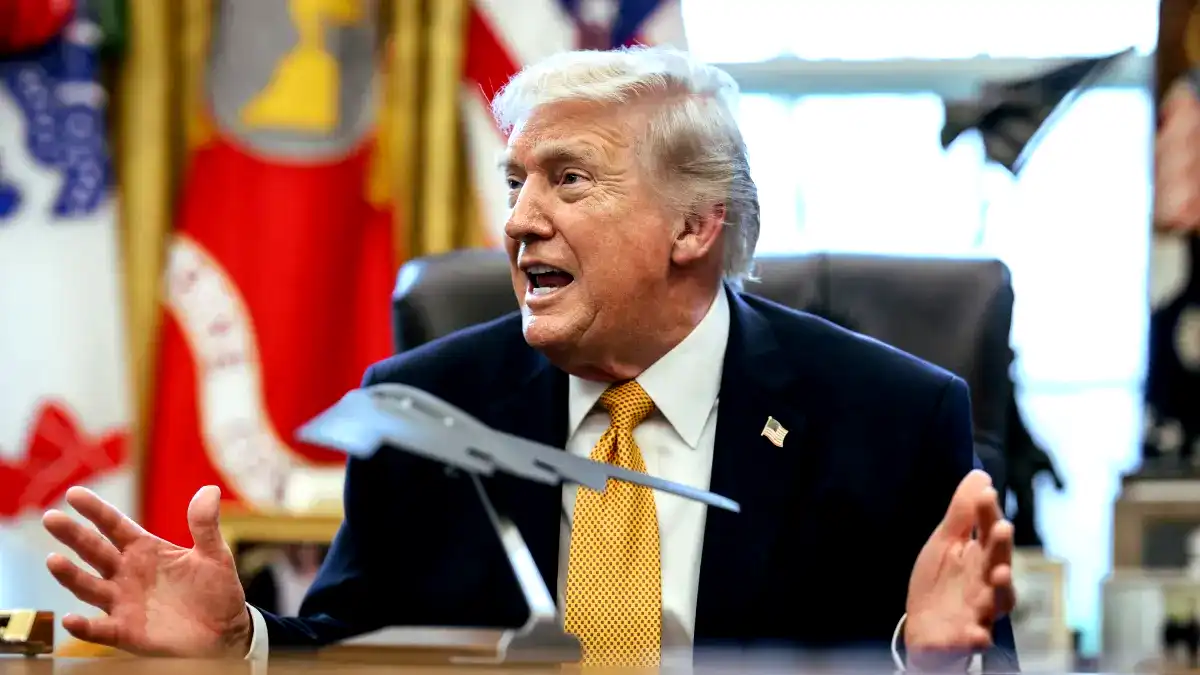
President Donald Trump rejected a formal peace offer from Iran on Sunday. His immediate refusal crushes any remaining hopes for a quick end to the 10-week war. The fierce conflict between the United States, Israel, and Iran has caused massive physical destruction across Iran and Lebanon. The fighting has also paralyzed commercial shipping traffic through the critical Strait of Hormuz. This blockade forced global energy prices to spike over the weekend. Oil prices jumped another $3 per barrel immediately after investors realized the peace talks had collapsed.
Iran released its list of demands just days after the United States offered to resume peace talks. Iranian state television anchors announced that the proposal focuses on stopping the war on all military fronts. The Iranian government specifically demands an end to the fighting in Lebanon. The plan also demands a guarantee for safe shipping access through the Strait of Hormuz. Trump read the proposal and immediately shut it down on his Truth Social account. He wrote exactly 6 words to describe his official stance: “I don’t like it — TOTALLY UNACCEPTABLE.” He provided zero additional details about his decision.
The Iranian government directly asked the United States to pay heavy financial compensation for war damages. State media reporters noted that Iran wants total recognized control over the shipping strait. Iranian leaders demanded that the United States end its naval blockade entirely. They also want Washington to lift heavy economic sanctions, cancel a strict ban on Iranian oil sales, and guarantee no future military attacks. In contrast, American leaders simply want to stop the shooting first. The United States proposed a complete halt to all fighting before anyone sits down to discuss harder issues, such as Iran’s controversial nuclear program.
Reporters at the Wall Street Journal discovered that Iran offered a major compromise regarding its nuclear weapons program. Unnamed sources told the newspaper that Iran offered to dilute a large portion of its highly enriched uranium. Iran would then load the remaining nuclear material onto planes and ship it to a third country. Pakistan mediated these specific nuclear discussions. A Pakistani official confirmed his government received the Iranian response and forwarded the document directly to the United States government.
Trump faces heavy political pressure to stop the fighting before he visits China this coming week. The 10-week war officially started on February 28. It quickly triggered a massive global energy crisis. Before the war began, commercial oil tankers carried 20 percent of the world’s total oil supply through the Strait of Hormuz. Now, Iran blocks almost all non-Iranian shipping through that narrow stretch of water. American voters heavily dislike this ongoing war because gasoline prices keep rising at local stations. Congressional midterm elections are less than 6 months away, and voters demand cheaper gas.
The United States struggles to find international support for its military campaign. NATO allies firmly refuse to send military ships to open the Strait of Hormuz. European leaders want a signed peace deal and an internationally approved mission first. Inside the United States, Democratic lawmakers fight Trump over his war strategy. They try to use the War Powers Act to force the military to stop fighting. Senator Jack Reed spoke about the issue on Fox News on Sunday. He blamed Trump directly, stating that Trump made the situation worse and now struggles to find a safe exit strategy.
Military actions continue in the Middle East despite a month-old ceasefire agreement. Defense officials spotted hostile drones flying over multiple Gulf countries on Sunday. The United Arab Emirates military shot down 2 drones that flew into its airspace from Iran. Qatar condemned a separate drone attack that hit a large cargo ship sailing from Abu Dhabi. Kuwaiti military officials also confirmed that their air defense systems intercepted hostile drones entering Kuwaiti airspace. These weekend attacks broke a brief period of calm that lasted exactly 48 hours.
A few ships managed to navigate the dangerous waters safely over the weekend. A Qatari ship named Al Kharaitiyat carried thousands of gallons of liquefied natural gas through the Strait of Hormuz. The ship sailed safely to Port Qasim in Pakistan. Shipping data analysts confirmed this was the first Qatari gas vessel to cross the strait since the war began. Iran approved this specific shipment to build trust with Pakistan and Qatar. Pakistan urgently needed this natural gas after experiencing massive power blackouts nationwide. A bulk carrier heading to Brazil also passed safely through the strait on May 4.
Leaders from both sides refuse to back down completely. Trump spoke about the military operations against Iran in a television interview broadcast on Sunday. He claimed the United States defeated the Iranian military, but he warned the fight continues. Israeli Prime Minister Benjamin Netanyahu also stated that the war continues. He told CBS News reporters that Israel needs to do more work. He wants to remove enriched uranium from Iran, destroy nuclear enrichment sites, and wipe out Iran’s proxy groups. Netanyahu prefers diplomacy but keeps military force ready as a backup plan.
Iranian President Masoud Pezeshkian posted a defiant message on social media. He promised the Iranian people that their country would never bow down to the enemy. He swore to defend Iranian national interests with full strength. Violence also rages in southern Lebanon. Israel and the militant group Hezbollah fight daily despite a ceasefire signed on April 16. Hezbollah fighters started shooting on March 2, just days after the United States and Israel bombed Tehran. Negotiators from Israel and Lebanon plan to meet in Washington on May 14 to try to stop the violence.















