

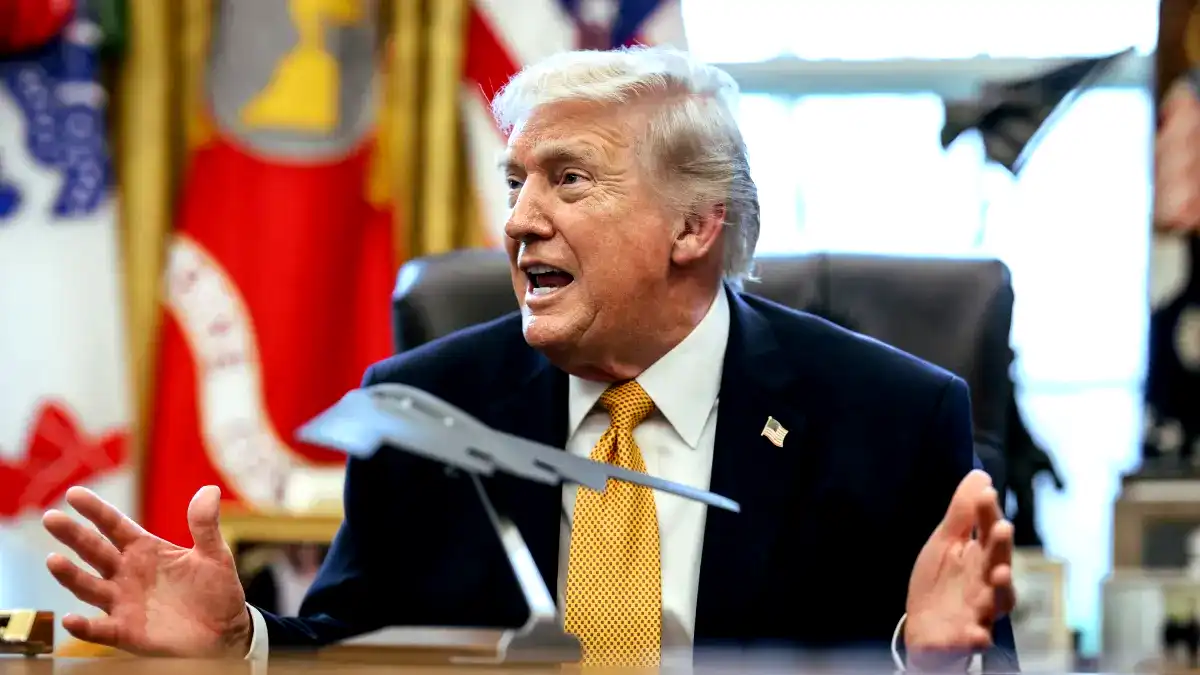
The military confrontation in the Middle East has entered an incredibly dangerous phase, threatening to spark a massive regional war. On Thursday, June 11, 2026, U.S. President Donald Trump announced that the United States would launch heavy, powerful new strikes against Iran. Posting on his social media platform, Truth Social, Trump warned that the U.S. military would hit the Islamic Republic very hard. Even more alarmingly, the president threatened to seize control of Iran’s vital oil infrastructure, including the strategic Kharg Island, in the near future. This bold threat marks a massive escalation in the conflict, virtually ending a fragile, Pakistan-brokered ceasefire that has tenuously held the region together since early April.
The president’s direct threat to target Kharg Island has sent fresh shockwaves through global energy and financial markets. Located in the northeastern Persian Gulf about 33 kilometers off the shallow Iranian mainland, Kharg Island serves as the cornerstone of the country’s oil-based economy. Because the mainland coastline remains too shallow for massive oil supertankers to dock safely, approximately 90% of Iran’s total crude oil exports must pass through this single, heavily defended facility. Seizing or disabling the island would completely choke off Iran’s national revenues. However, military experts warn that deploying U.S. troops on the island would leave them highly vulnerable to missile strikes from the nearby mainland.
In his social media post, Trump outlined a highly aggressive plan to take total control of the country’s energy markets. He declared that at some point in the not-too-distant future, the United States will take Kharg Island and other critical oil infrastructure points, assuming complete authority over Iran’s oil and gas sectors. Trump directly compared this potential operation to the previous U.S. military intervention in Venezuela, asserting that the strategy worked out brilliantly for both nations. By framing the potential seizure as an economic and strategic victory, Trump signaled that his administration is prepared to use extreme economic pressure to force a change in Tehran’s behavior.
Shortly after publishing his online threats, Trump clarified his strategic preferences during a live television interview. Speaking to broadcasters, the U.S. president admitted that his personal preference has always been to take Kharg Island to control the region’s energy flows. However, he expressed deep skepticism about whether the American public has the stomach for a major ground war, noting that most citizens prefer to see their soldiers come home. Trump sought to reassure voters by stating that he remains highly averse to sending large numbers of ground troops into the region, boasting that a very small group of specialized soldiers could easily take over the entire island if necessary.
During the same television appearance, Trump shared previously classified details about the scale of the ongoing U.S. military operations. He revealed that American forces had dropped over $250 million worth of precision bombs on Iranian targets during an intense wave of airstrikes. Trump claimed that the heavy bombardment had successfully destroyed the vast majority of Iran’s offensive military capabilities, asserting that the regime is already in submission but simply does not realize it yet. He warned that the U.S. military would launch an even bigger and more powerful wave of strikes, further complicating the prospect of a negotiated settlement.
This massive escalation in rhetoric and physical strikes comes as diplomatic efforts to secure a permanent peace treaty remain completely stuck. Trump has voiced growing frustration with the stalled negotiations, warning earlier in the week that Tehran would pay a heavy price for taking too long to agree to a deal. Negotiators from the United States, Iran, and regional intermediaries had spent weeks trying to turn the April 8 ceasefire into a permanent agreement, but the process has reached a complete standstill. While some diplomatic channels remain open, the rapid exchange of air strikes has severely eroded any remaining trust between the two nations.
At the same time, the United States continues to enforce its strict naval blockade against Iranian ports, which began on April 13, 2026. This aggressive maritime campaign has successfully disrupted international trade, shaving nearly 1.5% off global shipping volumes and costing regional economies over $1 billion in lost commerce. Over the past four days, U.S. naval forces have targeted several commercial tankers for violating the blockade. A U.S. missile strike on the tanker Settebello in the Gulf of Oman killed three Indian mariners, prompting a strong diplomatic protest from New Delhi. On Thursday, another vessel, the Guinea-Bissau-flagged asphalt tanker MV Jalveer, suffered an attack under similar circumstances near Oman.
Iran has reacted with intense anger to the threat of a U.S. takeover of its oil infrastructure, warning that any attack on its energy sector will carry catastrophic global consequences. Iran’s top joint military command issued a stern warning, stating that its forces will fire on any vessel attempting to pass through the Strait of Hormuz, which has been largely closed for months. Iranian state media also reported that coastal batteries fired on two U.S. warships over the weekend. Tehran’s chief negotiator warned that if Washington targets Kharg Island, global energy markets will instantly explode, sending oil prices past $150 a barrel and triggering a severe worldwide recession.
As the U.S. military prepares for another round of heavy strikes, the Middle East remains locked in a dangerous cycle of economic and physical retaliation. President Trump’s threat to seize Kharg Island represents a massive geopolitical gamble that could either force Tehran into immediate submission or drag the United States into a prolonged, costly ground conflict. For global markets and international shipping companies, the stakes could not be higher. Until Washington can relax its aggressive economic blockade or Tehran halts its missile campaigns, this volatile conflict will continue to threaten both regional stability and the global economy, keeping the entire world on a knife-edge of uncertainty.















