

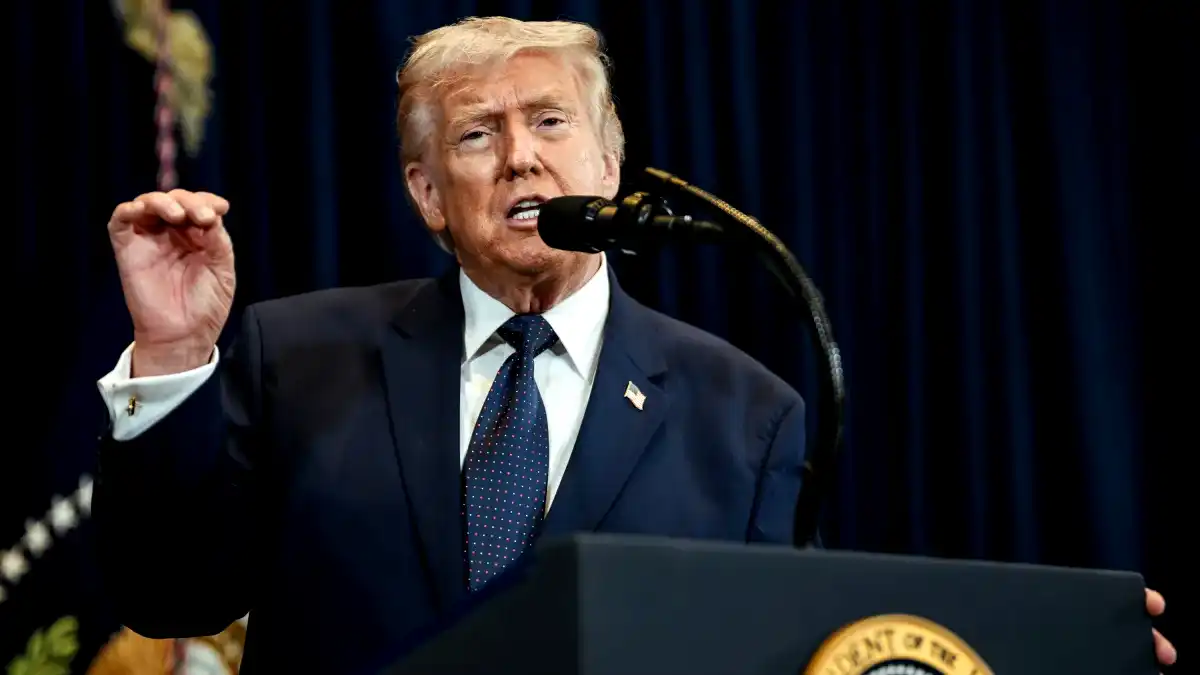
United States President Donald Trump has thrown Europe into a state of total confusion with a sudden, unilateral decision to reshuffle American military forces. In a late-night post on his Truth Social platform, Trump announced plans to deploy an additional 5,000 troops directly to Poland. This unexpected move completely bypassed traditional NATO consultation channels and left European defense planners scrambling to understand the sudden change in Washington’s security policy.
This dramatic announcement followed a highly controversial decision by the Pentagon last week to withdraw exactly 5,000 American troops from Germany over the next 12 months. That initial drawdown resulted from an escalating political clash between Trump and German Chancellor Friedrich Merz over the ongoing war in Iran. By suddenly promising to send those same 5,000 troops to Poland, Trump completely reversed the narrative, leaving European diplomats scratching their heads in disbelief.
The president openly tied his sudden military shift to his personal relationship with Poland’s newly elected conservative nationalist president, Karol Nawrocki. While Warsaw welcomed the promise of extra security, other European capitals expressed deep concern over Trump’s highly personal and unpredictable foreign policy. Critics argue that treating military deployments as personal rewards for friendly politicians severely damages the institutional trust that holds the entire Western alliance together.
NATO officials expressed private fury over the complete lack of communication from Washington. The United States did not consult its 32 partners before making these major troop movements, violating the alliance’s core principle of collective decision-making. This lack of teamwork heavily undermines NATO’s defense framework ahead of the critical July summit in Ankara, Turkey. European diplomats warn that the ongoing war in Iran, coupled with Trump’s erratic decisions, has pushed the alliance to its absolute limit.
Relocating thousands of heavily armed soldiers, their families, and heavy military equipment across Europe is an incredibly expensive and difficult process. Military analysts estimate that building new barracks, preparing training grounds, and establishing stable supply lines in Poland could easily cost the U.S. and European nations over $1 billion. Moving these forces also drains vital resources from other urgent defense projects at a time when global military budgets are already under severe strain due to the conflict in the Middle East.
Defense experts also warn that this chaotic reshuffling directly weakens Europe’s conventional deterrence capability. By pulling troops out of Germany to reward a friendly politician in Poland, Trump signals that America’s commitment to European defense is transactional rather than absolute. This division plays right into the hands of Russian President Vladimir Putin, who has spent years trying to fracture the NATO alliance and weaken its collective security guarantees.
In a desperate bid to keep the United States committed to European defense, several European Union member states are preparing to take on greater military responsibility. Countries like Britain, France, and Germany are planning a major post-war naval mission to protect the Strait of Hormuz. The ongoing war in the Middle East has blocked this critical trade corridor, driving global energy prices higher and pushing US inflation up by an additional 1.5%. European allies hope that taking over this dangerous naval mission will appease Trump and convince him to stop cutting troops in Europe.
Ultimately, Trump’s latest moves show that European allies can no longer rely blindly on the United States for their security. As the July summit in Ankara approaches, European leaders must make difficult choices. They must prepare to defend their own national interests with the Americans if possible, but without them if necessary. The era of predictable, rock-solid American security commitments has officially come to an end.















